.jpg)
Jeff Buckley's Cult of Grace
Introduction
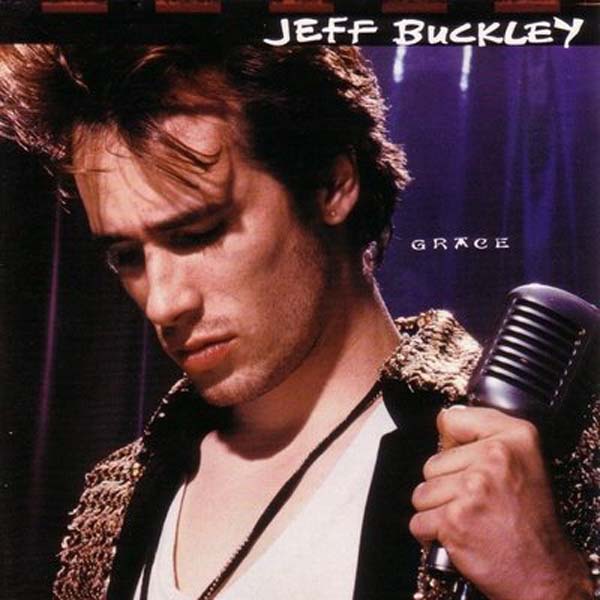
Jeff Buckley was an American singer-songwriter and guitarist who gained popularity in the early 1990s. He was the son of American folk vocalist Tim Buckley, whose music incorporated a range of styles including jazz, psychedelia, funk, soul, and avant-garde among others. Jeff's career took off in New York City where he played at various small venues in Manhattan's East Village, namely Sin-e, covering the the songs of influential artists and developing his own material. Jeff's performances attracted the interest of many major record label executives and in 1992, he signed with Columbia, recruited a band, and recorded his first studio album Grace. Buckley and his band spent the next four years touring and promoting his material throughout the US, Europe, Japan, and Australia. Upon his return to the US in 1996, Jeff rushed into the production of his second album, My Sweetheart the Drunk. On May 29, 1997, while waiting for his band to meet him for recording in Tennessee, a fully-clothed Buckley stepped into the Missippi for a spontaneous swim. His body was found on shore five days later. After his death, Jeff Buckley gained mysterious popularity as an artist and songwriter. Anthropologist Eric Rothenbuhler refers to the "church of the cult of the individual," in which the individual takes shape as a "symbolic entity that can be known only through communicative processes." This page explores the studio album Grace (1994) as the communicative process in the creation of a church and cult of artists, fans and critics surrounding Jeff Buckley as an artist after his death in 1997. How has Buckley's album and music in addition to his relationship with the media worked to create an aura/cult of mystery surrounding his persona? This page will analyze the album Grace; critical reviews of the album; newspaper and magazine articles concerning the release of Buckley's album ; interviews with the artist (Buckley) specifically from the DVD documentary Grace around the World; interviews with fans, family, and friends; and fan reviews of the album in order to formulate an anthropological study of Jeff Buckley, his album grace, and the cult of his individual.
Sources
- Jeff Buckley - bio, news, media, articles, reviews
- Jeff Buckley NPR
- Jeff Buckley MySpace/Blog Access
- Jeff and His Band and Oral History
- Jeff Buckley: Grace - Album Reviews
- Jeff Buckley: Grace Around the World
- Merriam, Alan P. The Anthropology of Music. Evanston, IL: Northwestern Univ., 2006. Print.
- Mithen, Steven J. The Singing Neanderthals: The Origins of Music, Language, Mind, and Body. Cambridge, MA: Harvard UP, 2007. Print.
- Nettl, Bruno. The Study of Ethnomusicology: Thirty-one Issues and Concepts. Urbana: University of Illinois, 2005. Print.
- Rothenbuhler, Eric W., and Mihai Coman. "The Church of the Cult of the Individual." Media Anthropology. Thousand Oaks, CA: Sage, 2005. 91-101. Print
- Titon, Jeff Todd. "The Music-Culture as a World of Music." Worlds of Music: an Introduction to the Music of the World's Peoples. New York: Schirmer, 1992. 1-14. Print.
Amazing Grace: Jeff Buckley Documentary Trailer
Interview in Paris with Jeff Buckley
MSNBC Expose on Jeff Buckley's Life/Death
Footage taken of Jeff on the road in 1994 and 1995
Jeff Buckley - Hallelujah - from Grace 1994
Ethnography
Fun Palace Entertainment Inc. and Jeff Buckley Music Inc. "Share Your Stories.” JeffBuckley.com - Official Website. Web. 26 Nov. 2010. <http://www.jeffbuckley.com/bday10/sharing-stories.htm>.
The following selections are three posts from a forum on jeffbuckley.com created by Fun Palace Entertainment Inc. whose mission statement is to “bridge the gap between music artists and fans through innovative and classic marketing techniques.” This particular forum contains hundreds of fan posts in response to the question “How do you celebrate Jeff?” on November 17, 2010 which would have been Jeff’s 44th birthday.
“Happy Birthday You legend
- NICHOLE”
“The crazy, lovely, harrowing, mystifying joy of your music has been an integral part of my life for the past five years and I expect it to be just as important until the day I die. My darkest moments of sorrow were accompanied by your music, as well as the brightest moments, the times when my heart was so full of excitement and love I thought it was going to burst, you were my soundtrack. You simultaneously kept my head in the clouds and my feet planted on earth. Your music was there as I became a man and it helped me become the man I am and am growing into. You were there when I fucked up and you were there when I did well, and if you couldn't make me feel better than you at least put things in perspective and made me realize there was a lot more than whatever I was dwelling on.
I have no real religious beliefs but if there is any kind of higher plane than "Hallelujah" is a doorway to it. For me, you are the definition of how powerful music can be to a person…One final note; I think the greatest testament to your place in my life is how you've connected me to some of the most important people in my life. Without realizing it (until now), almost every person that I have seriously cared about has at one time or another has received from me a used or burned copy of "Grace". Whether they listen to it or enjoy it or not, it doesn't matter to me; I just know that this person is important enough to me that I want to share this magic with them. So thanks for being a connection. A friend. A confidante, an encourager and a shoulder to lean on. A romantic and a rebel and a musician and a person. Thank you.
Happy Birthday, Jeff,
You Were Amazing!
Scott Eisenlohr”
“It's weird because listening to his music is very much like a religious experience to me. He's a kind of prophet and I don't pray to him or anything but I gain comfort and understanding through his music. I honestly don't know what I would have done without his music this year. It's strange how he came to me just when I needed him. I've learned how important it is to keep connection between us and the people who have passed on.
His words feel like mine. He vocalized how I feel inside with his voice and music. I don't feel so alone so I become inspired. Words flow, images appear - I fall into peace. I feel like I understand more than I should about life, its purpose - the possibilities. I have faith that things happen like they are supposed to. The fight is always worth it if your intentions are pure and full of love. Love is pain and joy and LIFE. Happiness isn't wealth or possessions - it's the small moments and the memories we leave behind.
So, thank you Jeff - where ever you are and Happy Birthday.”
Rothenbuhler, Eric W., and Mihai Coman. "The Church of the Cult of the Individual." Media Anthropology. Thousand Oaks, CA: Sage, 2005. 91-101. Print
Eric Rothenbuhler’s “Cult of the Individual”
“Why does celebrity work the way it does in the United States and other industrialized societies?” (91)
“Why do almost all people in such societies spend at least some of their time paying attention to the lives, activities, and performances of individuals unknown to them but who are presented by the media as celebrities?” (91)
“These mysteries can be answered if we understand the media as the church of the cult of the individual…the religion of modern society,” (91).
“The person, the self, which is the sacred object of the cult of the individual, is a symbolic entity that can be known only through communicative processes…the ceremonial practices of that cult (religion) must be in communicative processes,” (91).
“One of the media’s most important activities is the production of saints and heroes…a few disparate celebrities can be selected and analyzed for a strange phenomenon they have in common: most of their celebrity is not only posthumous but peculiarly concerned with the relations of the living and the dead,” (97).
Walter Benjamin on the “aura”
Walter Benjamin, “The Work of Art in the Age of its Technological Reproducability,” in Walter Benjamin: Selected Writings, 2002 [1936]
“One thing stands out: the here and now of the work of art – its unique existence in the place where it is now…We can encapsulate what stands out here by using the term ‘aura’.”
“The genuineness of a thing is the quintessence of everything about it since its creation that can be handed down, from its material duration to the historical witness that it bears.”
“In a regime of superabundant free copies, copies are no longer the basis of wealth. Now relationships, links, connection, and sharing are. Value has shifted away from a copy toward the many ways to recall, annotate, personalize, edit, authenticate, display, mark, transfer, and engage a work of art. Art is a conversation…”
Jeff and Critics on his Music
“ What do I want people to get from the music? Whatever they want, you know...whatever you like…” – Jeff Buckley, Fun Palace Entertainment Inc. and Jeff Buckley Music Inc. "Share Your Stories.” JeffBuckley.com - Official Website. Web. 26 Nov. 2010. <http://www.jeffbuckley.com/bday10/sharing-stories.htm>.
“My main musical influences? Love, anger, depression, joy, and dreams…and Zeppelin.” - Buckley, Grace Around the World Trailer (above), "Amazing Grace: Jeff Buckley - Documentary Trailer." YouTube - Broadcast Yourself. Web. Fall 2010. <http://www.youtube.com/watch?v=c6GeMq0BcJY>.
“You can reach a trance like stage where what's really going on inside the human psyche is being sung to... the music aims at what's really going on underneath... not what people pretend to be...The little scared kid or the full-on romantic lover is being accessed. There are really majestic qualities about people that can be reached through music. People are incredible to me even though I am healthily cynical sometimes. It's because we are spirits and the whole tension is that we don't know we are. Yet, music is able to touch this." - Sony Entertainment. Music. Sony (USA) Grace Press Release. Jeffbuckley.com. Robert Fuller, 4 Sept. 2006. Web. Fall 2010. <http://www.jeffbuckley.com/rfuller/buckley/words/articles/sonygracepr.html>.
Buckley describes his music as a "low-down dreamy bit of the psyche. It's part quagmire and part structure. The quagmire's important for things to grow in... do you ever have one of those memories where you think you remember a taste or a feel of something... maybe an object... but the feeling is so bizarre and imperceptible that you just can't quite get a hold of it? It drives you crazy. That's my musical aesthetic... just this imperceptible fleeting memory. The beauty of it now is that I can record it onto a disc or play it live. It's entirely surreal. It's like there's a guard at the gate of your memory and you're not supposed to remember certain things because you can only obtain the full experience by completely going under its power. You can be destroyed or scarred... you don't know... it's like dying." – Sony Entertainment. Music. Sony (USA) Grace Press Release. Jeffbuckley.com. 4 Sept. 2006. Web. Fall 2010. <http://www.jeffbuckley.com/rfuller/buckley/words/articles/sonygracepr.html>.
Spanning a wide range of styles, Grace moves from the Zeppelinesque bombast of "Mojo Pin" to the undulating raga rock of "Dream Brother." Throughout, lyrics conceived in late-night coffeehouses veer between flower-child mysticism and earnest soul bearing. "Last Goodbye" and "Lover You Should Have Come Over" detail a dying relationship's fade. On "Last Goodbye," Buckley begs to be kissed "out of desire, babe, and not consolation." Elsewhere, Buckley tackles Big Questions like racism and war. He says "Eternal Life" was inspired by anger over "the man that shot Martin Luther King, World War II, slaughter in Guyana and the Manson murders." His cosmic bent is balanced by earthier inclinations, Buckley says, "I like a spirituality," he says, "with a God that knows how to drive a car, that knows how to take his girl to the dance club, dance all night, have a little drink, kiss the kid when they come back in and go to sleep. God doesn't need a chauffeur - he needs to drive himself." – Diehl, Matt. ""The Son Also Rises: Fighting the Hype and Weight of His Father's Legend, Jeff Buckley Finds His Own Voice On Grace,"" Rolling Stone Magazine 20 Oct. 1994: 68-70. Kingdom for a Kiss: Jeff Buckley in Words. Web. Fall 2010. <http://www.jeffbuckley.com/rfuller/buckley/words/features/rs-sonalsorises.html>.
Analysis
My analysis of the ethnographic material above will first look at the focus of Jeff Buckley’s music in the hopes of establishing its meaning as a mediated anthropological artifact, then use the birthday posts to illustrate his music’s effect on individual experience and meaning. Then I will relate these to the broader concepts of aura and the cult of the individual.
It becomes clear that the subject of Jeff’s music and lyrics is human spirituality and human experience. What did he want people to get from his music? “Whatever they want, you know...whatever you like…” Jeff hoped his music would help people experience themselves. His personal observations of human spirituality and experience were meant to help his listeners gain individual access to their own memories and experiences. This speaks to what Jeff thought of the power and purpose of music – the ability to encapsulate “imperceptible fleeting memory,” on a recording or in a live setting. “It's entirely surreal. It's like there's a guard at the gate of your memory and you're not supposed to remember certain things because you can only obtain the full experience by completely going under its power. You can be destroyed or scarred... you don't know... it's like dying." Human interaction with his music allows access to memories of particular actions, feelings, and experiences which they cannot fully understand. The submission to the “power” of music allows a reliving and re-experiencing through which humans can achieve higher understanding of what it actually was they felt at a certain moment, because, essentially, they feel it all over again. Why is Jeff’s music specifically offer this sort of access? Jeff’s music aims at “what's really going on inside the human psyche…what's really going on underneath... not what people pretend to be...The little scared kid or the full-on romantic lover is being accessed. There are really majestic qualities about people that can be reached through music.” These “majestic qualities” are the focus of his music – “love, anger, depression, joy, and dreams…” His broad, symbolic, musical portrayal of these particular human concepts and faculties among others allows humans to relate to and understand the same within their own lives.
Now let’s look at how this happens:
In the fan posts above, the adjectives used to describe Buckley and his music include: CRAZY, LOVELY, LEGENDARY, MYSTIFYING, INSPIRING, PEACEFUL, MAGICAL, ROMANTIC, RELIGIOUS, PROPHETIC, A DOORWAY TO A HIGHER PLANE. In only three posts, it becomes evident that Jeff’s music affects his fans in a powerful and extraordinary manner. These people view Jeff’s music as an essential piece to their lives, one which certainly intensifies their personal human experience in addition to deepening their personal relationships with others. Scott says, “My darkest moments of sorrow were accompanied by your music, as well as the brightest moments, the times when my heart was so full of excitement and love I thought it was going to burst, you were my soundtrack. You simultaneously kept my head in the clouds and my feet planted on earth.” Jeff’s music accompanies his personal feelings of sorrow, excitement, and love. As a result, he is “in the clouds,” somewhere unknown, achieving higher understanding, but he is simultaneously grounded. Jeff’s music offers him something more to bring back to real life and experience. The third post, which was left anonymous says, “He [Jeff] vocalized how I feel inside with his voice and music. I don't feel so alone so I become inspired. Words flow, images appear - I fall into peace. I feel like I understand more than I should about life, its purpose - the possibilities. I have faith that things happen like they are supposed to.” Jeff’s musical approach to and presentation of the human experience grants peace, comfort, and understanding through access to individual moments and memories.
What does mediation have to do with this and how does a cult form?
Rothenbuhler seems to indicate that humans use media presentations of celebrity to create a cult or religious experience. “The person, the self, which is the sacred object of the cult of the individual, is a symbolic entity that can be known only through communicative processes…the ceremonial practices of that cult (religion) must be in communicative processes.” People come to know celebrities through some mediated, communicative process such as musical album. Since these celebrities are presented by society as greater, more respected and revered individuals than any ordinary human being, members of society give a higher meaning to their lives, following them like religious figures. Jeff’s existence occupies a special place in Rothenbuhler’s Cult of the Individual – that of the “saint” or “ghost.” He states, “A few disparate celebrities can be selected and analyzed for a strange phenomenon they have in common: Most of their celebrity is not only posthumous but peculiarly concerned with the relations of the living and the dead.” Because Jeff is dead he seems to take on an even more cult or religious, symbolic status. He is no longer here to create or give meaning to his own communicative processes, so members of society give it their own prophetic, mythical, and ritual meanings. For his fans, Jeff’s album Grace serves as the communicative link between Jeff’s life and death, almost like the Bible. Jeff’s lyrics are shrouded in mystery, but this leaves room for personal interpretation and this clearly seems to be his intention. The aura surrounding or contained in Jeff’s work is Jeff himself – it’s “genunineness” or the “quintessence of everything about it.” Jeff is dead, but his aura is not. The cult of Jeff Buckley forms when his fans “recall, annotate, personalize, edit, authenticate, display, mark, transfer, and engage” him through Grace and the rest of his music. Why does this happen with Jeff, but not for all artists? Jeff’s music and lyrics are more uniquely in touch with human experience than most, allowing his fans to develop a deeper and more intimate relationship and conversation with themselves and others through its celebration.