
Janet Jackson's Got 'Till Its Gone: from African lens to American video
Media is a way of communication, a means of expression, education, and insight. This medium of spreading information though newspapers, internet, and music videos has influenced our opinions, as well as created and shaped our personal relationships. This paper will focus on Janet Jacksons 1997 video Got ‘Til Its Gone directed by Mark Romanek, as a form of media that has the power to inform, uplift, as well as bridge the gap between Africans and their descendents separated by the diaspora.
What does a museum, an American pop singer, and a Malian photographer have in common? At first one may claim nothing, and even after watching Janet Jackson’s video “Got ‘til its Gone” which features many of Malick Sidibé's and Seydou Keita's photos the comparison may still seem far-fetched. However each of these forms of media; a museum, music video, and photographs have taken on the challenge of depicting the life and lifestyles of Africans on the continent as well as abroad. One medium uses material culture such as masks, drums, and gold weights, the other uses actors and songwriters, while still the other used a simple Kodak Brownie Flash to catch the spirit of young people in the 60’s. They are all unique in their own way, while still having a strong bond to each other. Within this essay the notion of the museum only as a four walled building will be challenged causing the reader to rethink what a museum is and should be. It should no longer be defined as a building or institution that holds and preserves art, artifacts, and objects. But any form of media that displays objects, art, or images. Ranging from magazines, street morals and music videos. All facilitating discussion, dialogue, and critical thinking about what is displayed and the emotional attachment one feels after their experience.
From Africa, to the Caribbean and the Americas, art produced by Africans and their descendents have been seen in many different arenas. Displayed in museums, hung in homes, and used in ceremonies. Although the artwork itself may remain the same, within each venue the objects appearance and relationship with the audience is altered. The photographs taken by the contemporary Malian artists, Malick Sidibé and Seydou Keita have experienced this idea of altered identity and modified relationship with its audience. The now well known photos currently displayed all over the world in personal collections as well in museum archives were once just a bunch of snapshots taken by an unknown man. Capturing scenes of African teens trying out the latest American dance move or listening to the newest Elvis song. These photos personify in an artistic way what the Pan-African movement stood for, the unification of Africans all over the globe creating a “global African community”. These photos symbolized a formed relationship between African and African American youth in the 60’s through music and dance. These same photos used in Jacksons 1997 music video, now shown in a different venue to a new audience continue to symbolize the bond between African Americans and Africans. Throughout this essay I will examine what these images are doing or representing to its audience and the reaction it receives from its viewers via blogs and YouTube post.
The phrase “a picture is worth a thousand words” relates directly to the works of Malick Sidibé, Seydou Keita and other individuals who have been classified as “African” or “African diasporic” artists. By looking at the works of these artists one can observe the role that Africa plays within their life and how their relationship with Africa has influenced their worldviews in ways words could not fully express. However many viewers and members of the online community have made efforts to express how these images have created inspiration, motivation and unification with them and their online peers. According to many viewers of Got Till Its Gone and admirers of Sidibé’s and Keita’s photographs these images were more than just pretty pictures. They represented something deeper, a form of communication connecting people who were physically separated by distance but brought closer through shared struggles. In an interview from 2001, Malick Sidibé told Simon Njami (co-founder and editor-in-chief of Revue Noire, a magazine that specializes in African contemporary art and culture) that “pictures offer instant communication because their message is direct”, there is no need for translators or interpreters and “without them we cannot understand the world around us. “ (Matt, 94) The ability to understand the “other,” the foreign and unfamiliar is an important skill needed to form bonds and relationship with those across the globe. A photograph, painting, or any artistic work for that matter can represent a multitude of things much deeper than the image itself. Which is quite apparent from the vast array of comments made about Jackson’s music video.
The 1960s were more than just people in tight fitting bell-bottoms listening to good music; it was an era of sociopolitical revolution felt from Brooklyn to Bamako, Mali. The teens that were photographed by Sidibé's camera and later reproduced in Jackson’s video were not merely up to date with the newest fashion or dance trends in the US. But also on the issues Black Americans were facing, staying knowledgeable on “latest news about Muhammad Ali, George Jackson, Angela Davis, Malcolm X, and Martin Luther King, Jr. ” (Diawara, 21) Manthia Diawara, a Malian man who grew up at this time said all his friends “supported black power, the Black Panthers, and the Black Muslims in America; we were against the war in Vietnam and apartheid in South Africa.” (21) When these African youth looked to the West they did not see distant strangers but instead they saw themselves. They sang along with James Brown shouting “I’m Black and I’m Proud”, they “wore shirts decorated with peace signs and flowers” and they dealt with injustice similar to what Africans Americans faced. (Diaware, 16)
As African Americans fought for equal rights through the Civil Rights Movement and Black Power Movement, young African men and women were encouraged by such actions and began to become aware of race relations they had with Europeans that lived in their countries. Diaware, who is now a filmmaker, cultural theorist, art historian, and professor at New York University remembers these movements and believes that they caused him and his friends to become “aware of race in our daily relations with French people, we began to see racism where others before us had seen colonialism or class exploitation.” (Diaware, 16) These images taken by Sidibé and Keita shown in Jackson’s video represented the atmosphere and the desires of the people. The photos reflect how young people in Africa defied what a journalist called their “second hand status”, Sidibé’s camera recorded a “declaration of confident self-styling, influenced by Western modes, but made fresh by free adaptation.”(Bebord, 2000) Meaning that these individuals were defining themselves by their own terms and not by anyone else’s standards. African Americans also looked to Africa during the Black Power Movement of the 1960s, as a way to embrace their heritage and emphasize racial pride. Some adorned themselves with traditional African dashikis, wore big Afros and “adopted traditional African music to reinforce their African identity.” (Saighoe, 21)
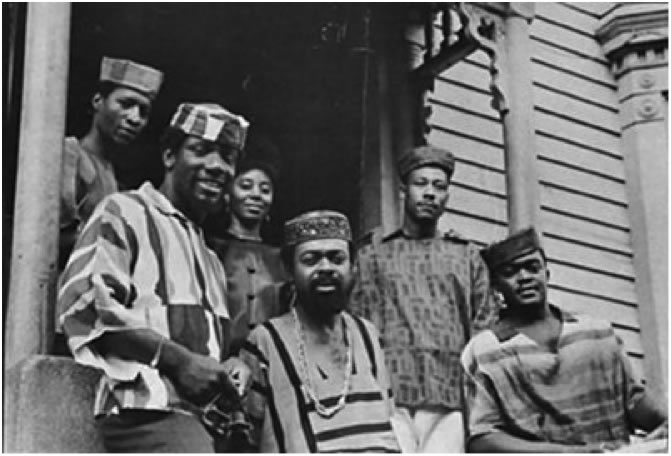
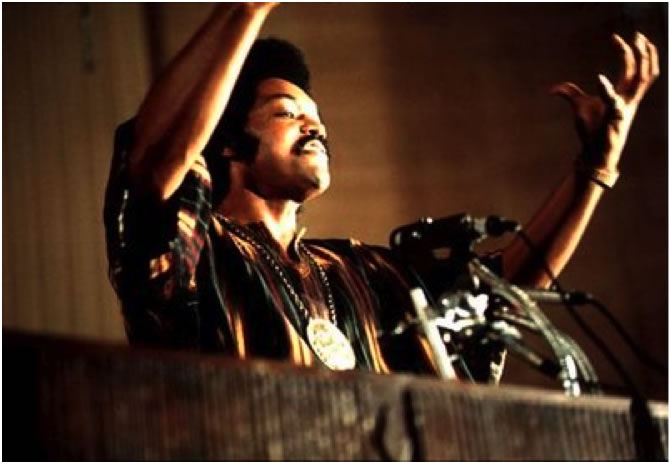
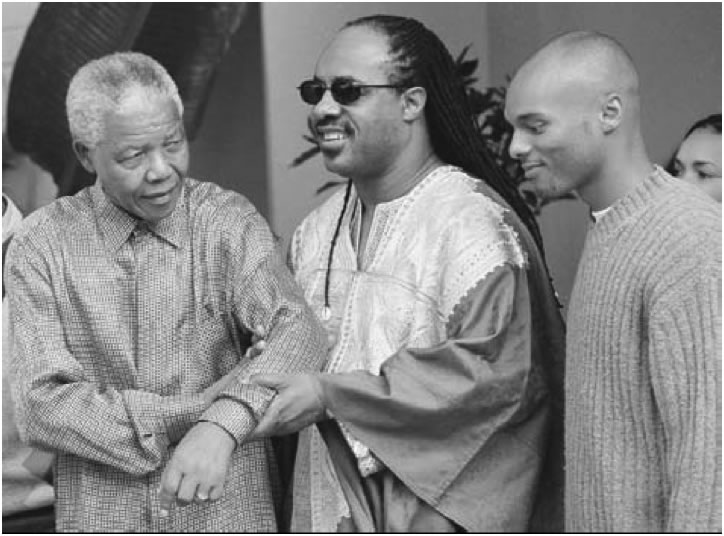
Many men wore outfits like this to express their connection with Africa, even if they have never been to the continent before. As well as political leaders like Jesse Jackson, pictured in the second image, who wore a dashiki while addressing an audience. Some men continue to wear dashikis on festive occasions like, Stevie Wonder (in third picture) who wore a dashiki while in Johannesburg, in 1998.
The desire of equality continued to be longed for way after Martin Luther King’s “I Have a Dream” speech and the release of Nelson Mandela from prison. Which is why these photos taken in the 60s are still so powerful to people in even a “post-racial” America. These photos are still relevant in an America that has supposedly gone beyond race with the election of Barack Obama, the first black president, because racial issues still arise, (ie. Erica Winchester ) and aggressive racist rants are rampant on websites and comment boxes (like James von Brunn, the man behind the shootings at the Holocaust museum in 2009, posted things such as “Hitler’s worst mistake. He didn’t gas the Jews” on websites).
To truly understand the significance of what Sidibé and Keita captured we must place “photography within the context of certain traditions of the image not entirely analogous to this moment in the history of the image, especially in the West.” (Matt, 9) What went on in America in the 60s and 70s greatly impacted what happened in other parts of the world, influencing minor things such as fashion choices as well as major political and social change. The independence of many African countries and the end of apartheid also impacted the world, especially Black Americans who supported them in their struggle and felt as though they were fighting with them at home. Black nationalist like Malcolm X, Stokely Carmichael, Huey Newton, Bobby Seale, Angela Davis, struggled for economic and social equality at the same time African leaders were struggling for independence and respect. The late 50s and 60s were trying times for both Africans and African Americans. Numerous events occurred that both helped and harmed the movements on these two continents. Within these years progress was made in several African countries like Cameroon, Togo, Madagascar, and Zaire who gained independence, the admittance of the first African American student at the University of Mississippi, and the creation of the Organization of African unity (later African union). But many other devastating occurrences happened also, like the jailing of Nelson Mandela, the increase of violence in apartheid South Africa, as well as the assassination of Martin Luther King Jr., Malcolm X and Patrice Lumumba.
Sidibé’s photos expressed the joy of life and carefree attitude that many tried to maintain even in uncertain times. His work is a “living testimony to a epoch in which Africans believed that everything was possible.” (Matt, 94) This joy that he captured radiated through his photos as well as off the screen when the images were recreated in Jackson’s video. As John Henley a journalist for the Guardian states, Sidibé ’s work captured “the pride and exuberance of a generation of young Africans during two decades of momentous – and euphoric – social and cultural change.”- (Henley, 2010) A generation who no longer wanted to be associated with tragic fractious wars or deadly viruses but with having a good time on their own terms. Countering negative images and foreign media by documenting themselves celebrating life in clubs showing off their personal wealth.
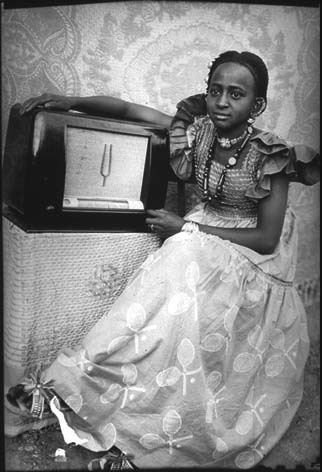
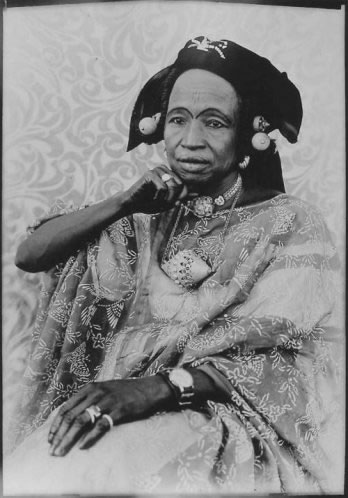
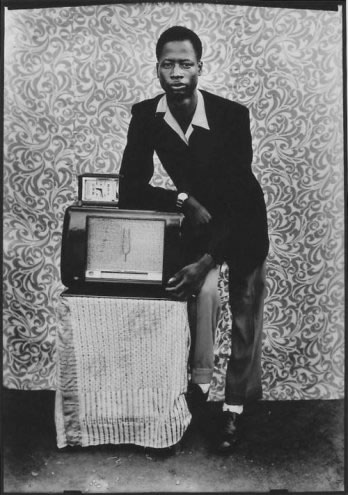
Untitled, 1951, Seydou Keita.
Untitled, 1954, Seydou Keita.
Untitled, 1952-1955, Seydou Keita.
When people went to get their photograph taken, they made sure they looked their best, women wore their most expensive jewlry and those who did not have anything to show off would use props like the motor bikes, TVs, and the radio that is in both shots.
Many YouTuber viewers commented on how the video was touching or as BreSooFlY put it, full of “meaning and purpose.” Others said it showed the “true beauty of Africans” and that they were proud to be black. In another music video by a Cameroonian artist, Manu Dibango, titled “Woa” that also used Sidibé’s and Keita’s photographs as inspiration many comments mirrored those of Jackson’s viewers. Youpcss said “this video makes me proud to be African” and Dalubbe gives kudos to the artist and photographers expressing how “we are all proud of his beautiful works.” While another YouTuber said everyone who is a part of the African diaspora can “listen and feel the source from which the river flows…when you can feel this, hear every flex of layered simplicity wash over you, you will have known rhythmic beauty.”
Although the song does not directly bring up race or mention the end of South African apartheid or the independence of African countries the video takes on the challenge of representing these issues and people. These photos taken in clubs and portraits taken in Keita’s studio are images made by and of Africans. Before photographers like Sidibé or Keita were behind the camera lens photographs of Africans were often times made to reinforced stereotypes of the native or as Gregory Woods, a photographer and writer living in northern California states as “exotic fantasies meant for the consumption by non-Africans.” However the video as well as the photographs showcase men and women staring directly at the camera as if announcing their presence and posed in ways that exuded confidence. Re-defining how Europeans viewed Africans, no longer subject to European control. A new national identity had emerged and documented through these photographs.
This photo by Malick Sidibé criticized many of the pictures that were circulating in the Western Hemisphere that showed hungry children with swollen bellies and Africans with “tribal” face paint. The photo does not attempt to disprove that children do go hungry in some areas or that many societies color their bodies for ceremonies but is drawing attention to the fact that those picture do not encompass all of Africa. Poking fun at the ignorance that many Europeans have toward Africa.
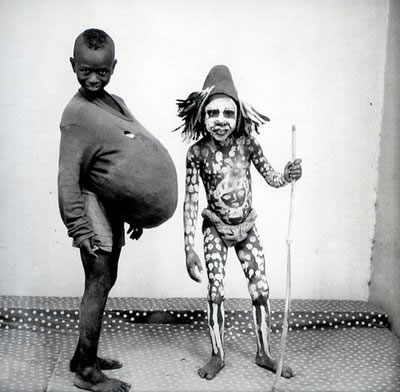
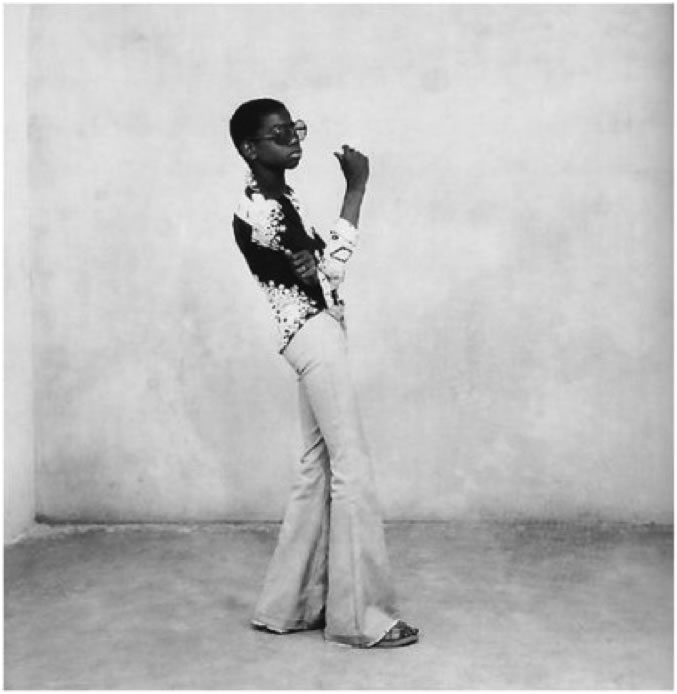
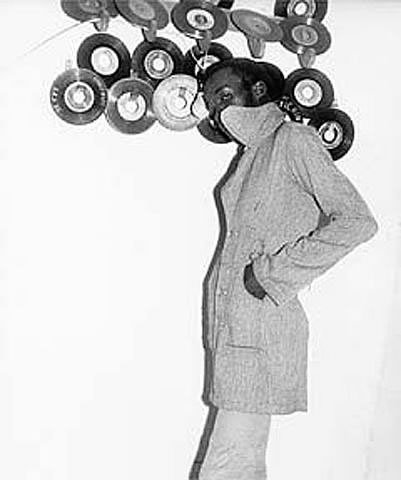
A Ye-Ye Posing, 1963, Malick Sidibé.
Fou de disque, 1973, Malick Sidibé.
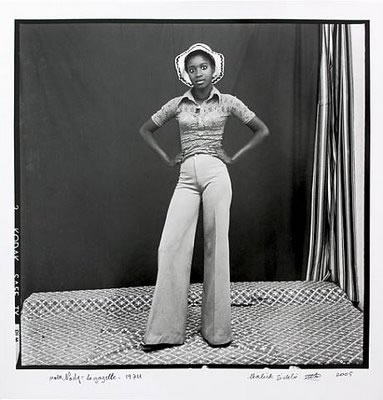
La Gazelle, 1974 by Malick Sidibé.
This video has become an inspiration for some like blogger Andrea Pippins who has a BFA in graphic design, worked professionally for Hallmark Cards, Worth Global Style Network, and TV Land. In 2006 she began curating her fashion, art and design blog named Fly, as a resource for all to enjoy including her 1318 fans as well as countless others who visit her site. (Fly, 2006) On one of her post she put up still shots from Jackson’s video and recreated the “retro” looks found in the video by showcasing pieces such as wooden sandals and dresses with colorful prints to create an ensemble that incorporate the “the pop culture and historical references, the textures and patterns that were within the video."
http://flygirls.typepad.com/fly/2010/01/janet-jackson-got-til-its-gone.html
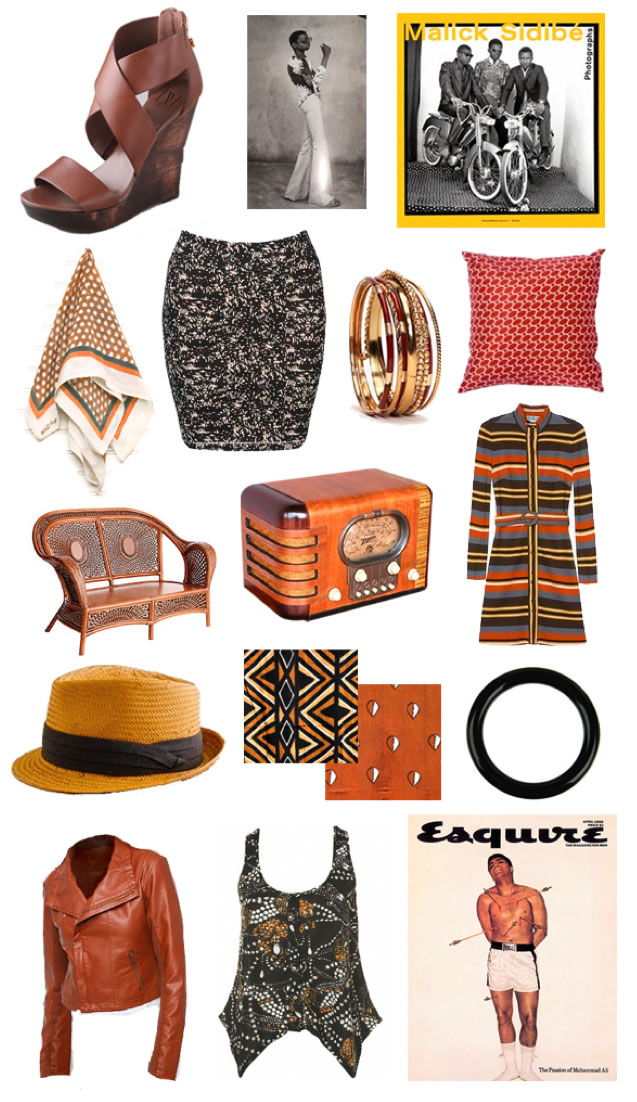
She proclaimed that "one can't help but be inspired" by "the retro aesthetic playing seductively throughout the video." On January 4, 2010, Puregoldlady complemented Flys choice of Silk Blockprinted Bandana, Faux Leather Max jacket, and Straw Suiting Trilby Hat, telling her "I love how you were inspired and picked such amazing items after watching the video." Another fan commented that the video "makes me proud to be African. Black is Chic". Whether for their fashion sense or the free spirit the young adults photographed by Sidibé and Keita are still influencing contemporary culture all over the globe. Music videos like Jackson's and Dibango's keep these images alive and reaching wider audiences. As Bunmi Olorunto, author of a blog named "A BOMBASTIC ELEMENT" that has had 2473 hits, puts it "music videos traffic in symbols and no other symbols of emerging postcoloniality are as iconic as Malick Sidibé 's photographs of Malian youth from the 50s and 60s." Through the use of media people like Olorunto can see images of young adults in the past and can be encouraged to start change of their own, in the political arena, art world, or their own community.
This video has been seen by thousands, shared on message boards, blogs, and in classrooms. These two photographers have had facebook fan pages made in their honor (Keita having 835 fans and Sidibé 1,1690) with people expressing their admiration for their work, posting their favorite work by them and informing other fans about exhibitions and documentaries made in remembrance of these artist. Post such as Rachel Landman's post on June 25th who said "Wonderful work! Saw the documentary last eve. Here is a wonderful project fyi: www.shootnations.org." And Mistah Brown who said on April 8th that "We went to the exhibition at the Lichfield Studios today - beautiful images! If you ain't been yet, get your skates on - think it ends pretty soon..."
These post show how art is being used to bring people together no matter their race, location, on language. Testifying that many who have seen their photos in museums, open exhibits and/or in music videos find their view their work meaningful, impactful, and inspirational.
Through the medium of the internet, fashion blogs, online art magazines, music videos, and international news websites relationship have been formed, information has been shared, and the world has become a bit smaller. Not in physical size but in the distance between continents have been decreased by technology, which allows us to communicate with people all over the world. Allowing us to learn from each other and share personal experiences instantly. But even before Skype, facebook, orthe internet people like Sidibé and Keita were communicating with the world through film, because as mentioned before “pictures offer instant communication” to better understand the unknown. These pictures will continue to foster communication, debate, and discussion as long as they are not limited to the four walls of a building or shoebox but made public to viewers in the ways it has been shown throughout this essay.