Peru 2009
In early 2009 we received a phone call from Australia. It was the Dowds asking if we
were interested in a little trip; to Peru! So in November the Dowds arrived in the US
with a plan for our trip. We boarded a plane for Miami and the transferred to a plane
leaving for Lima, Peru. We arrived in Lima and were met by a guide who took us to a
hotel in the Miraflores section of the city where we got a few hours sleep followed by
a quick lunch and a trip back to the airport to fly to Cusco and then on to Juiliaca,
where we were picked up for a drive to Puno on Lake Titicaca at nearly 13,000 feet altitude.
|
Day 1: Arrive in Lima, fly to Juliaca, Sillustani, Puno
When we arrived in Lima it was the wee hours of the morning so we were met by a guide
who took us to hotel in the Miraflores district where we could get a few hours of sleep.
We got up to have lunch at a local restaurant and then were picked up by our transport
to go back to the airport for our flight to Juliaca that stopped on the was in Cusco. The
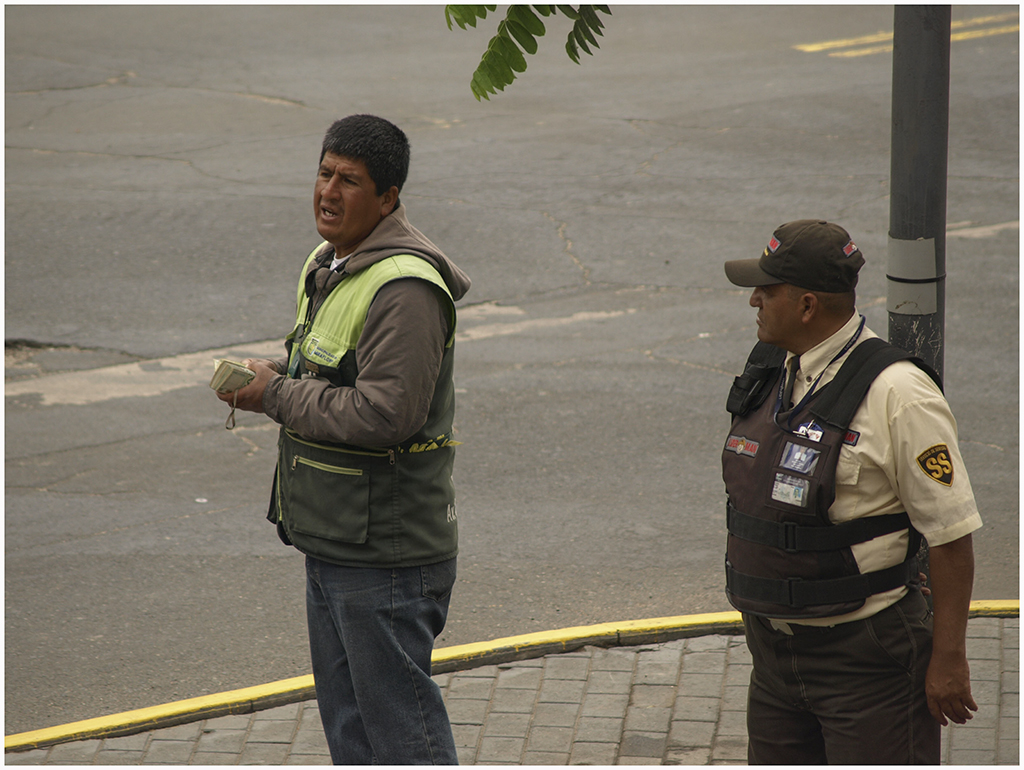
picture of the moneychangers was taken from our hotel window. It seems to be an unusual
quirk of Lima that when you want to exchange foreign money you can do so on the street with
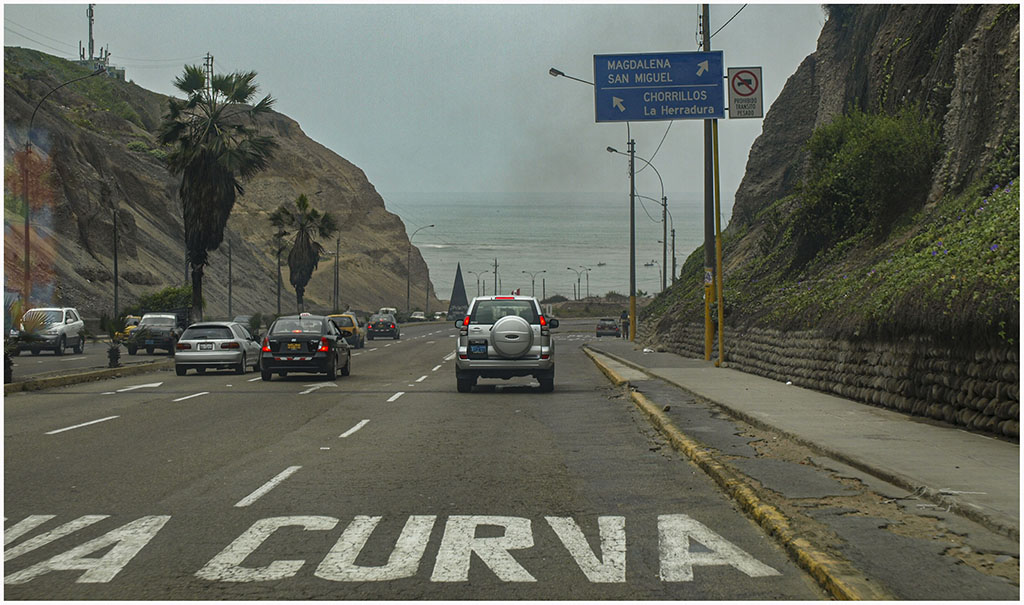
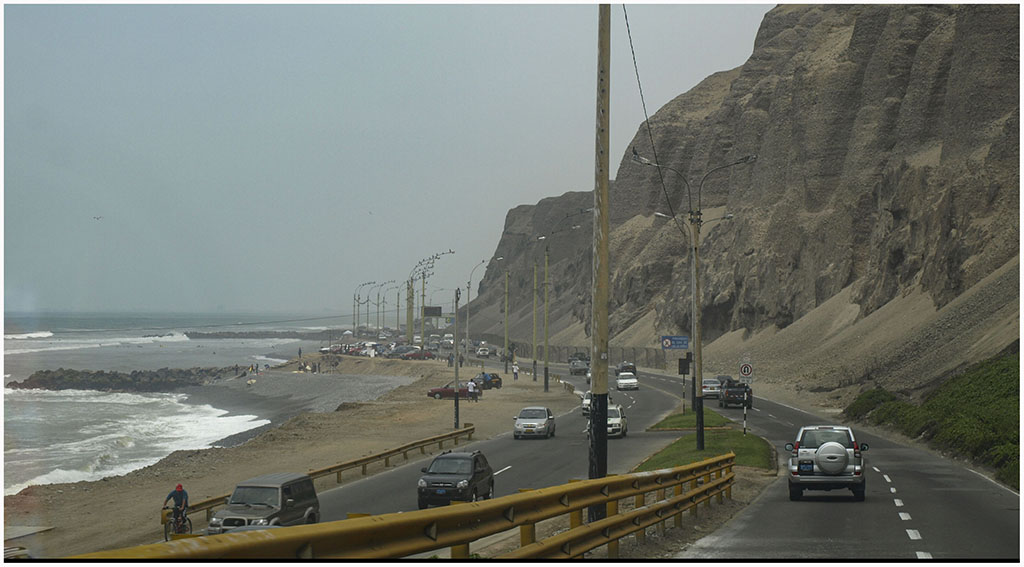
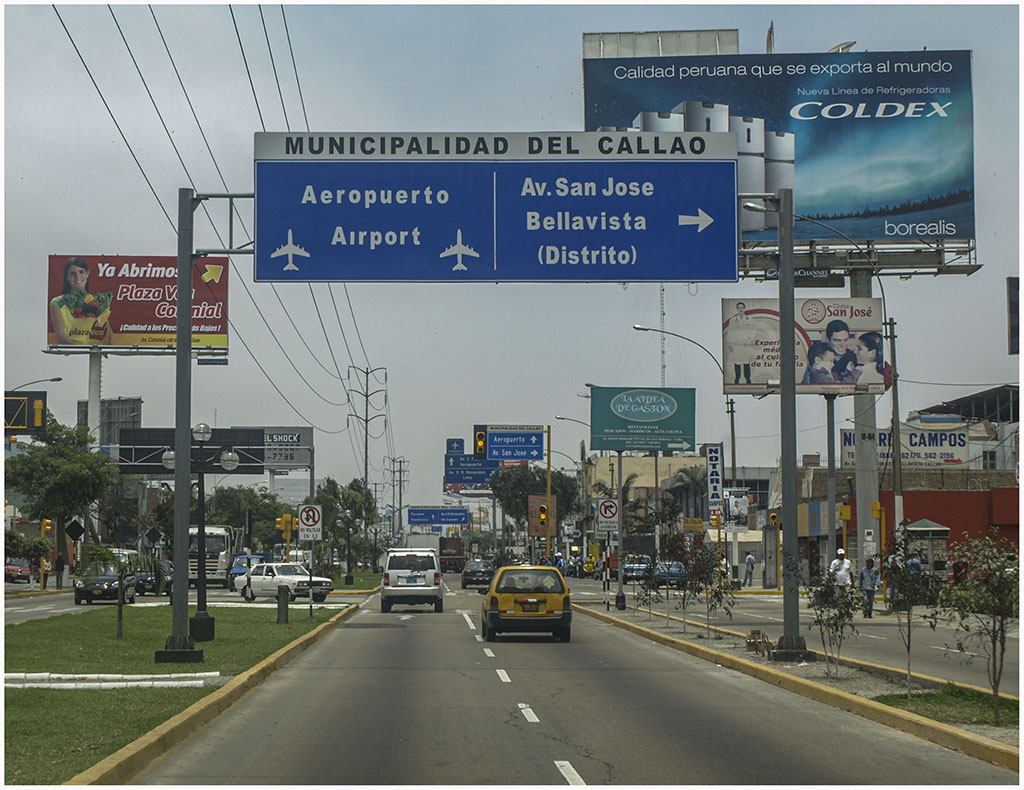
a guard there with him. On the way to the airport we were driven down to the Pacific Ocean
and then along the Ocean Road and back up to the airport for our flight.
|
|
|
Street Money Changers in Lima
Lima Road to the Ocean |
|
|
Ocean Road in Lima
Road to Lima Airport |
|
|
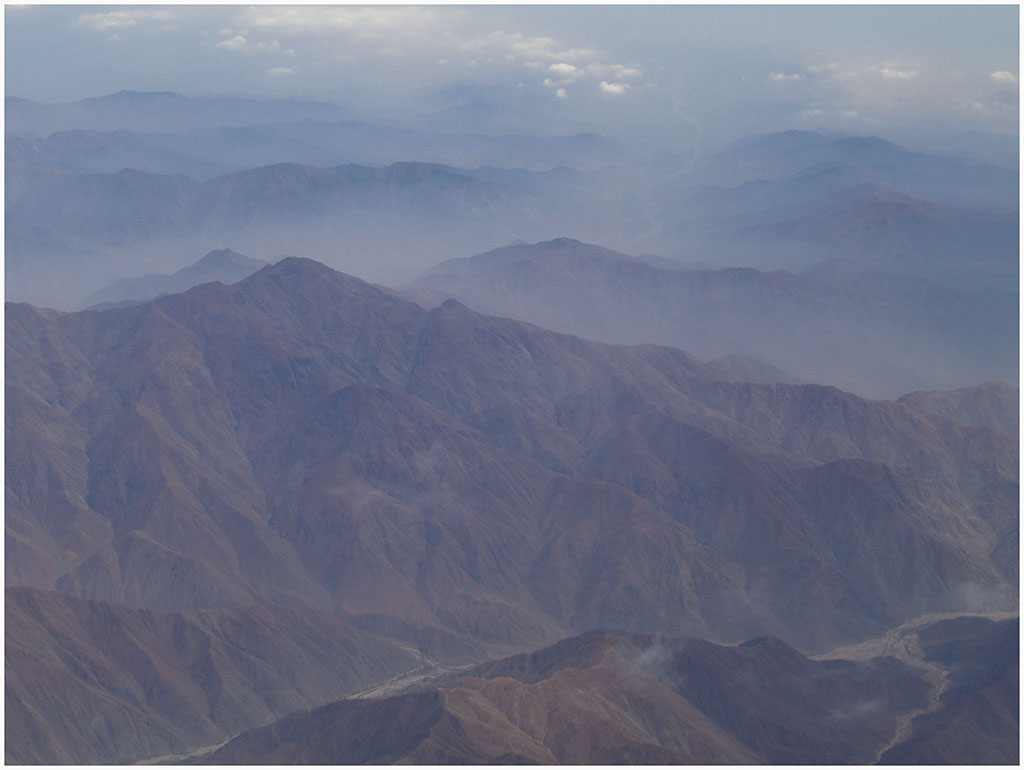
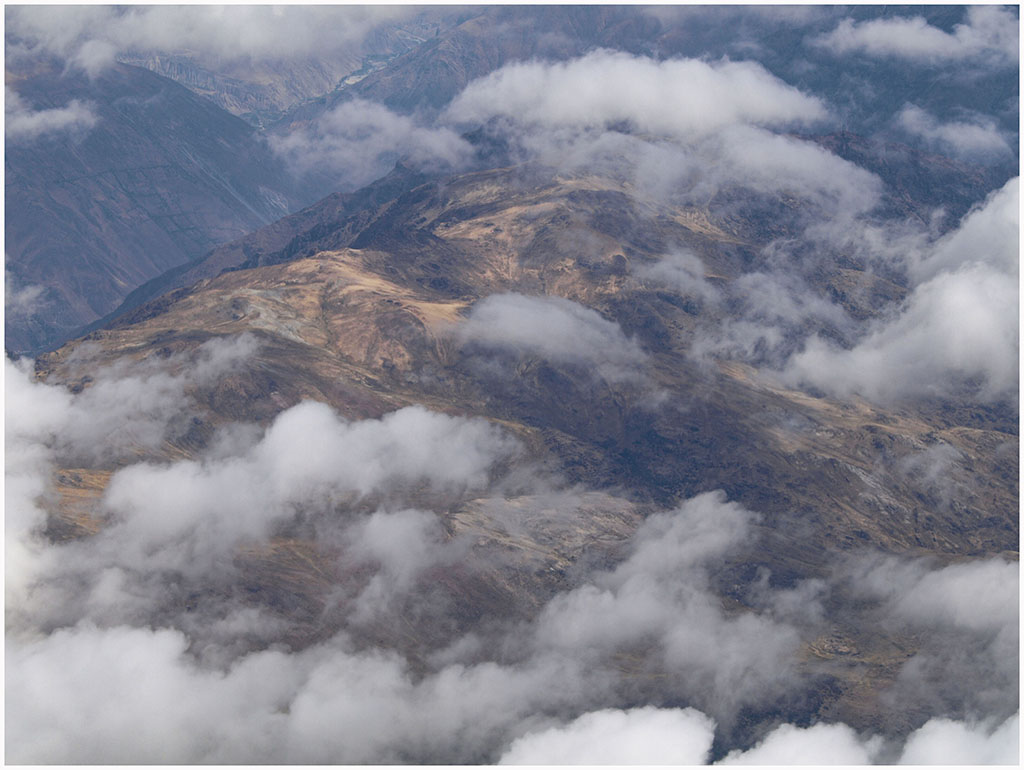
Over the Mountains to Juliaca
Flight to Juliaca |
|
|
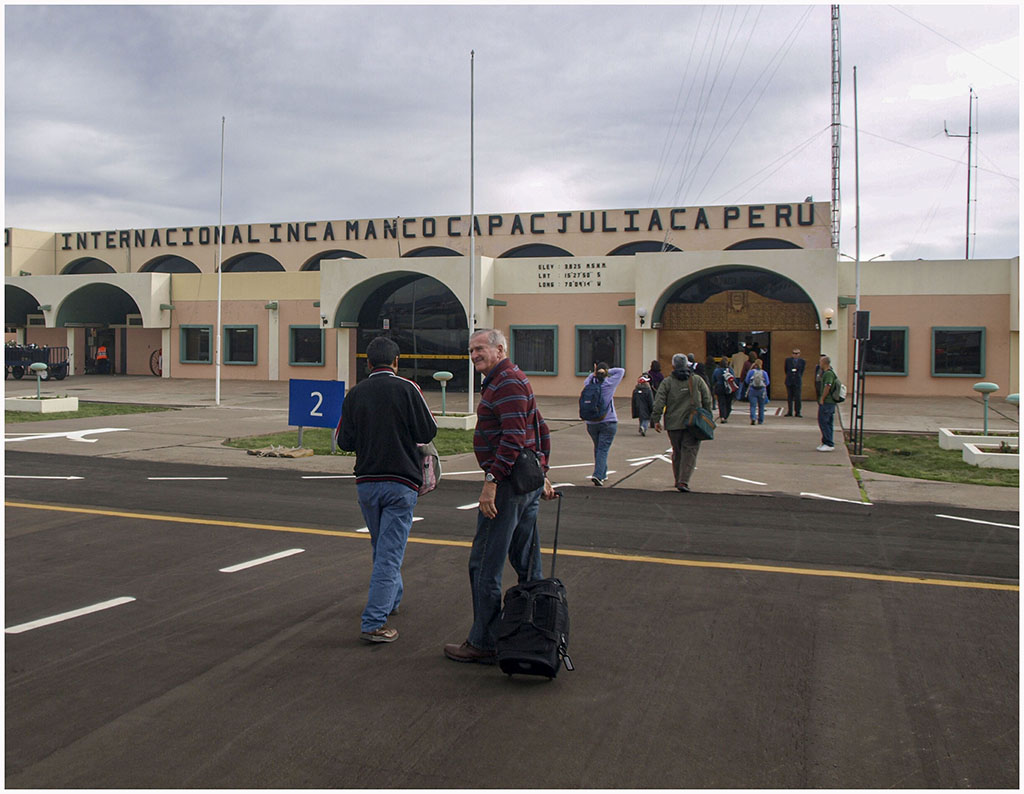
Arrival at Juliaca Airport
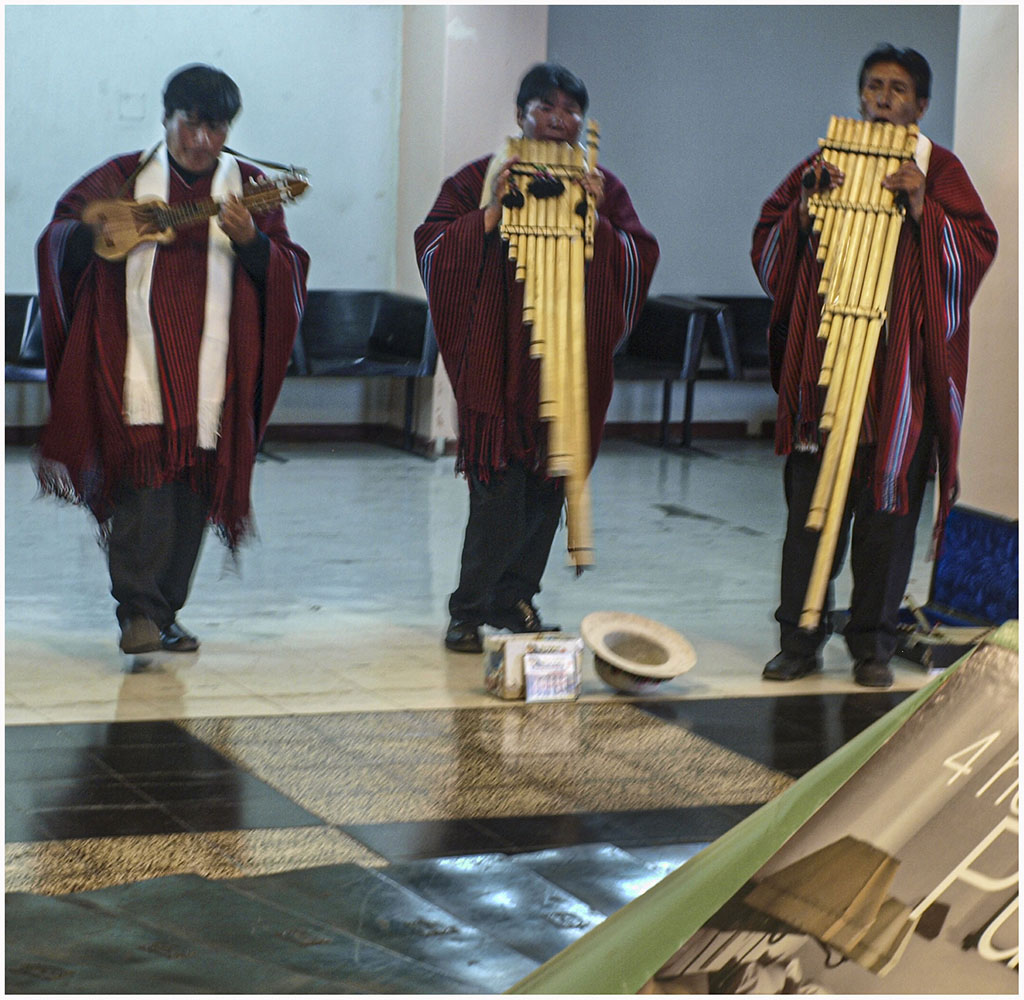
Music at Juliaca Airport |
|
|
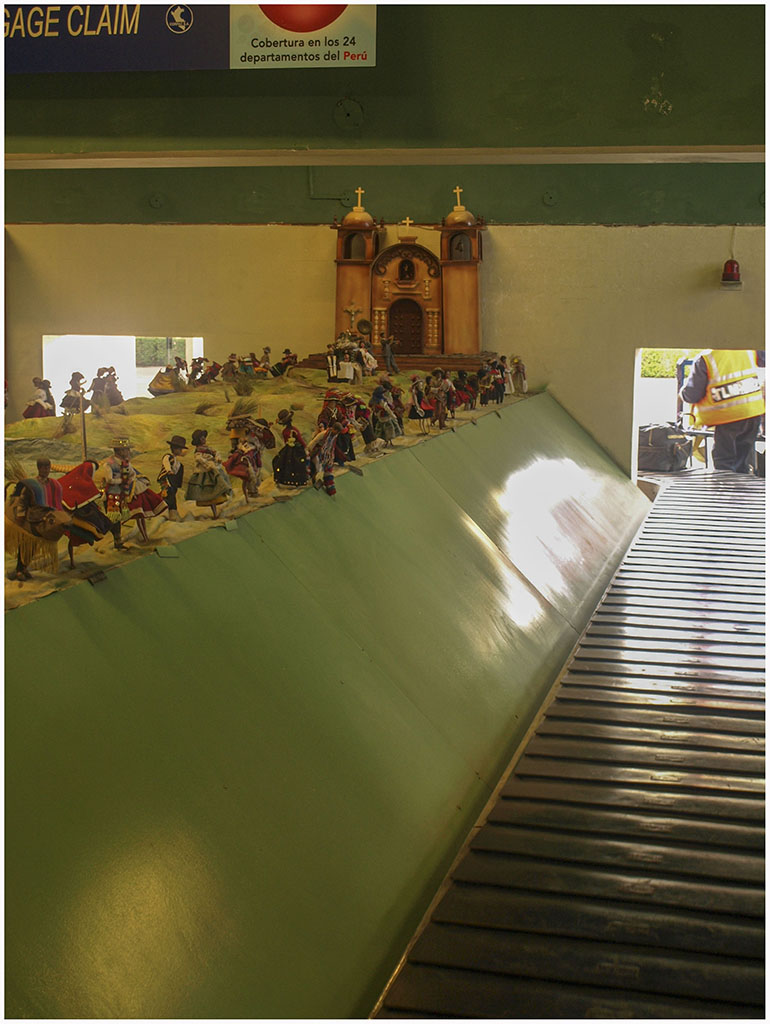
Juliaca Aiport Baggage Claim
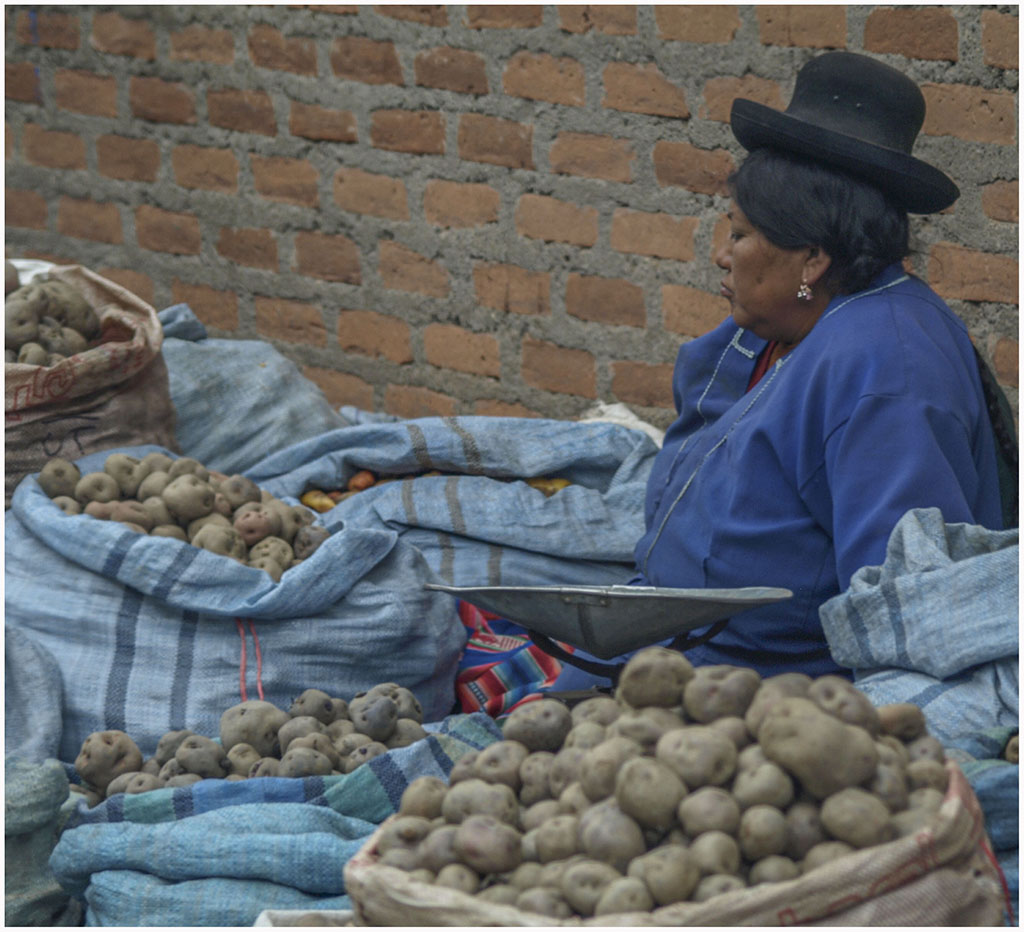
Juliaca Street Vendor Potatoes |
|
|
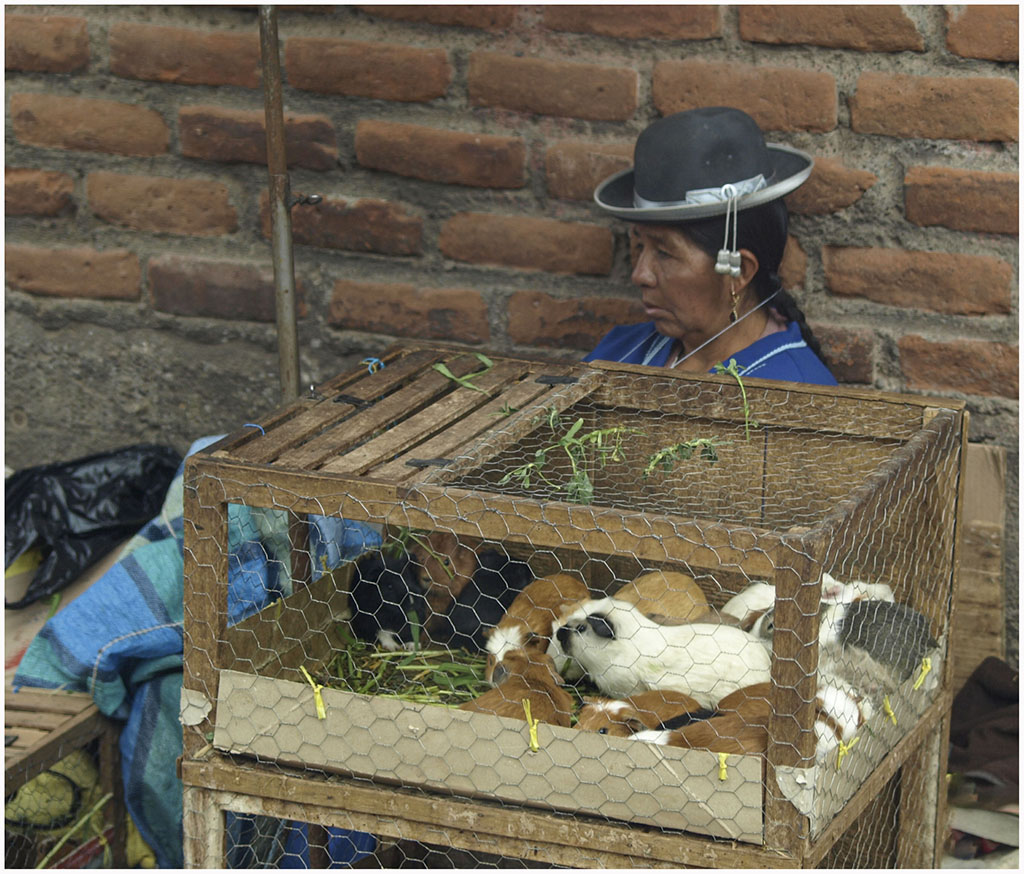
Julica Street Vendor Guinea Pigs
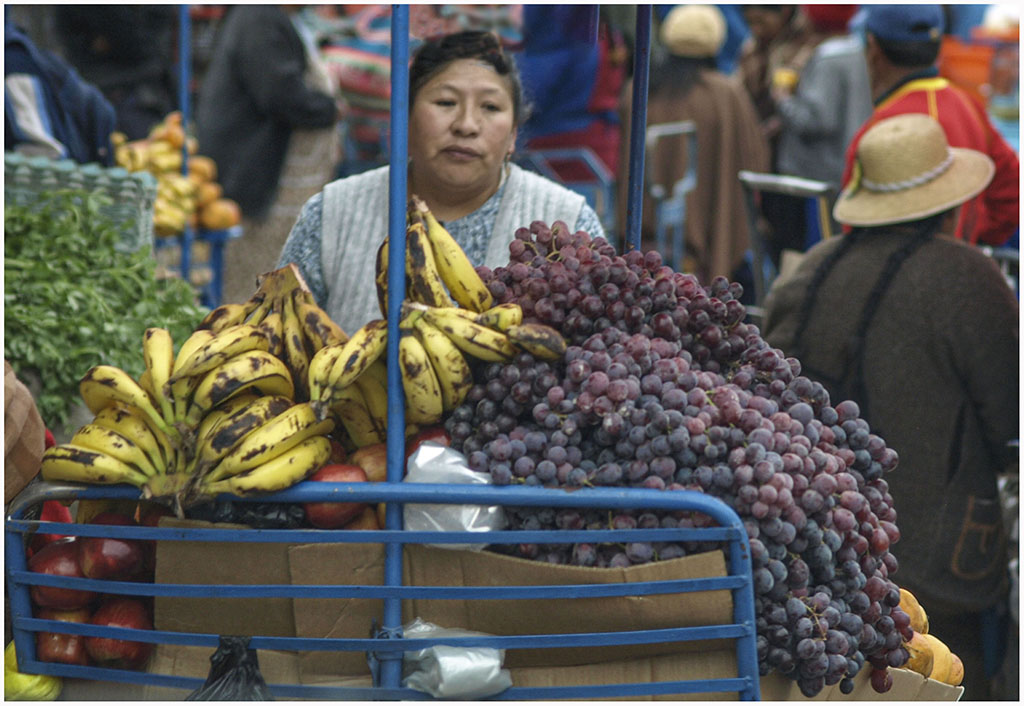
Juliaca Street Vendor Fruit |
|
|
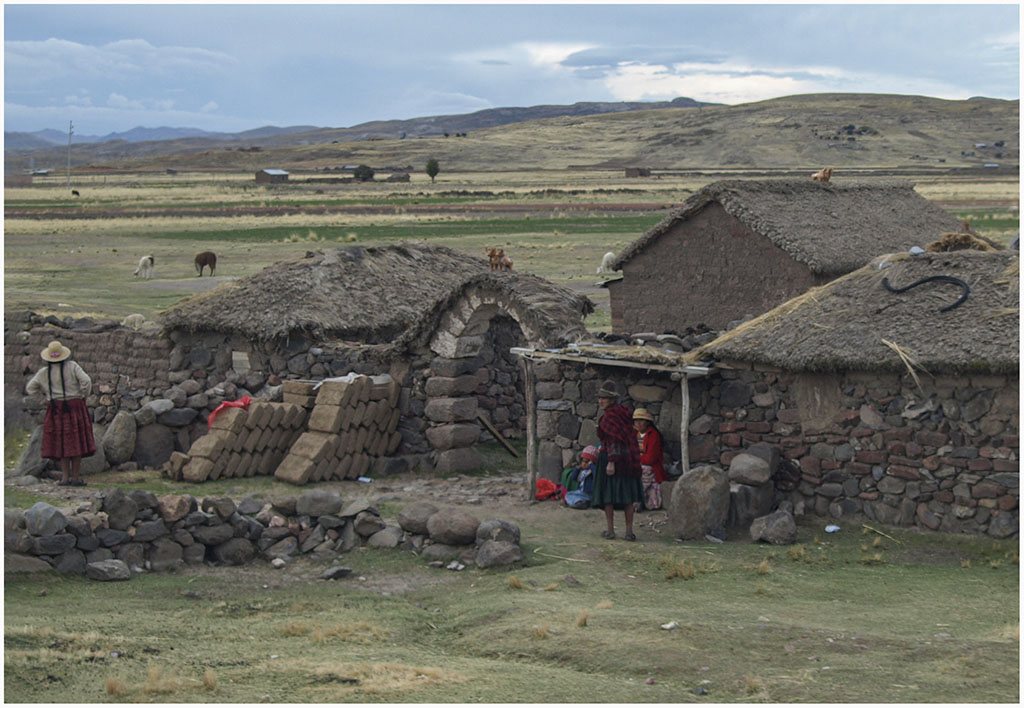
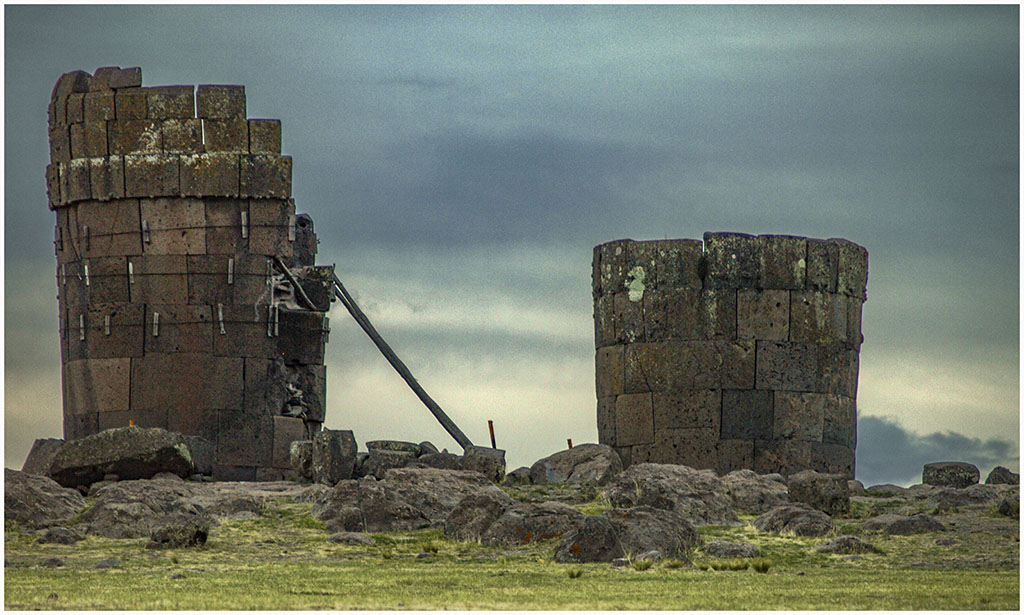
Sillustani Village Homes
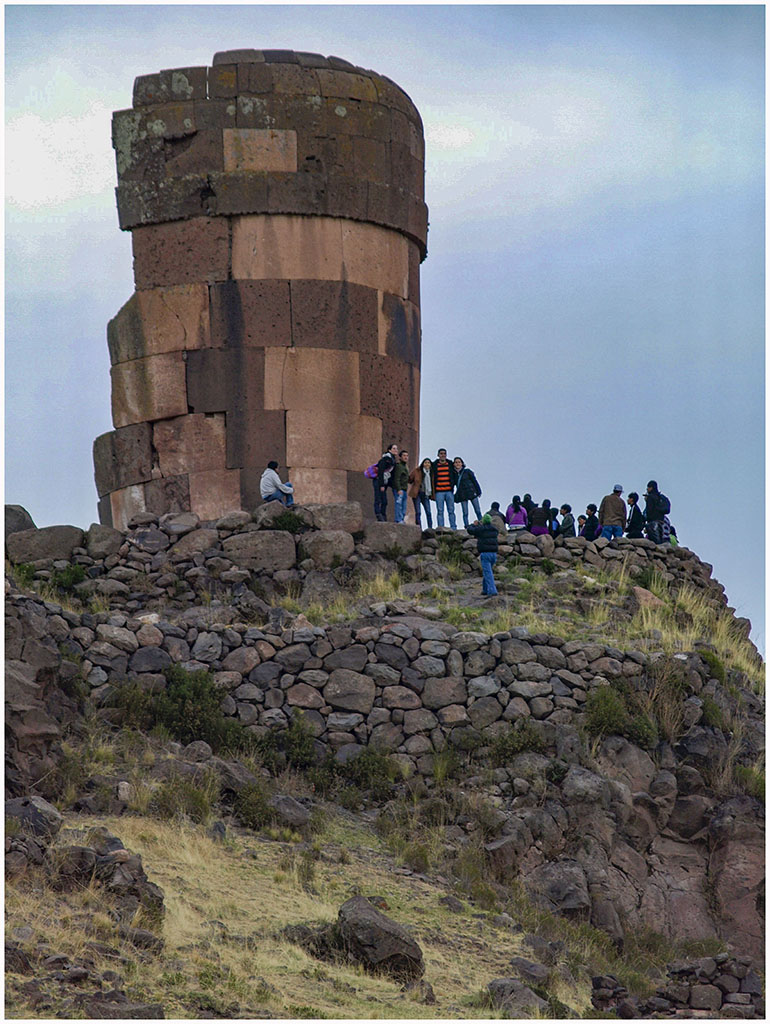
Sillustani Burial Tower |
|
|
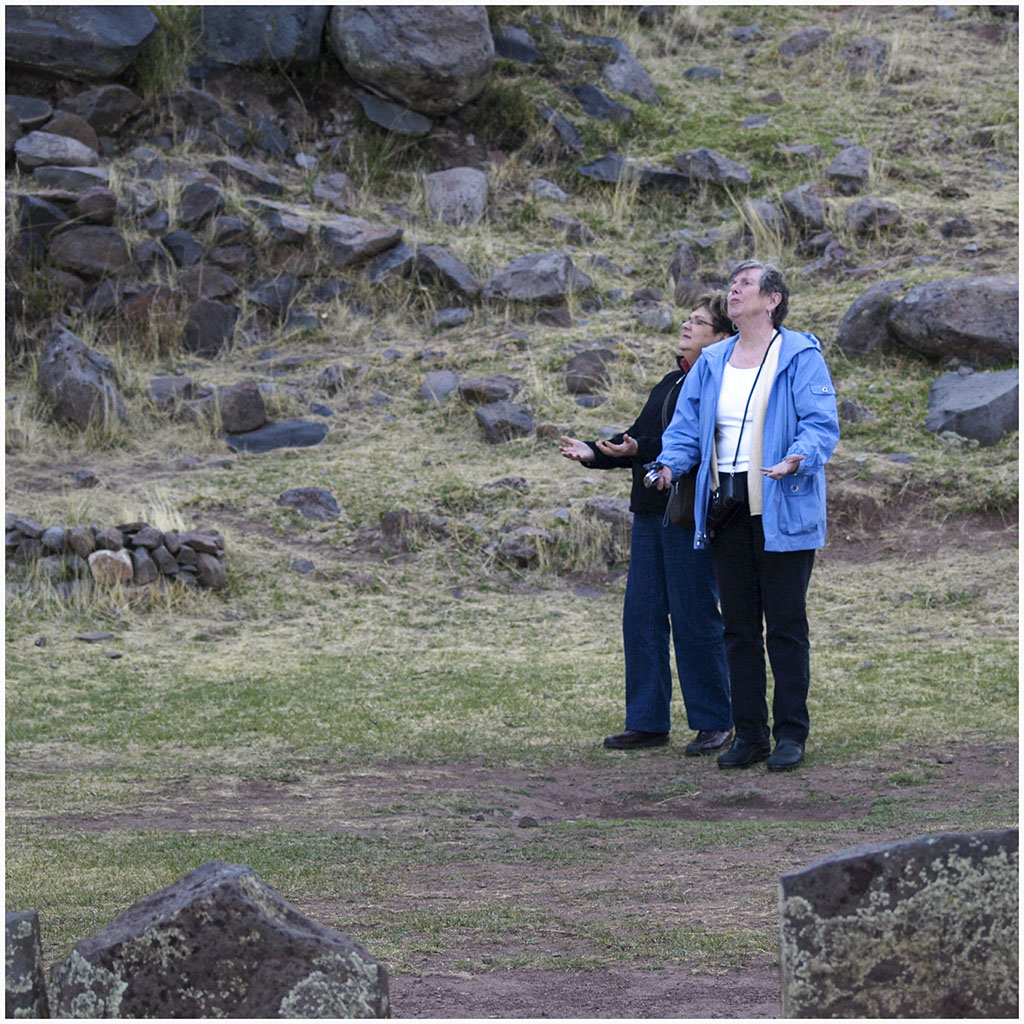
Shirley and Trish Honoring the Burial Tower
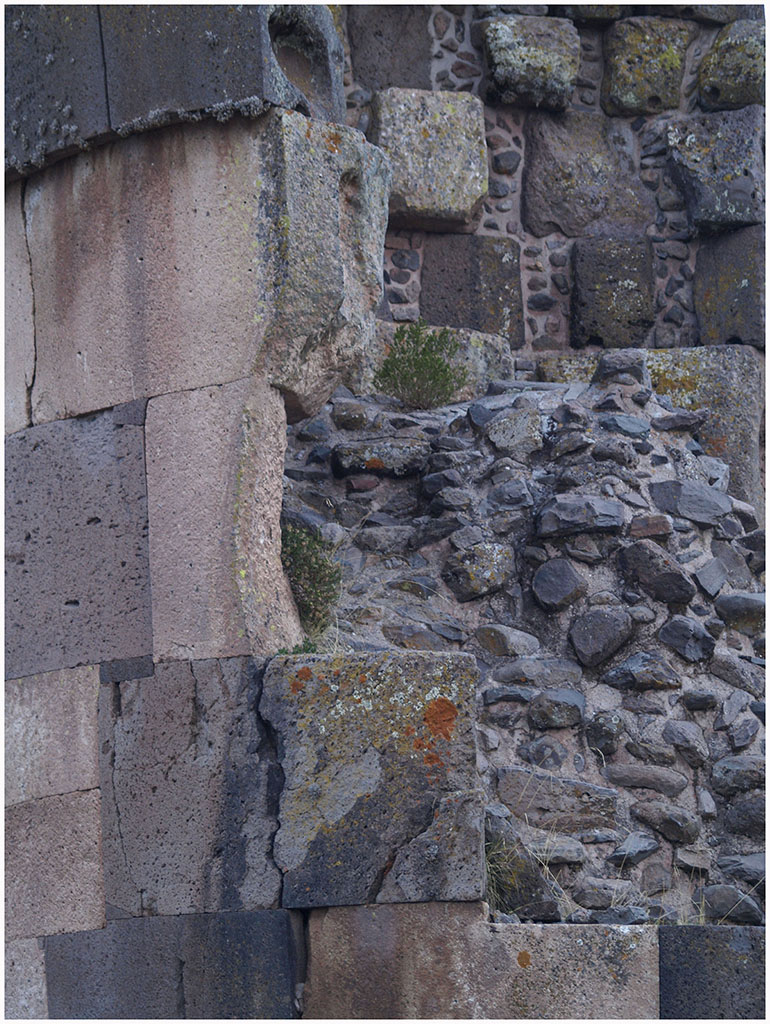
Sillustani Stonework |
|
|
Sillustani Burial Towers
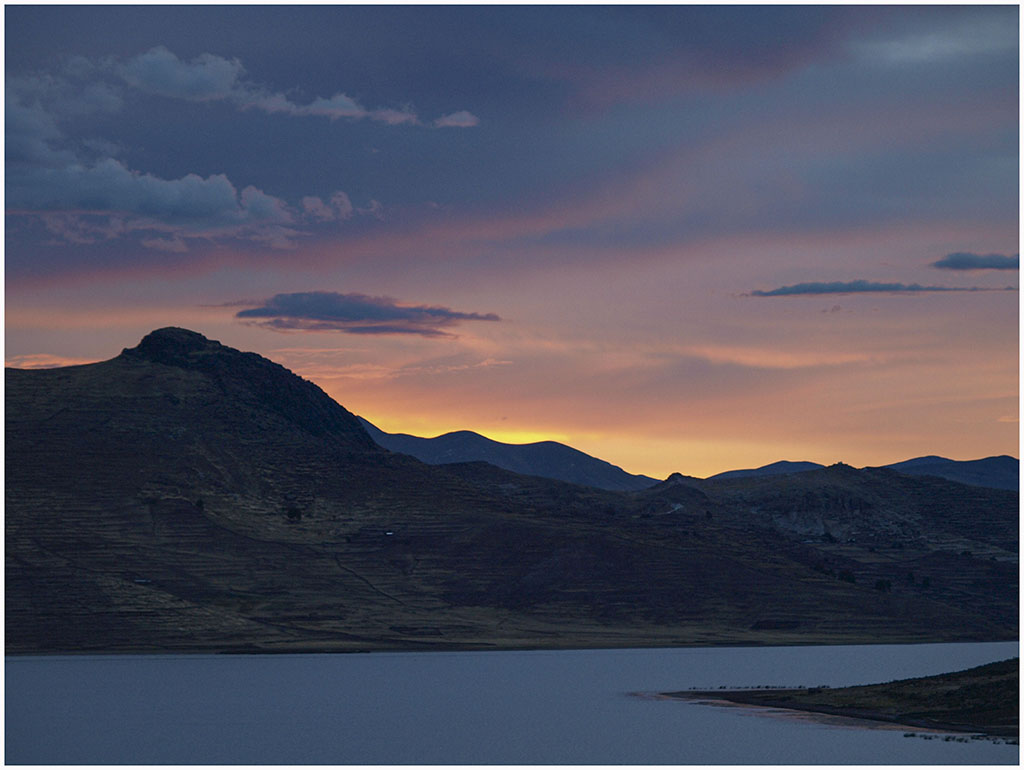
Sunset Over Lake Umayo |
Day 2: Lake Titicaca, grass islands, Taquile
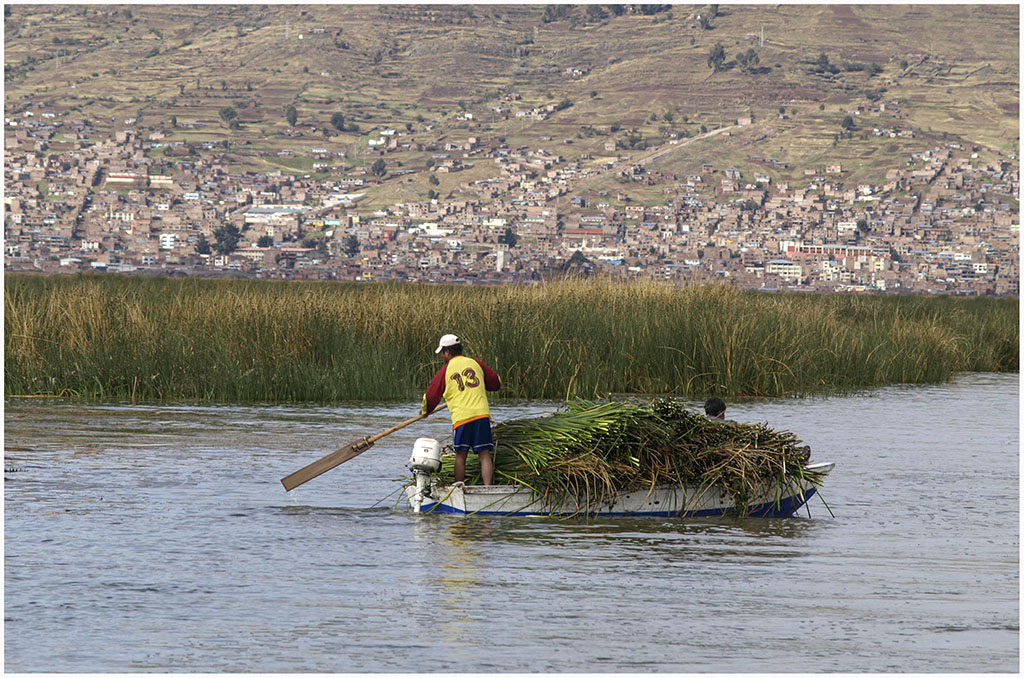
On day 2 we woke up in Puno and headed down to Lake Titicaca for our boatride adventure.
We headed out onto the lake located at altitude of 12,500 feet. One of the first features
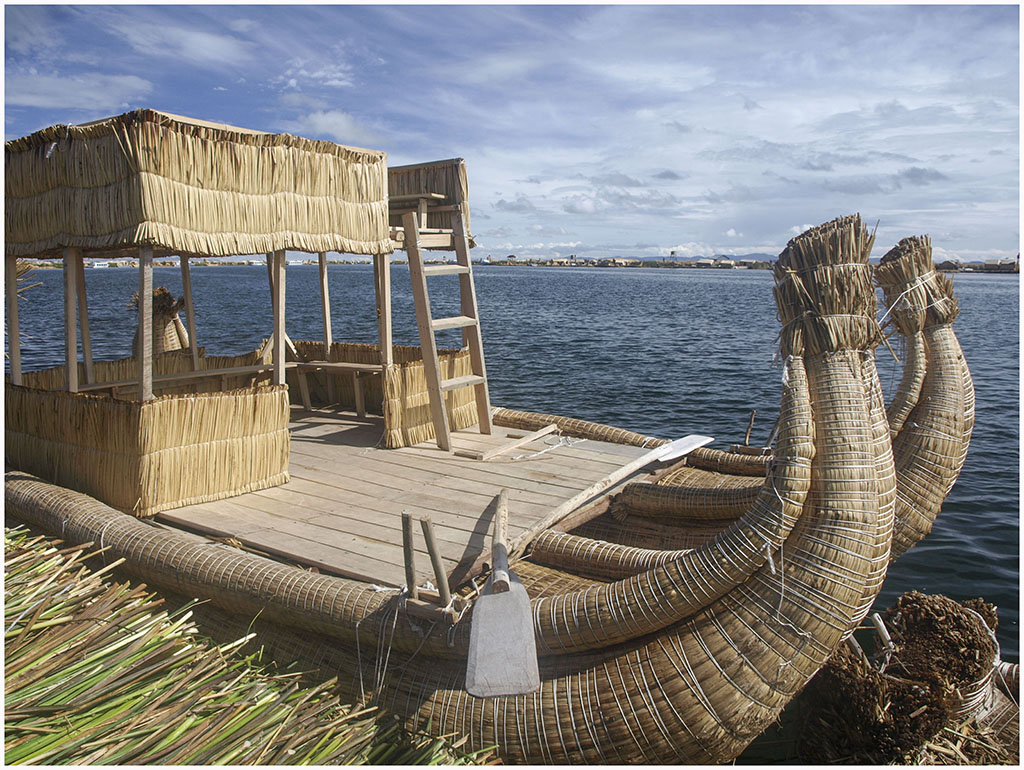
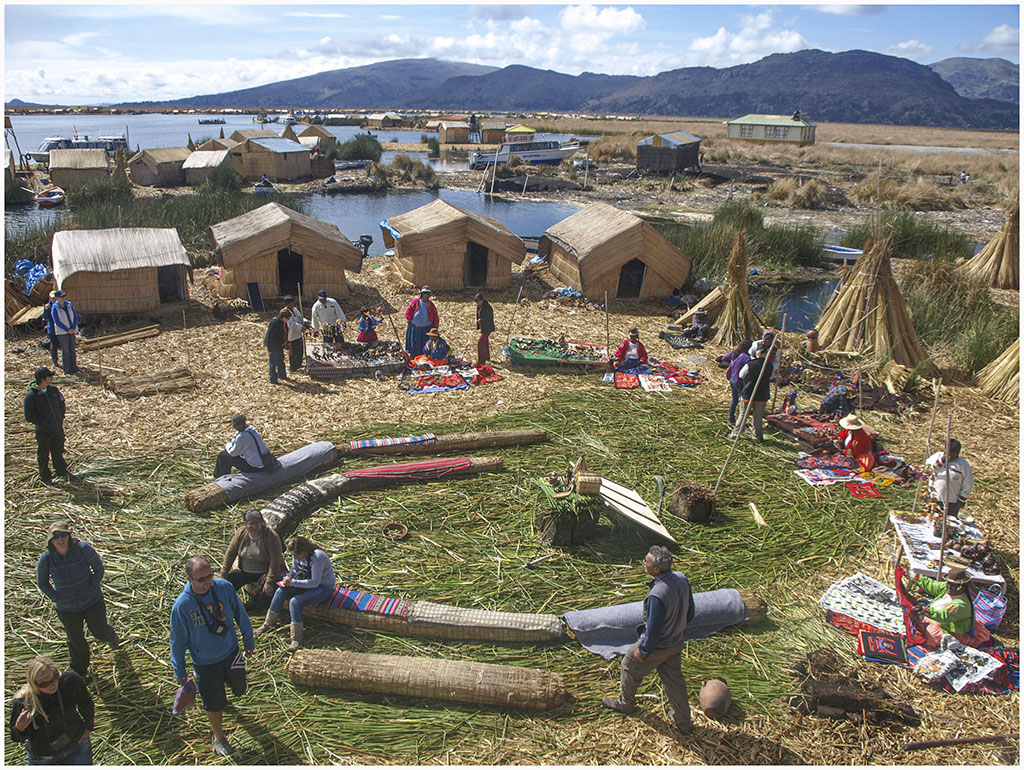
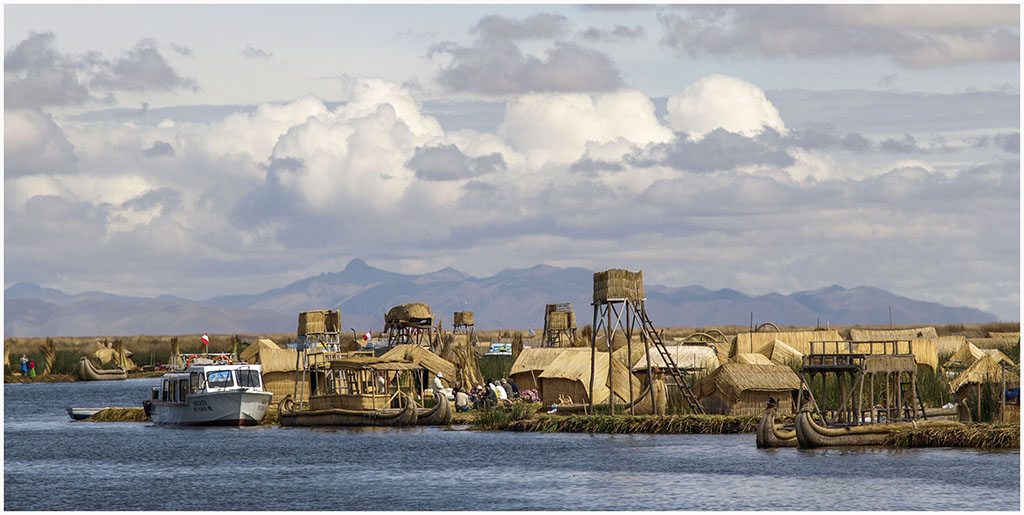
of the lake was the section with acres and acres of reeds. There was a whole group of
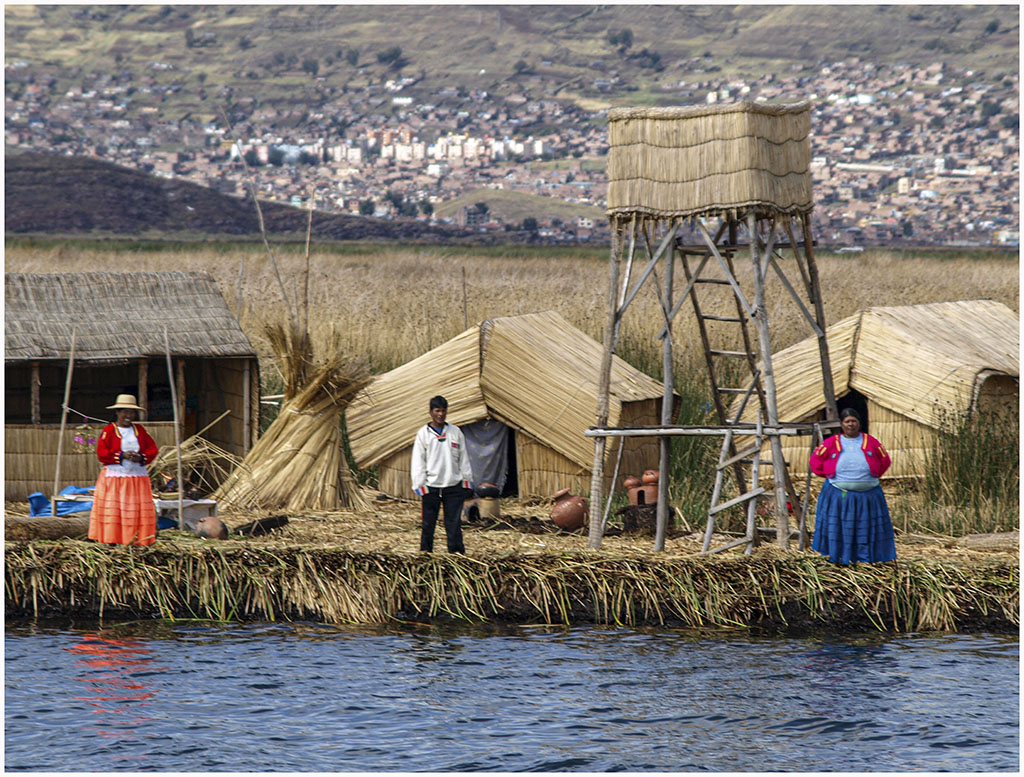
Incas who at one time were driven to the lake by opposing forces and figured out how to
weave the very coarse reeds into floating islands with reed houses and boats and lookout
towers. It is an an amazing sight to see these many islands that still exist today with
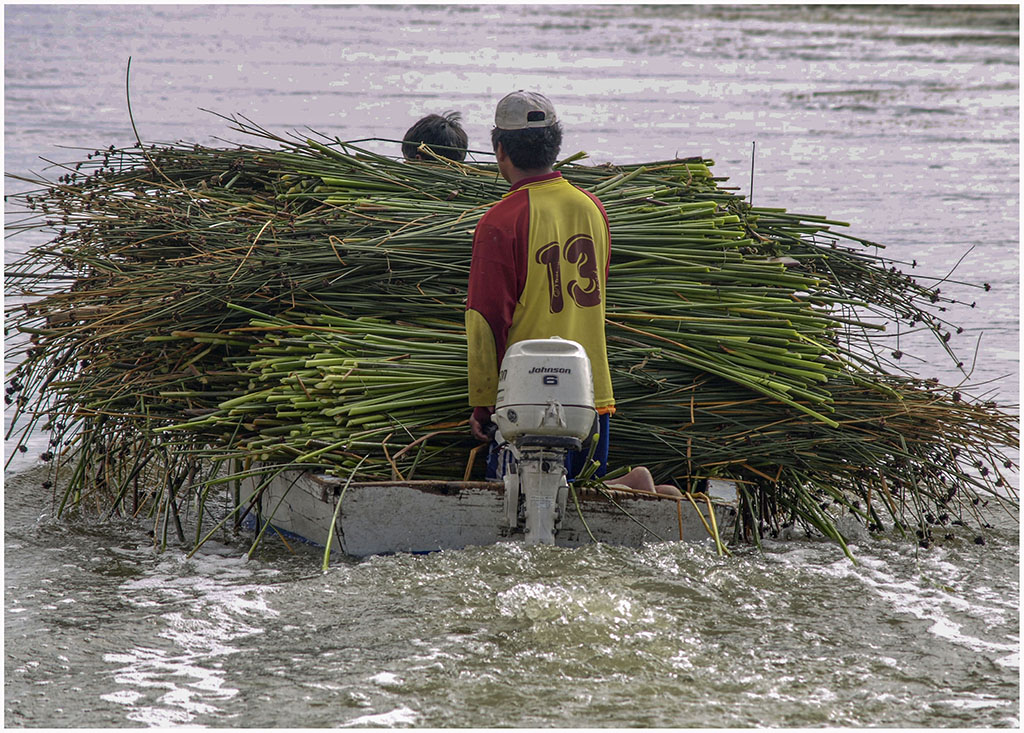
thousands of residents. On the way out we saw severarl reed-gather boats loaded to the gills.
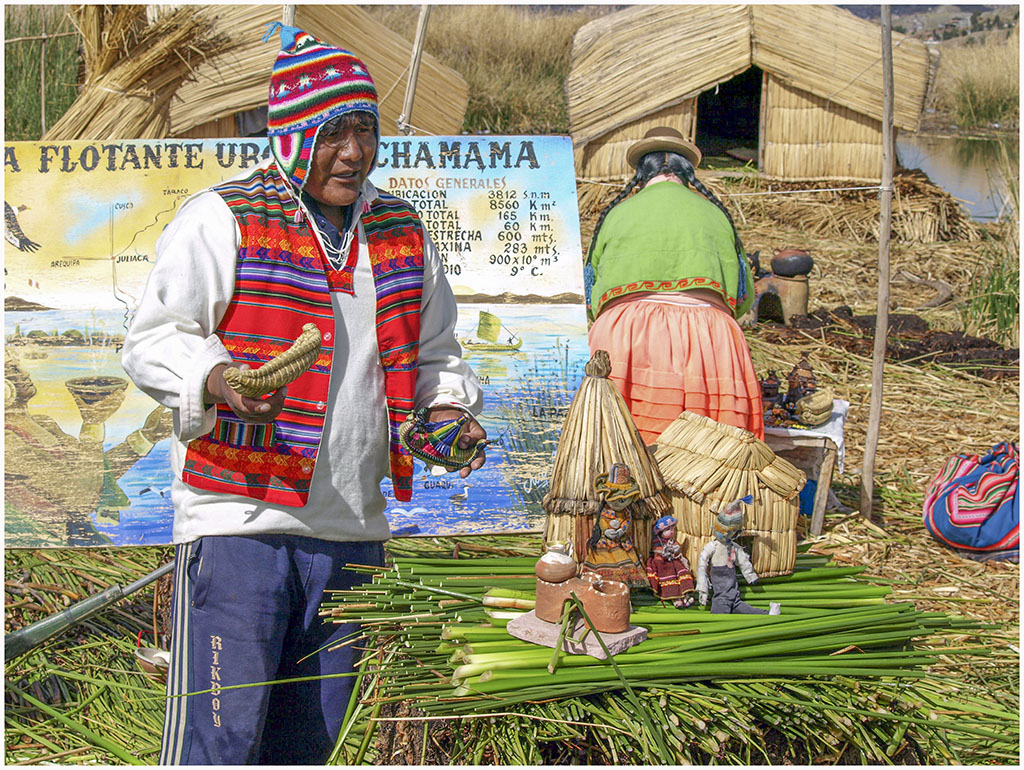
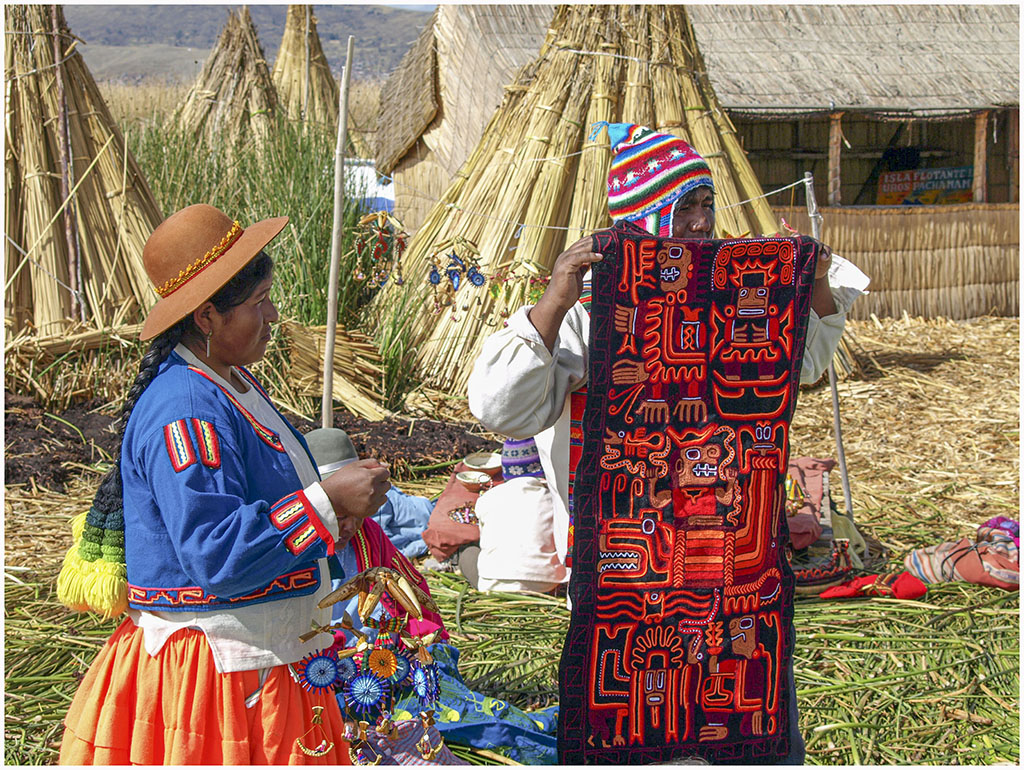
We stopped on an island where we were greeted by the Head Man (the Pachamama) and several
residents who were engaged in weaving activities. We didn't see the actual weaving of
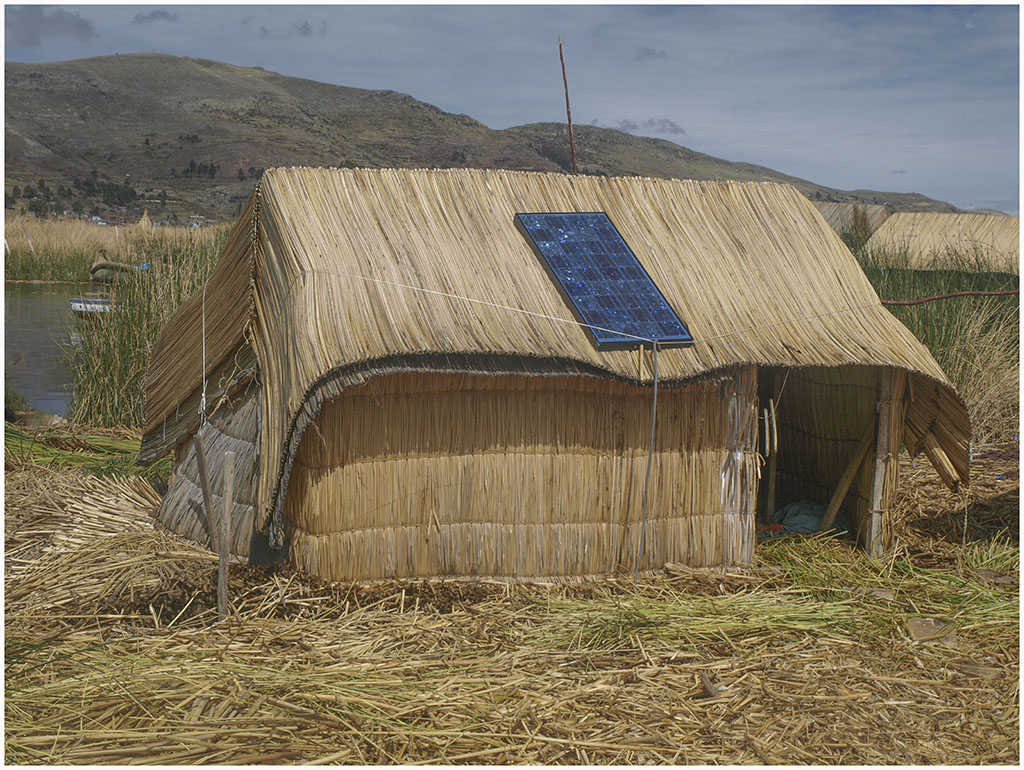
island territory but we did take a short ride on a reed boat to a nearby island. I also
noted one reed house with solar panels on the roof.
|
|
|
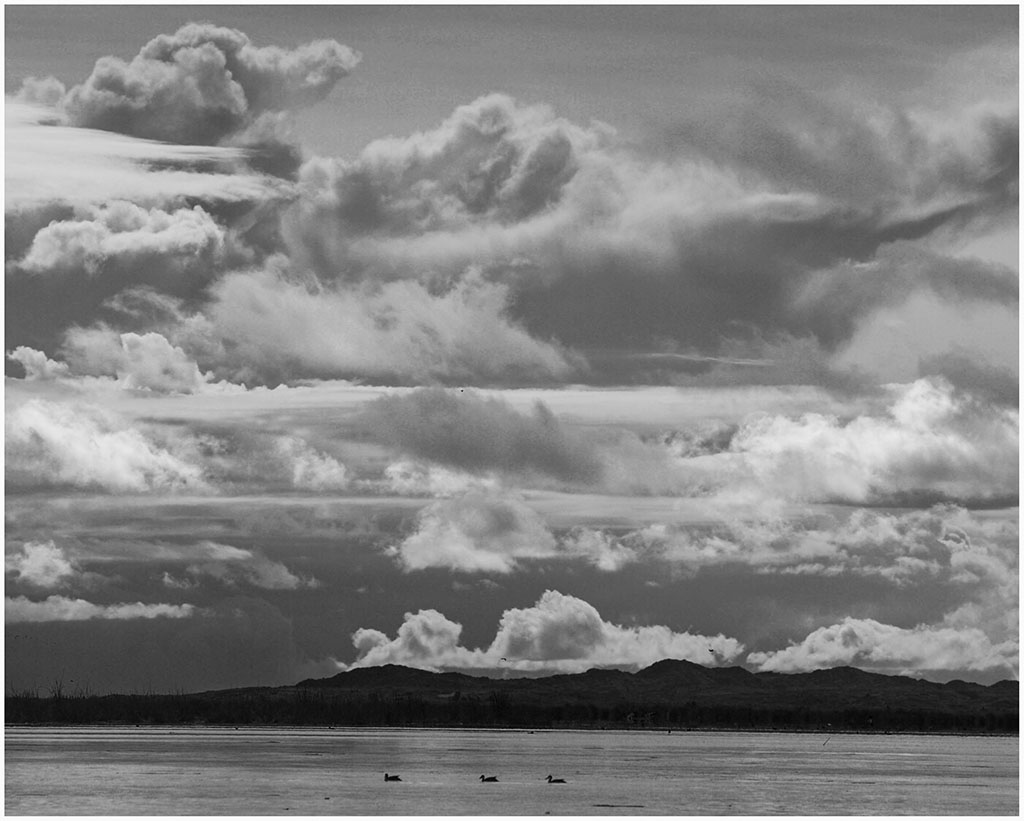
Clouds Over Lake Titicaca
Gathering Reeds on Lake Titicaca |
|
|
Reeds on Lake Titicaca
Floating Grass Island |
|
|
The Pachamama
Showing Weaving Done on the Island |
|
|
Grass Boat
Grass Island with Houses |
|
|
Grass Island House with Solar Panel
Grass Islands |
|
|
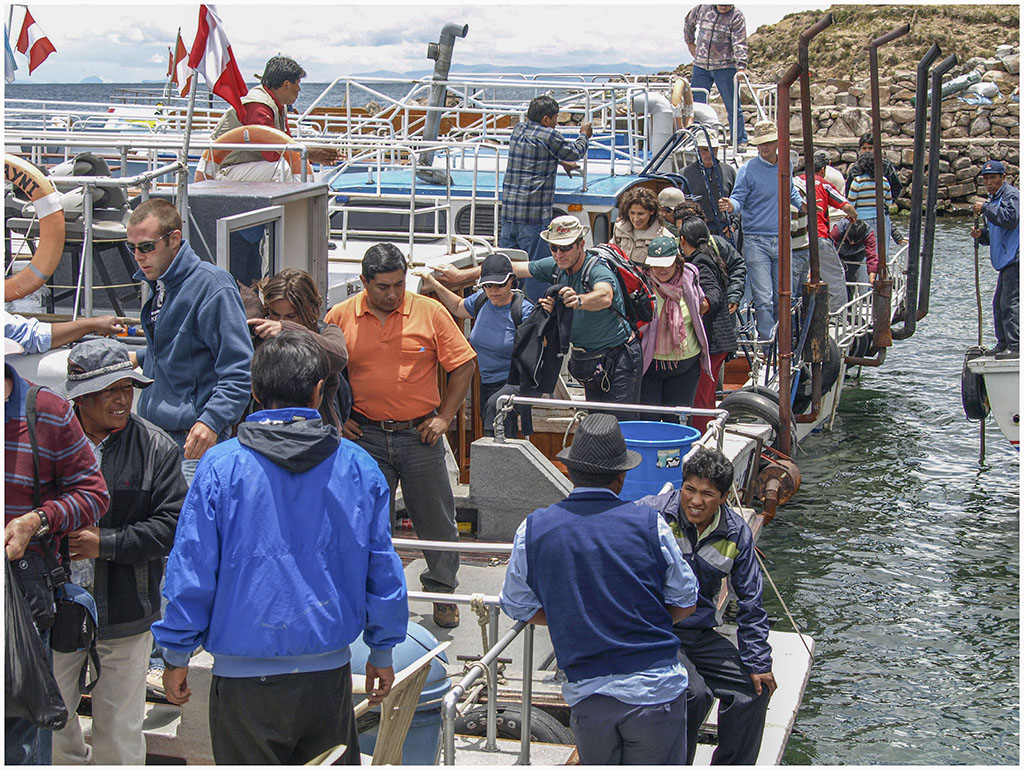
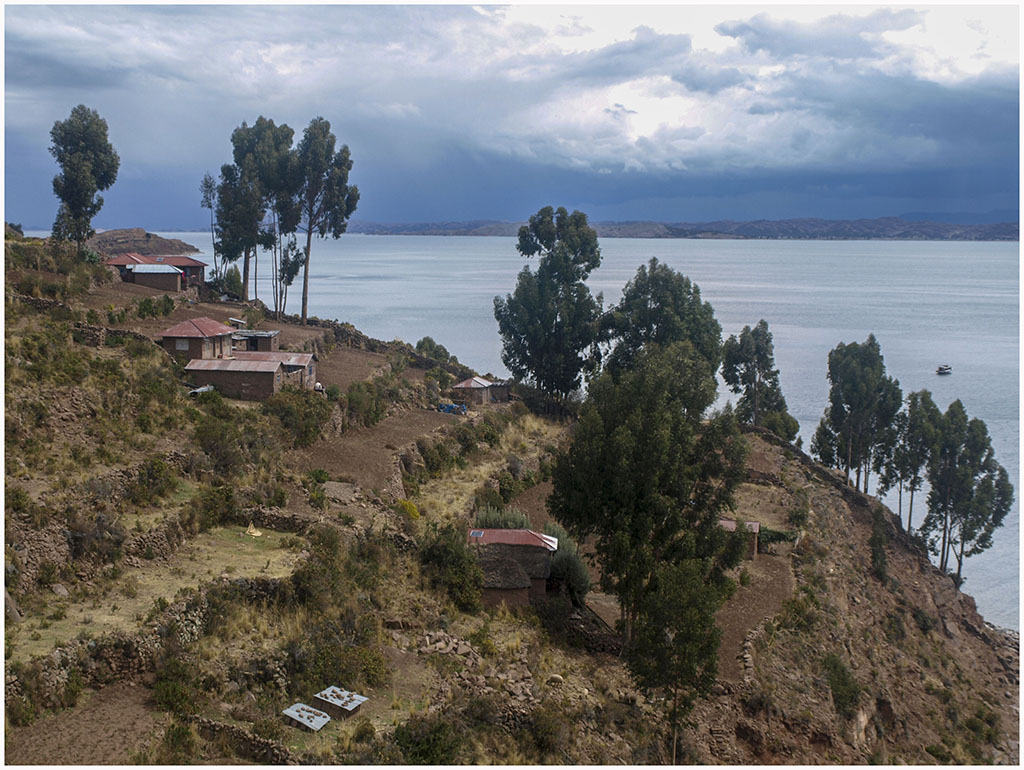
Arrival at Taquile Island
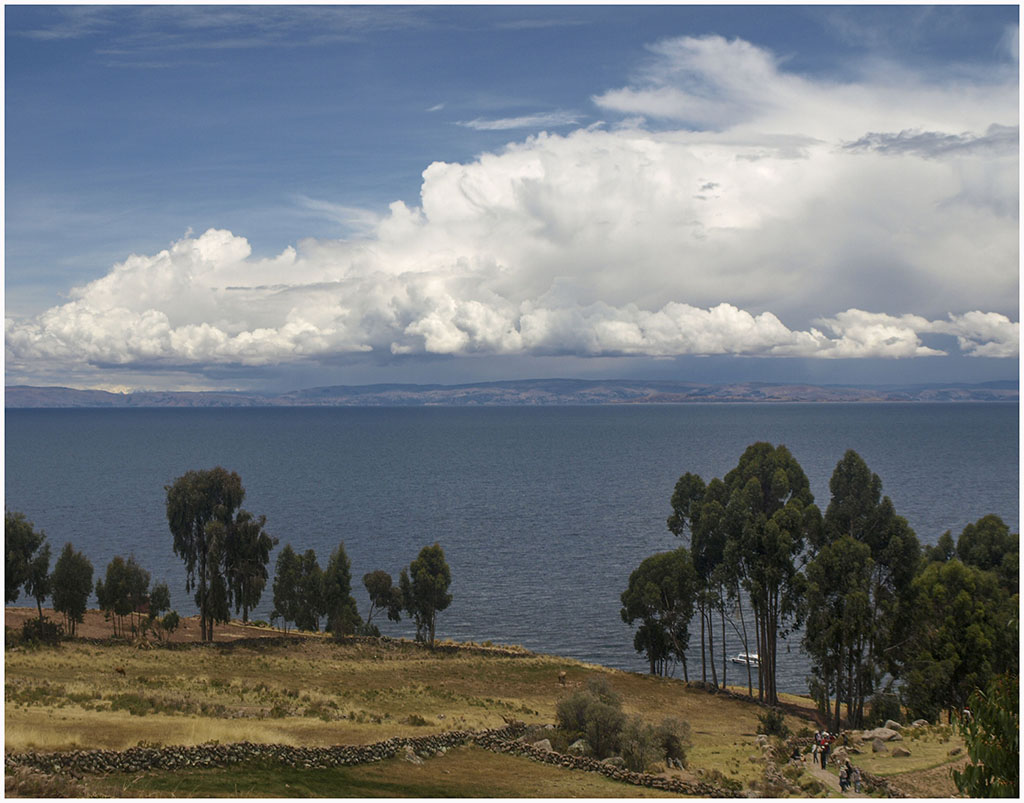
Taquile View |
|
|
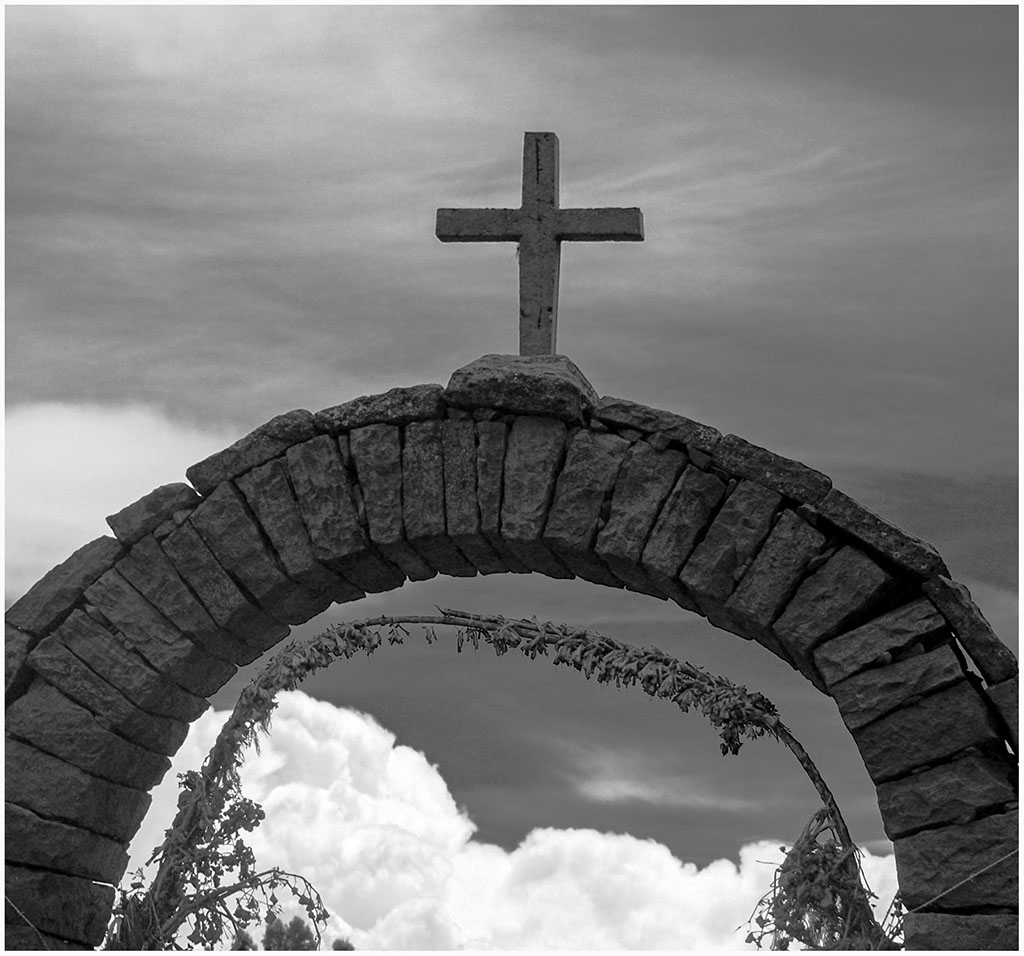
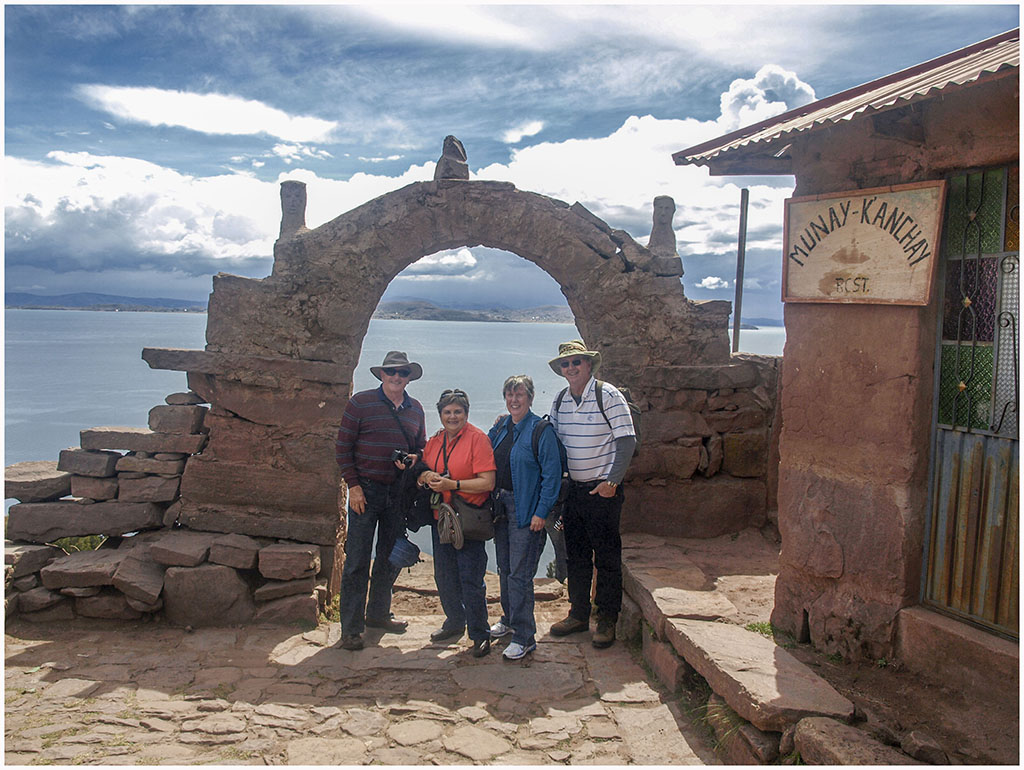
Stone Arch on Taquile Island
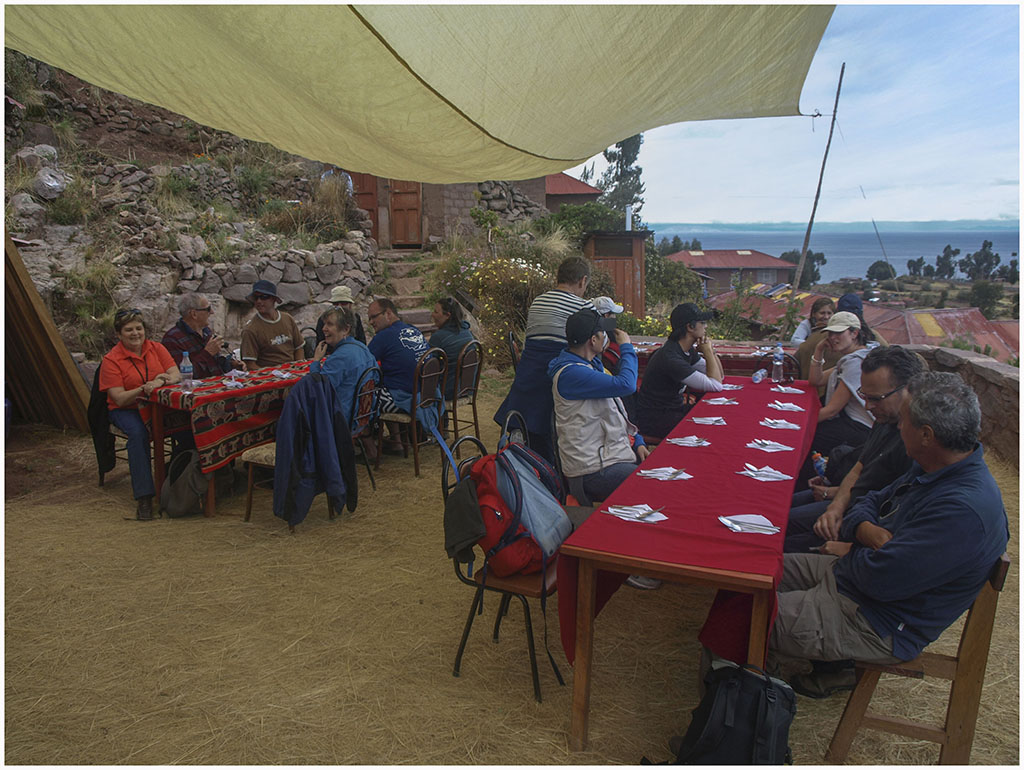
Taquile Lunch |
|
|
Gordon, Trish, Shirley, and Rich on Taquile Island
Taquile View |
|
|
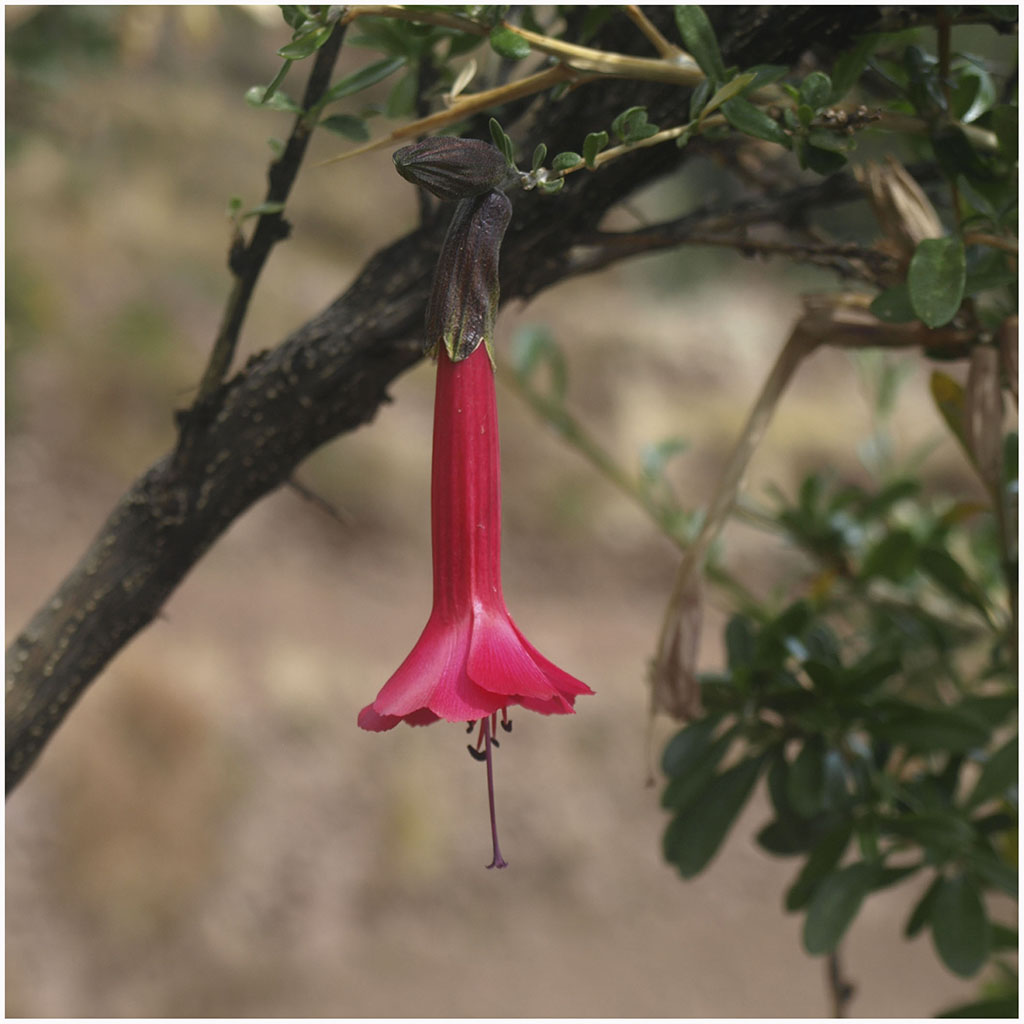
Cantatu Inca Sacred Flower
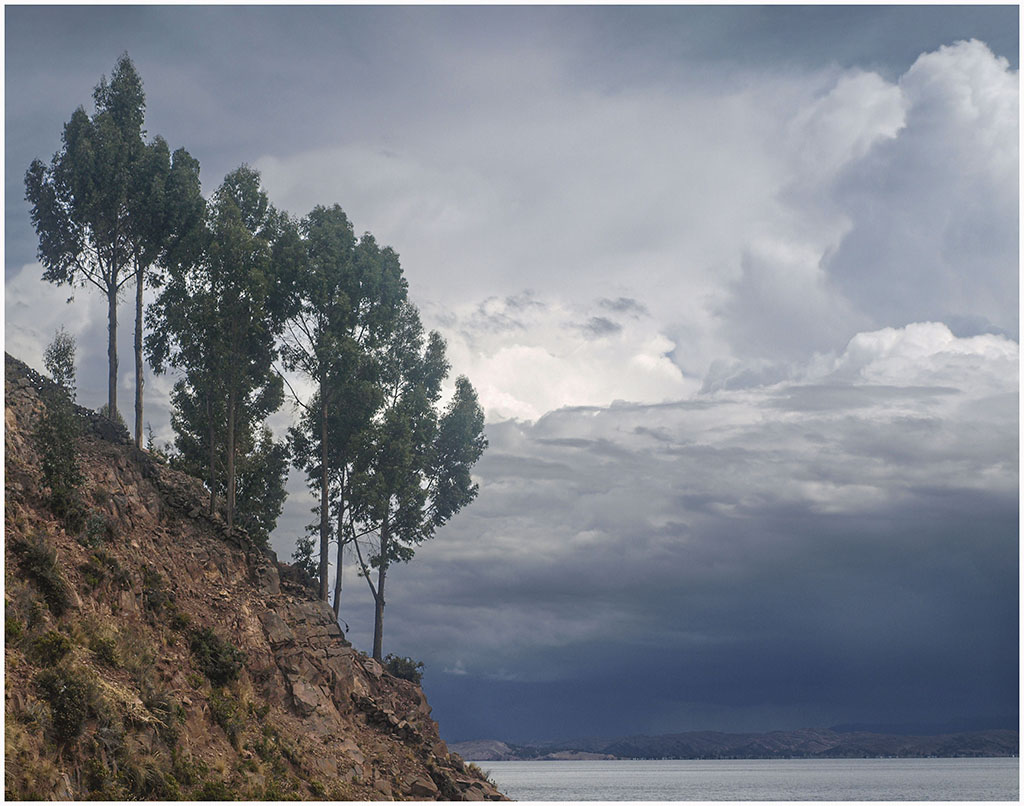
Taquile Trees on Hillside |
Day 3: Bus to Cusco
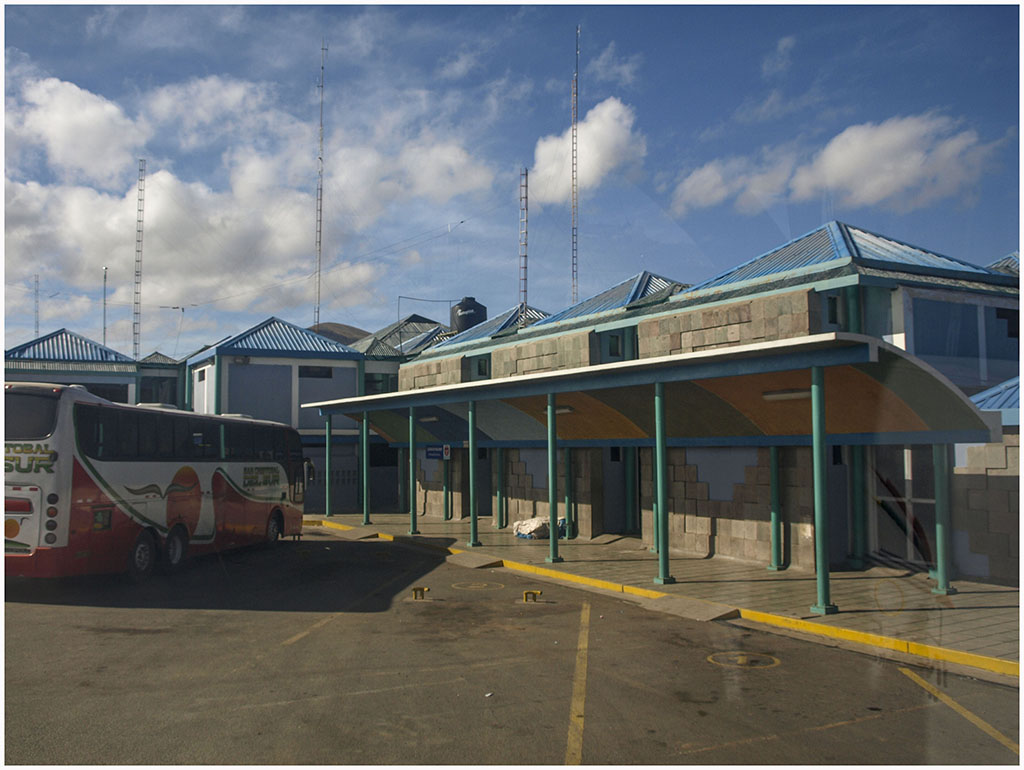
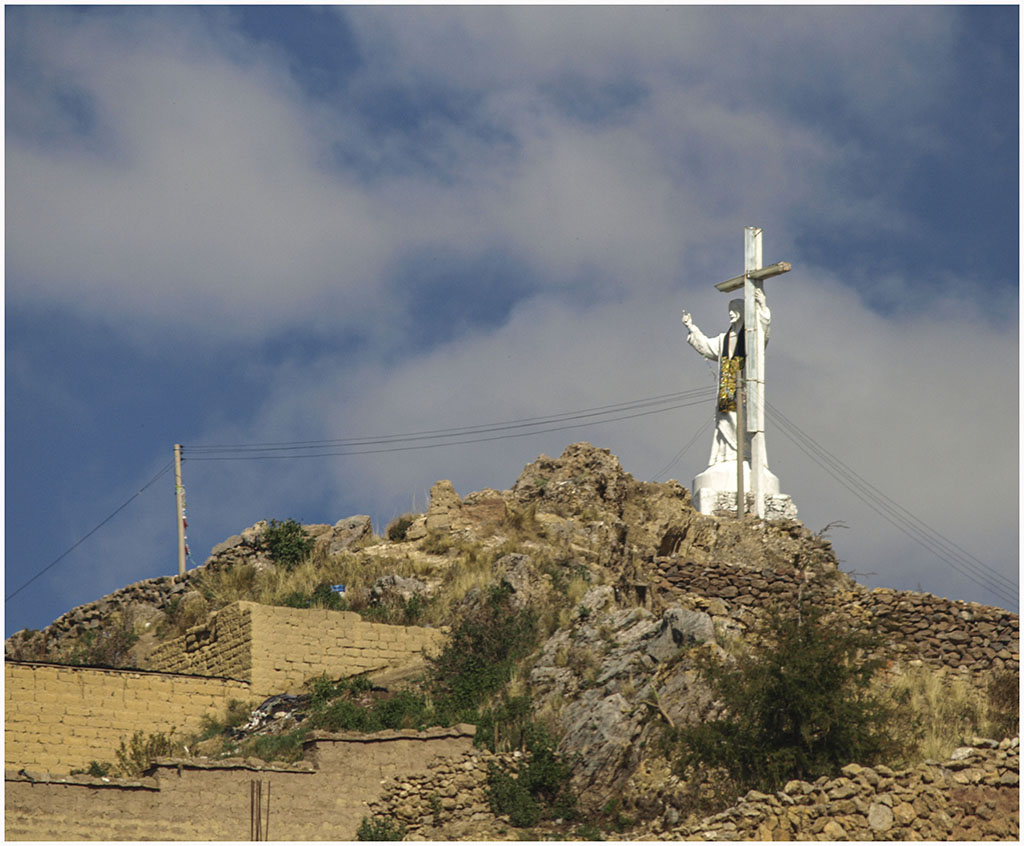
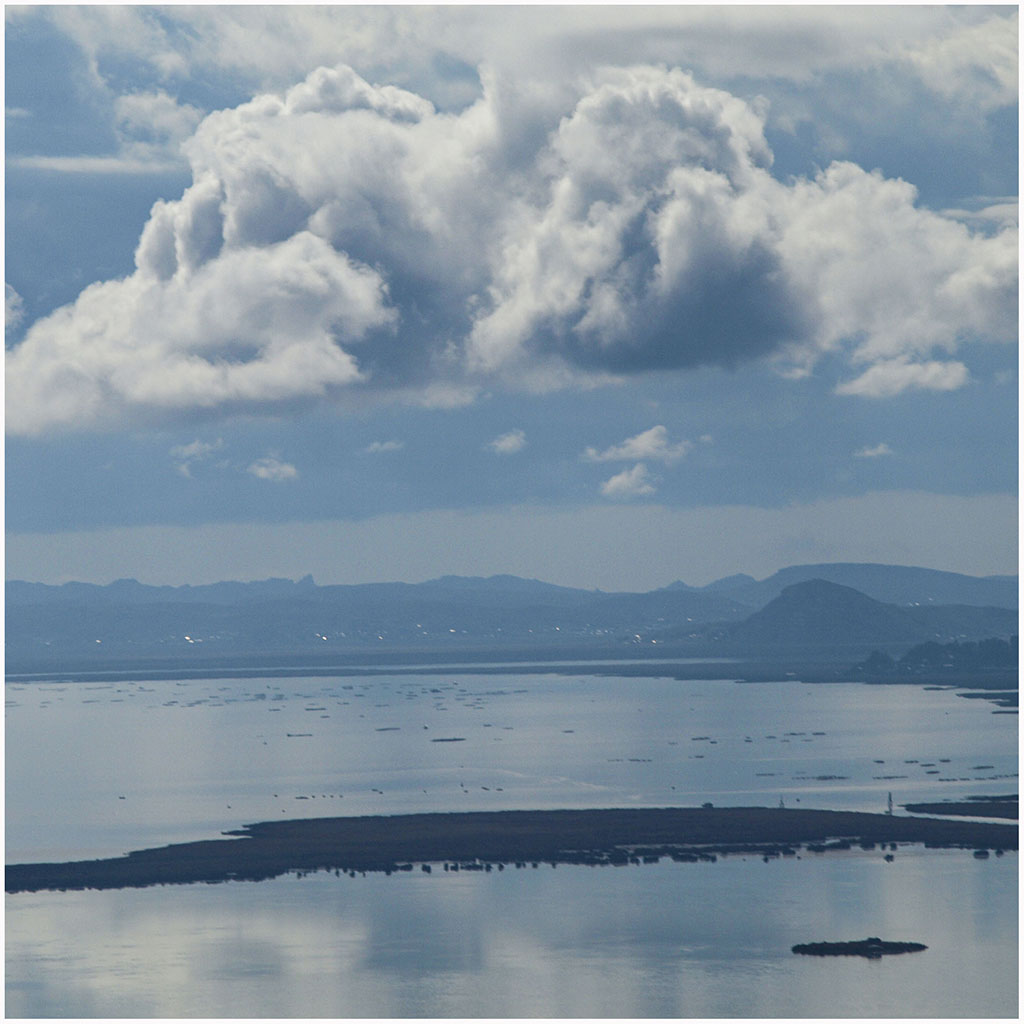
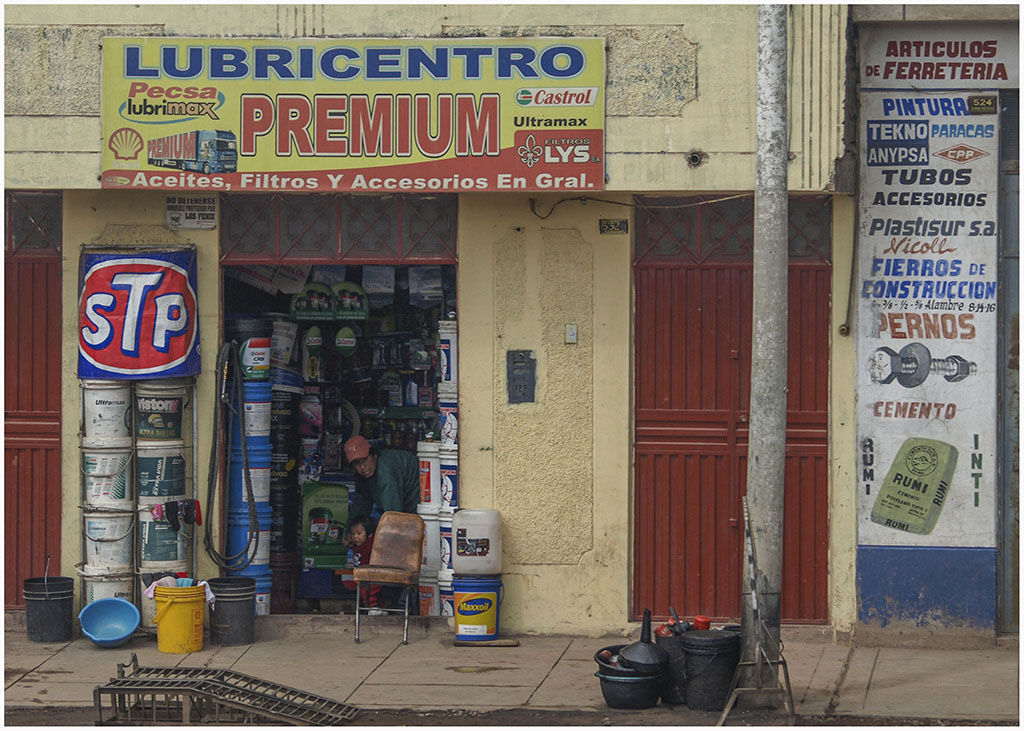
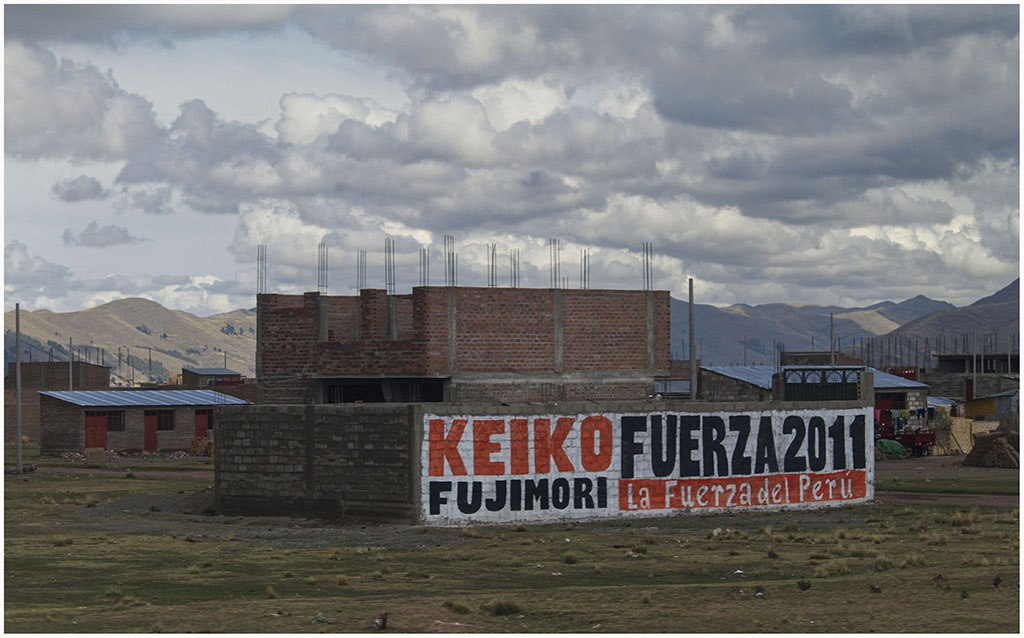
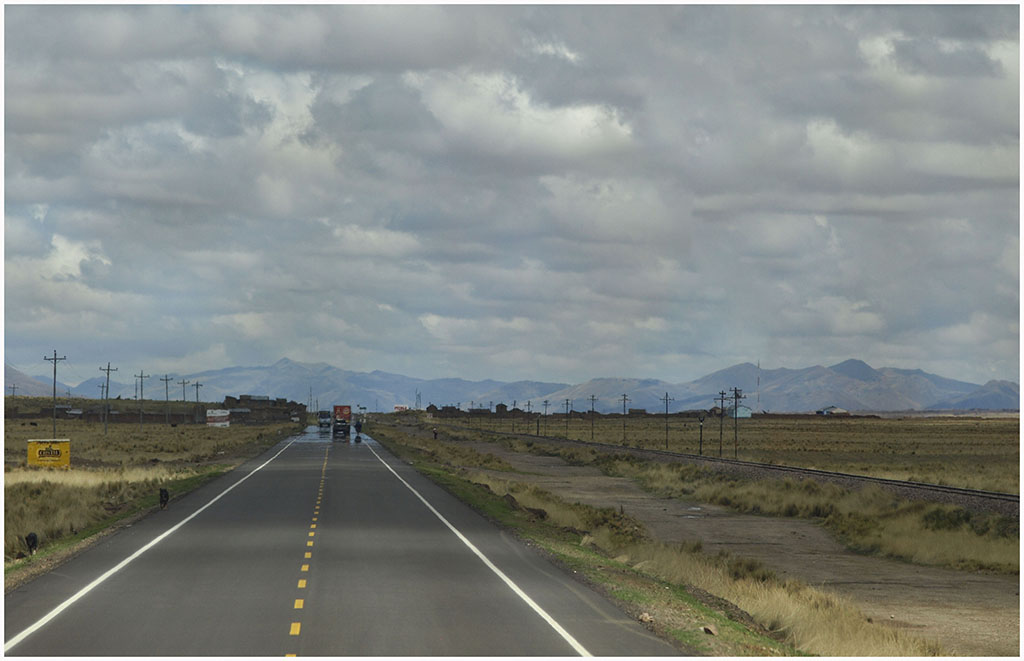
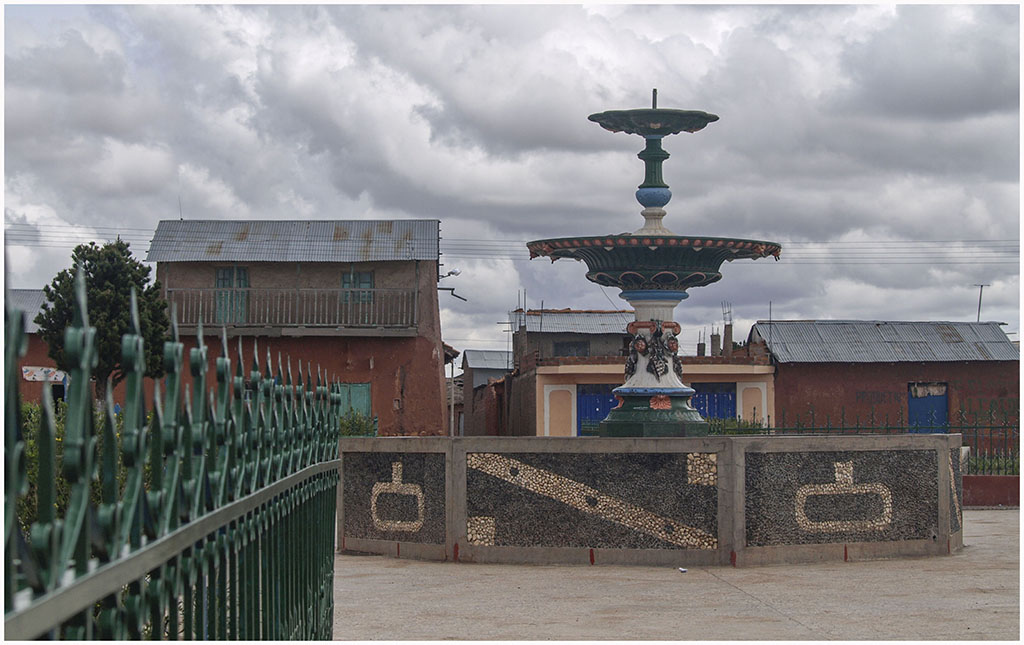
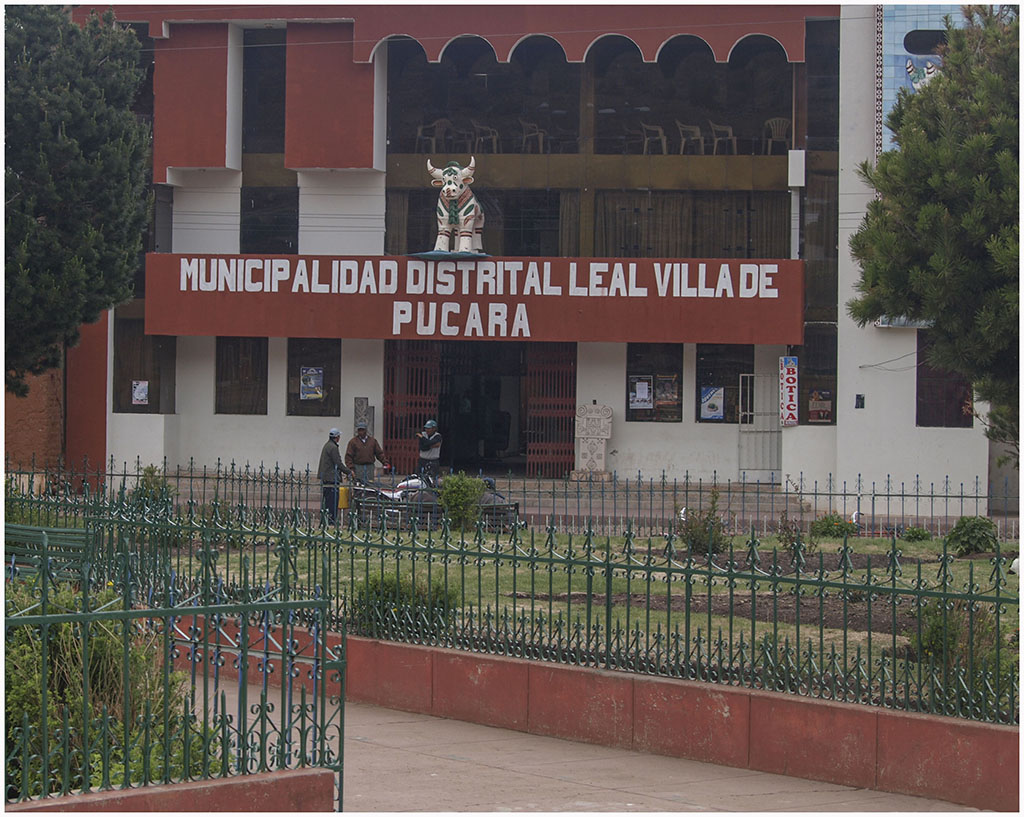
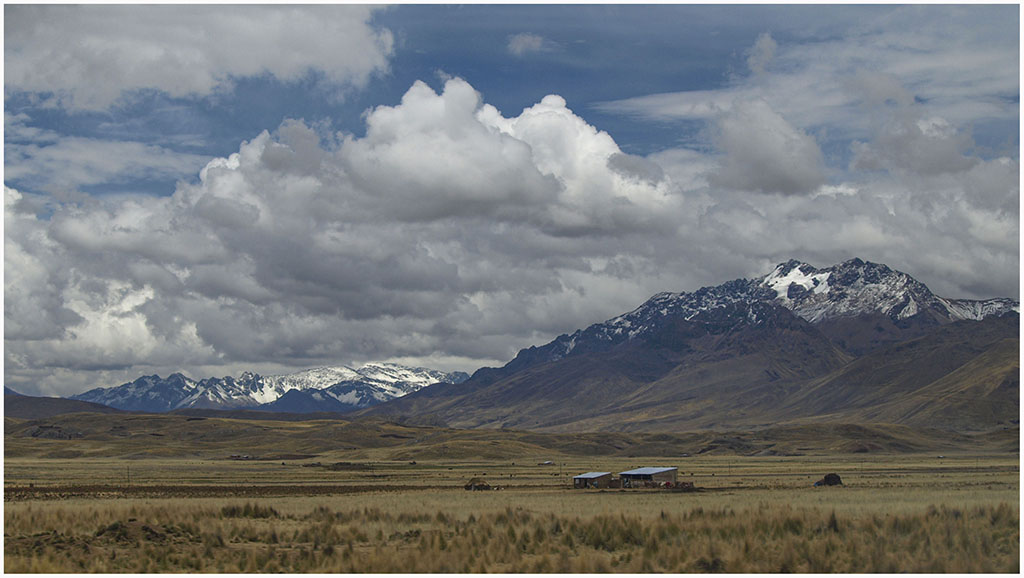
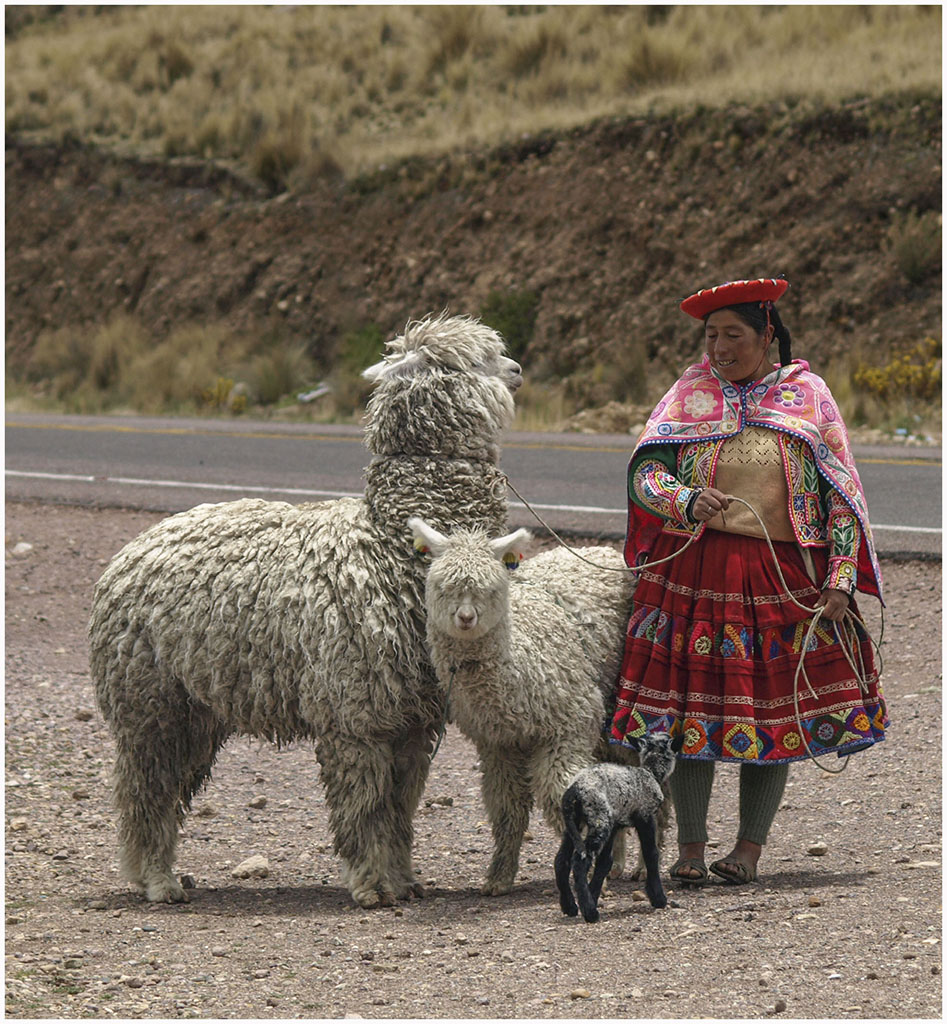
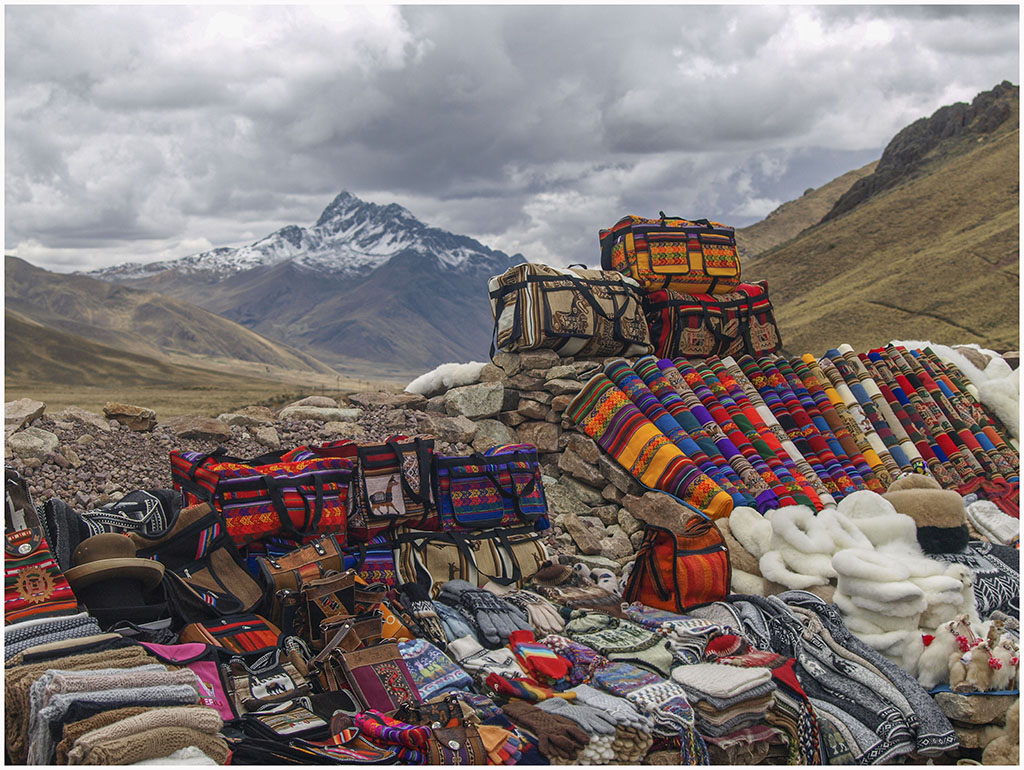
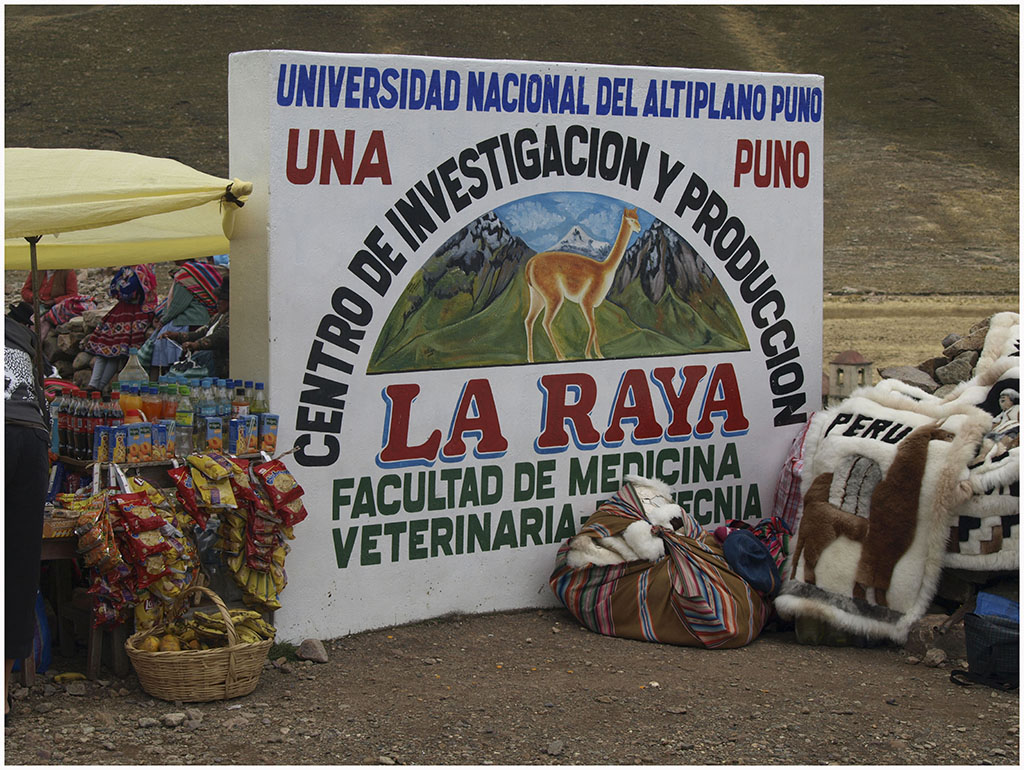
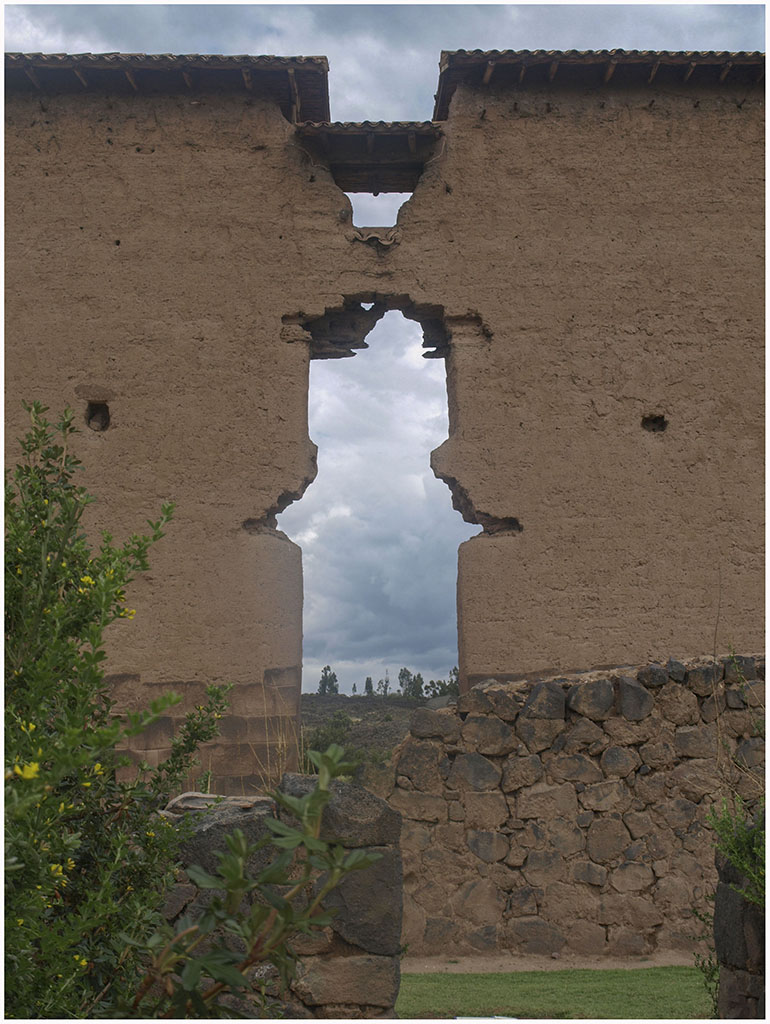
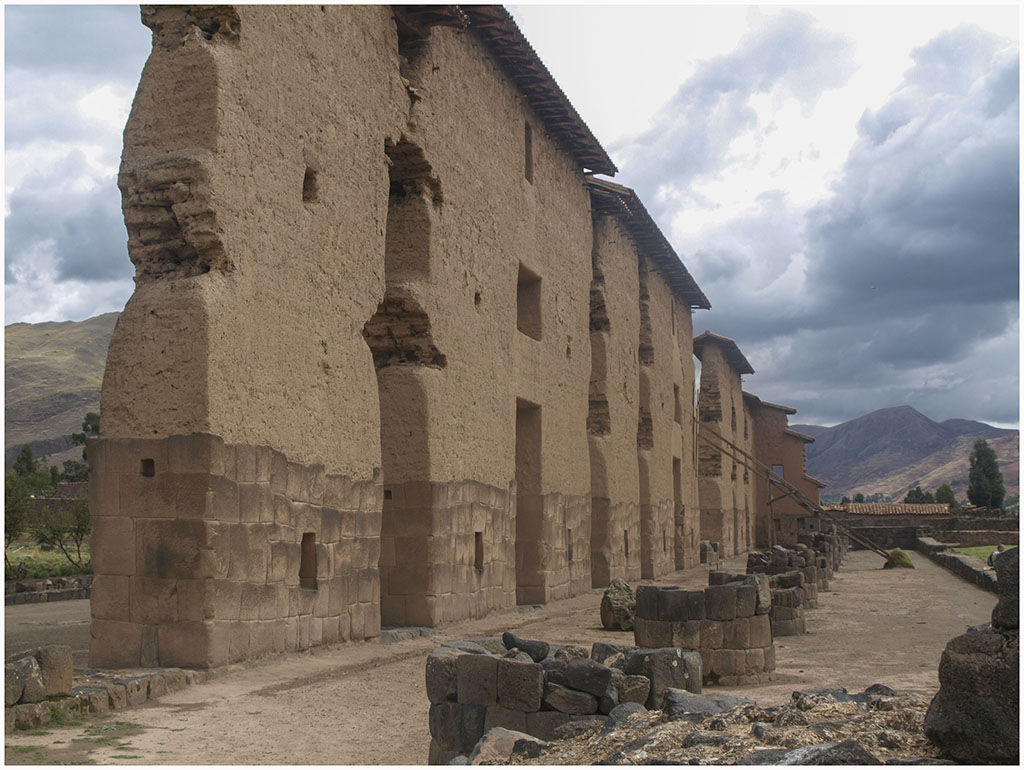
On day 3 we went down to the bus station in Puno to catch the overland through the Altiplano, over La Raya pass and down into Cusco at a lower altitude under 8,000 feet. As we pulled out of Puno we climbed away from Lake Titicaca onto the flat plain of the Altiplano at about 13,000 feet above sea level. The plain is surrounded by mountain ranges that rise up to 18,000 to 20,000 feet. I looks a little like the central Colorado plateau at twice the altitude. On the way we went through the village of Pucara and eventually climbed to the top of La Raya Pass at over 14,000 feet. At the pass was a sort of flea market of woven goods and locals in traditional dress with their llamas and goats. From the pass we began the descent towards Cusco with a stop at Wiraqucha to see some impressive ancient ruins. |
|
|
Puno Bus Station
Hillside Cross Leaving Puno |
|
|
Looking Down on Titicaca Climbing out of Puno
Small Service Station on Road out of Puno |
|
|
Political Campaign Sign
Long Road Across the Altiplano |
|
|
Pucara
Pucara |
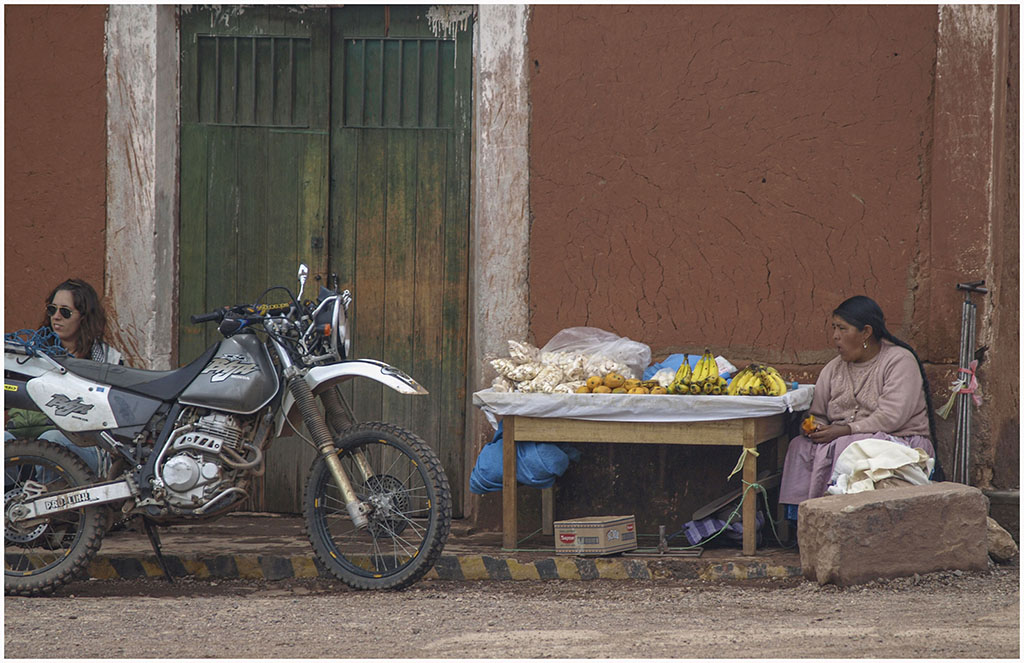
|
|
Selling Fruit in Pucara
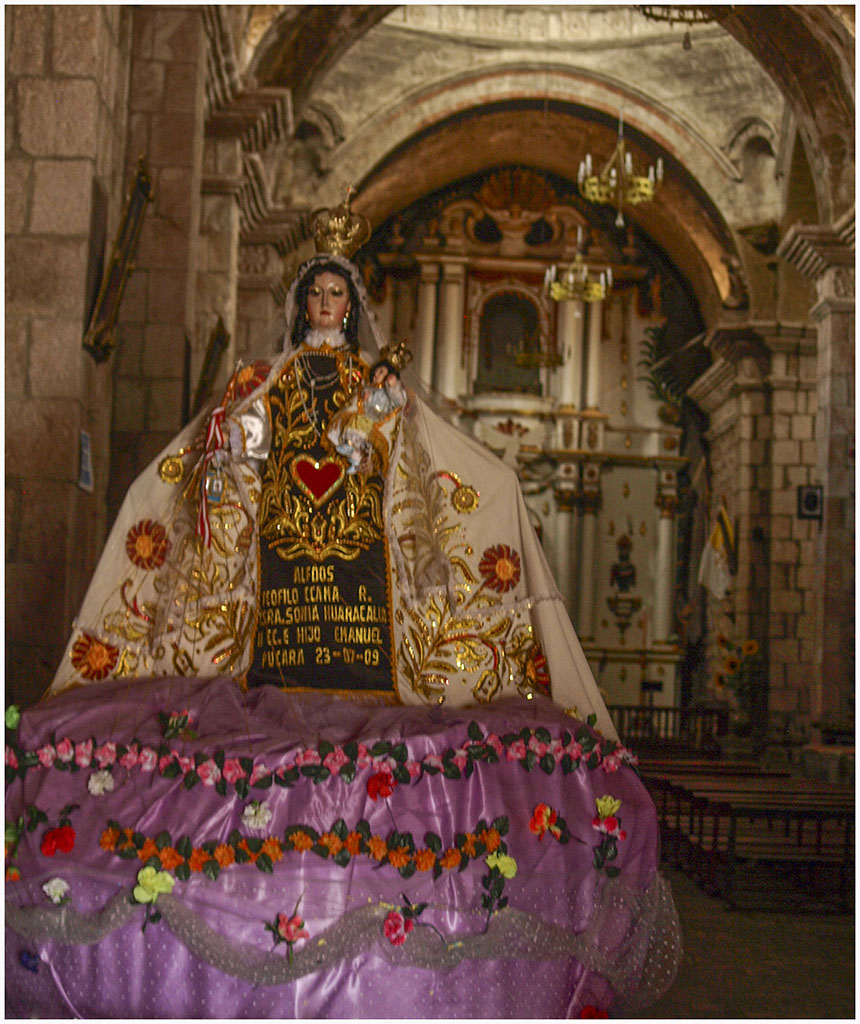
Church Interior Pucara |
|
|
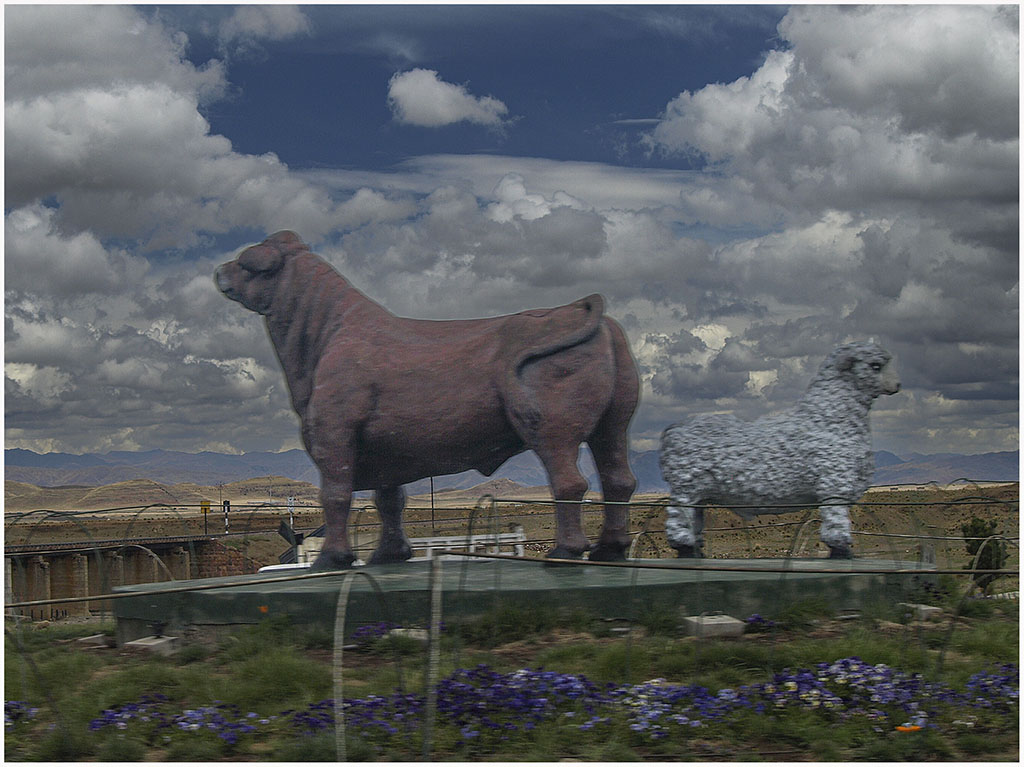
Pucaro Statues
Altiplano View |
|
|
La Raya Pass Woman with Llamas
La Raya pass Goods for Sale |
|
|
La Raya Sign and Goods for Sale
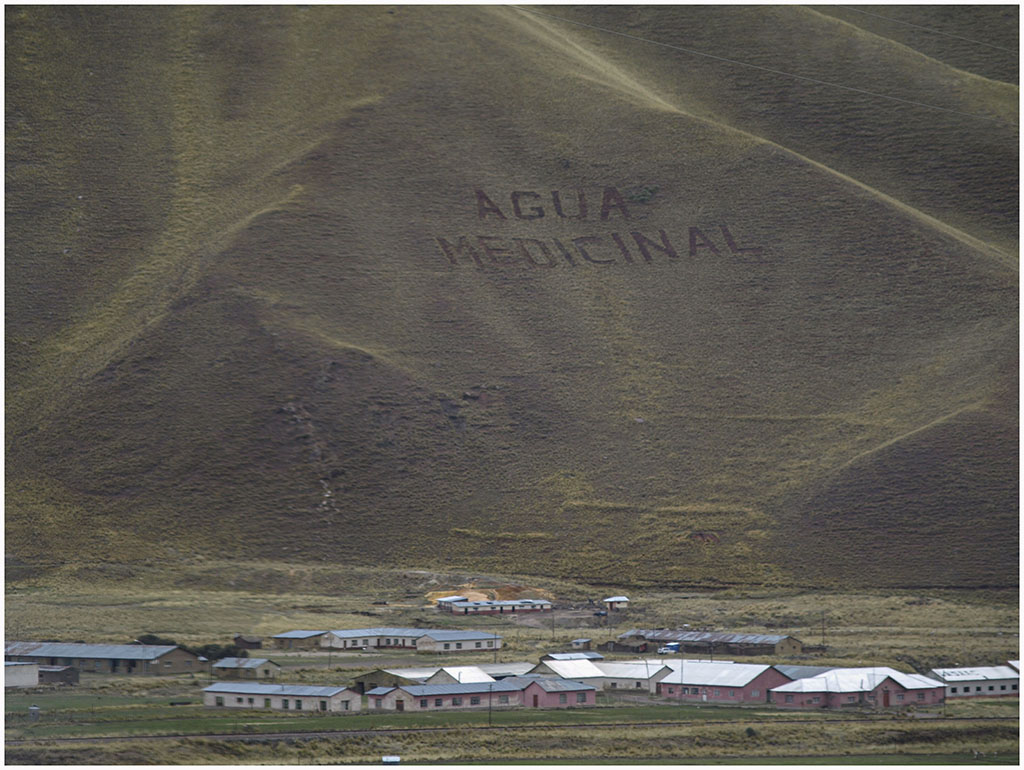
Leaving La Raya down to Cusco |
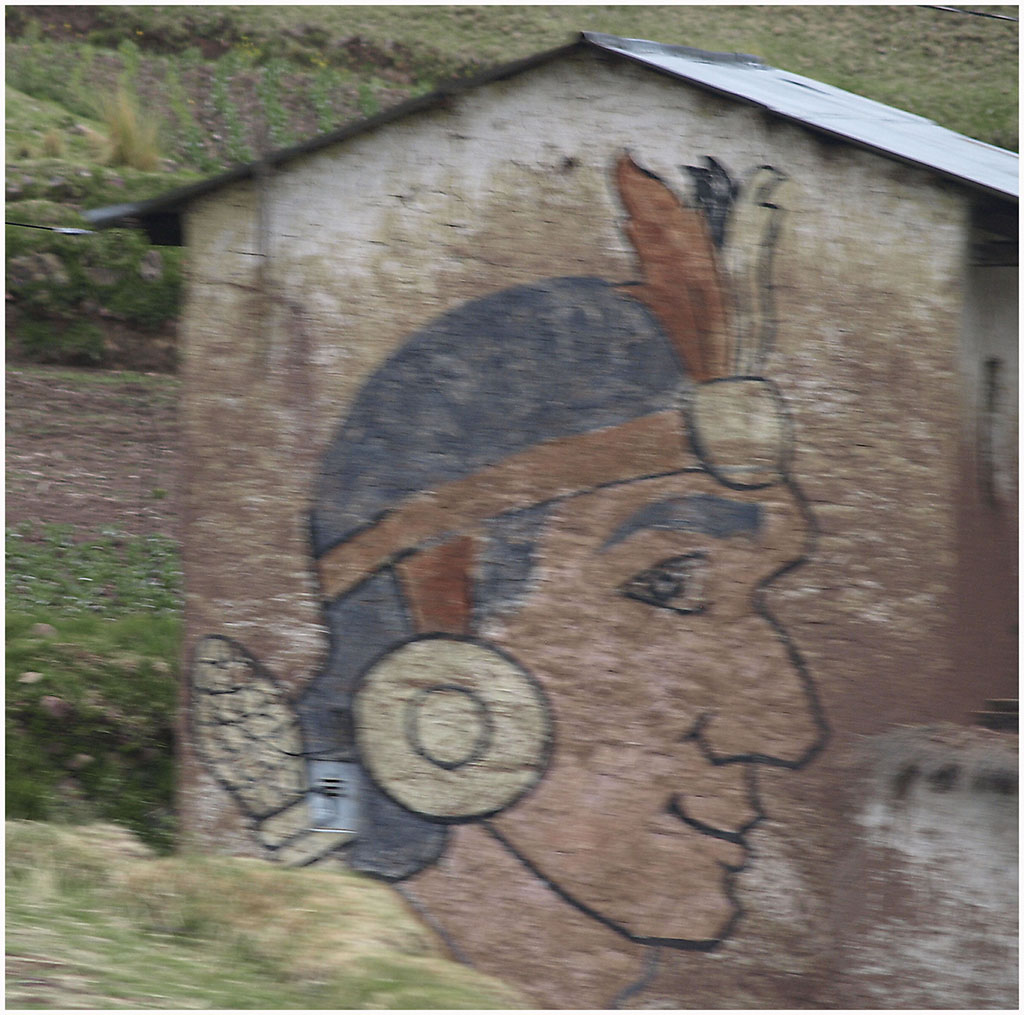
|
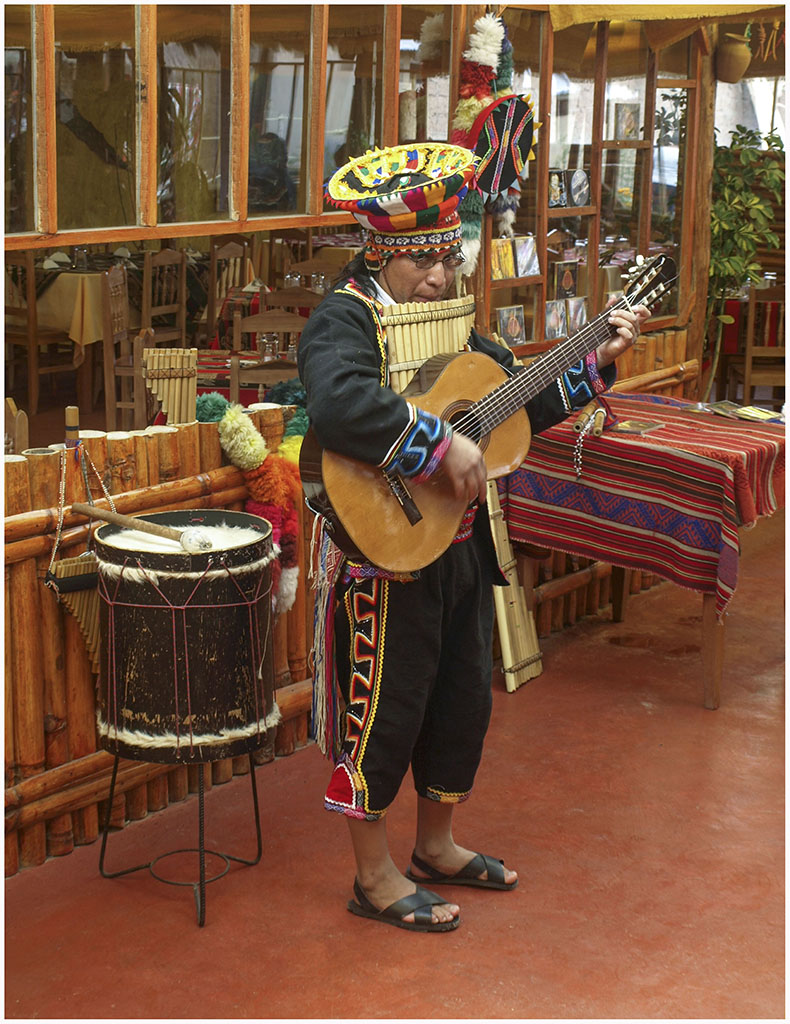
|
Mural on Road to Cusco
Musician at Wiraqucha |
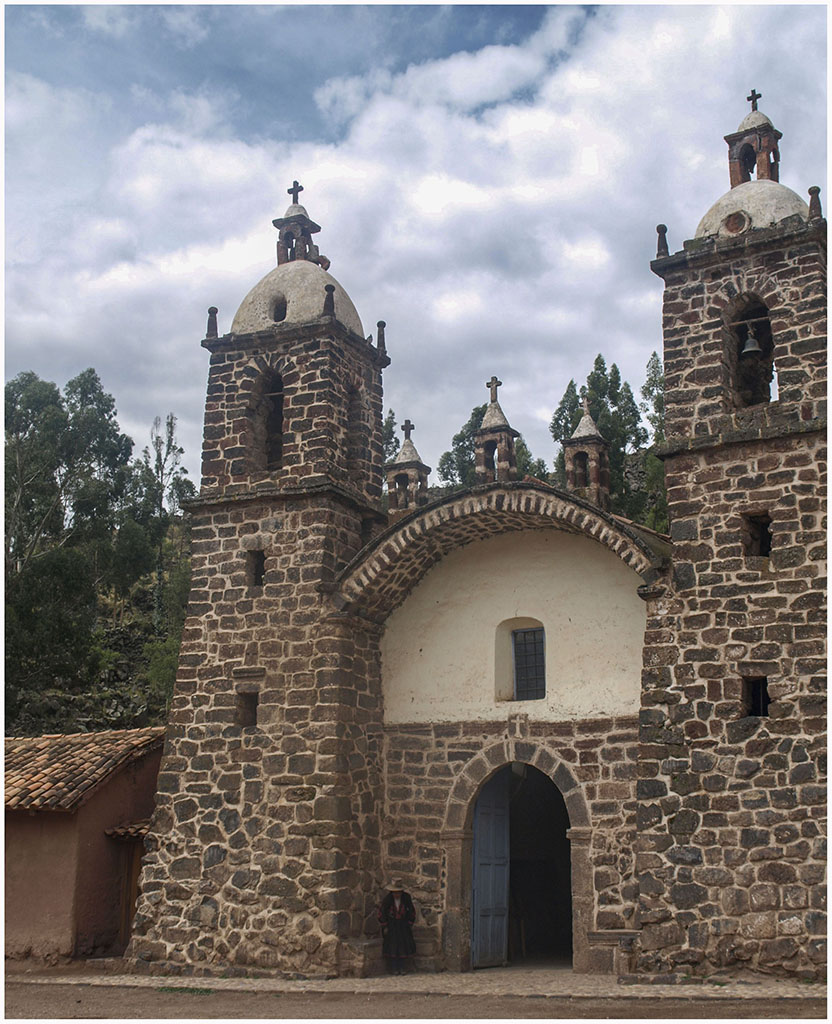
|
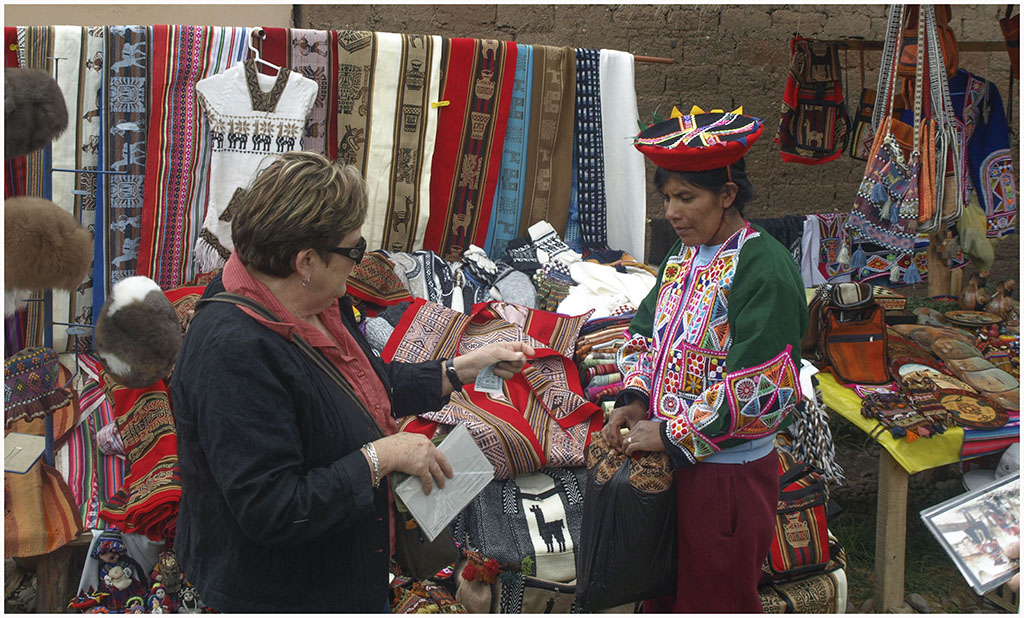
|
Wiraqucha
Trish Shopping at Wiraqucha |
|
|
Wiraqucha Wall
Wiraqucha Wall |
Day 4: Sacred Valley, Ollantaytambo, Pisac, Chinchero
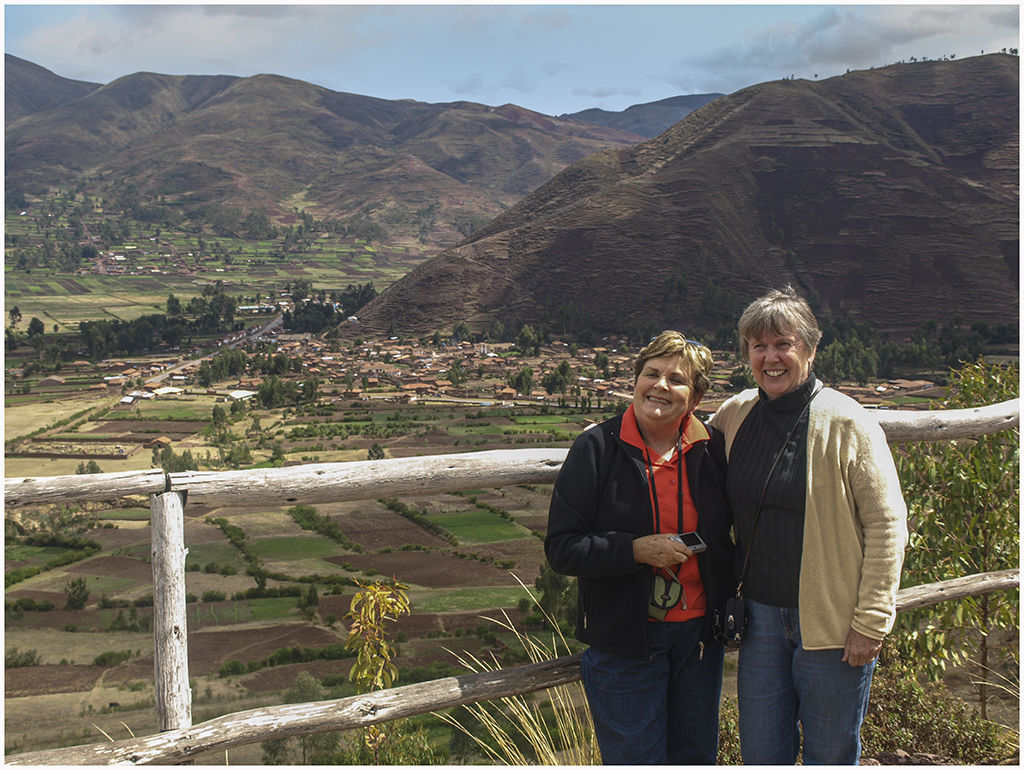
We were now based in Cusco, the capital of the ancient Incan empire. On our first day (fourth
overall) we took a bus trip to a variety of interesting locations in the Sacred Valley of
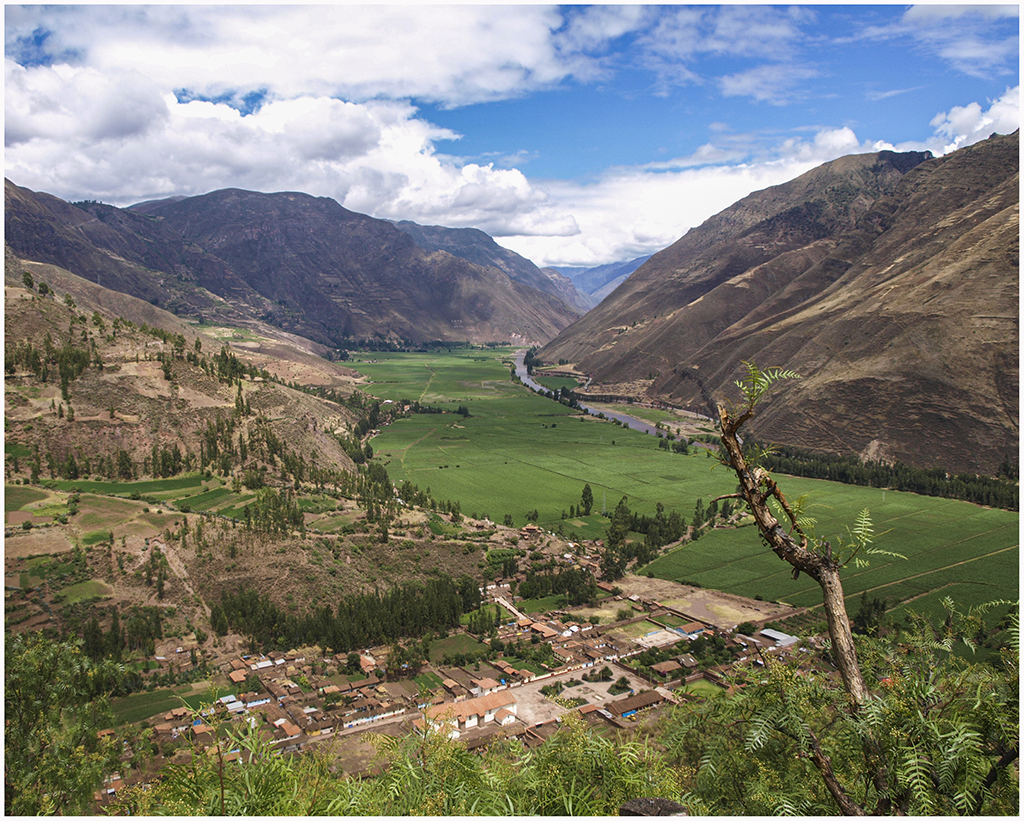
the Incas. We paused on a curve in the road to take pictures looking down upon the length
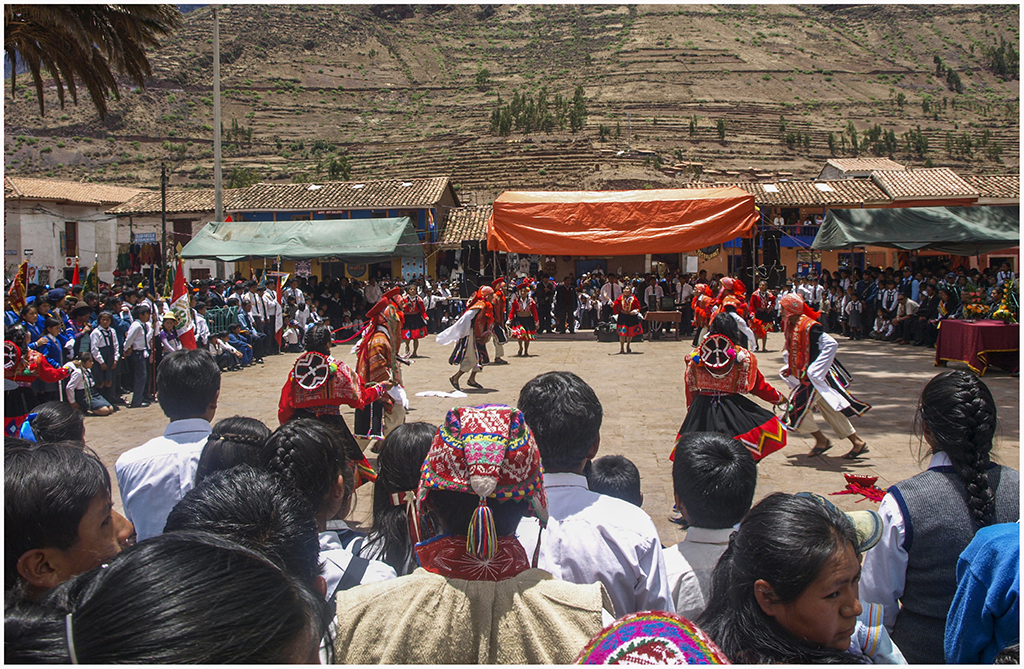
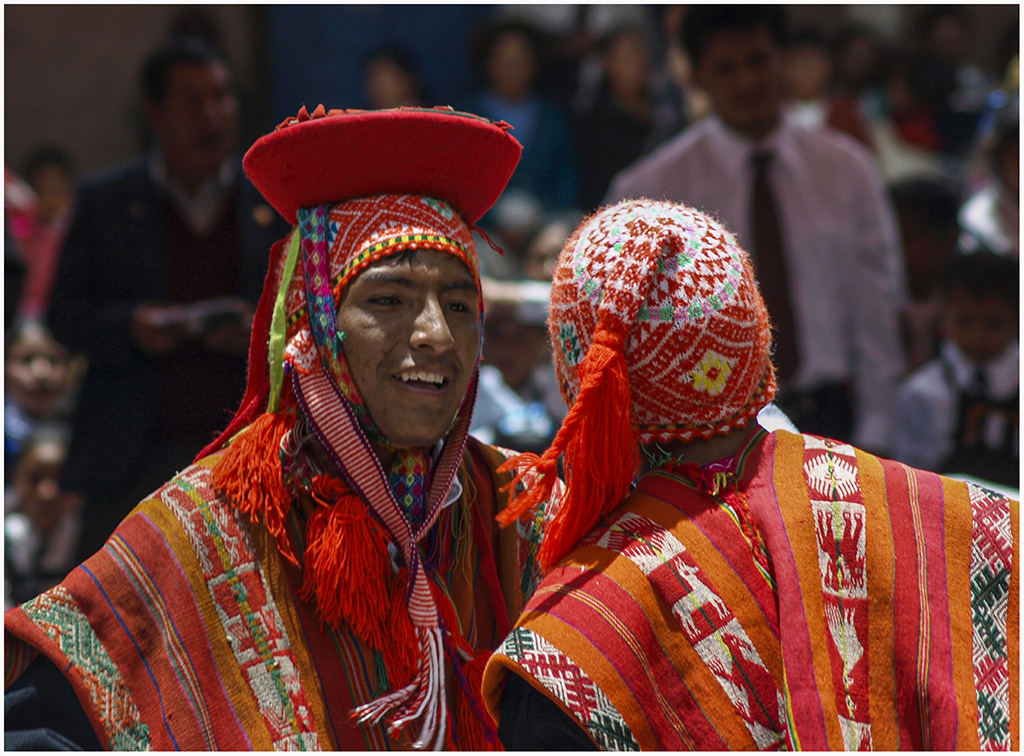
of the Sacred Valley. Our first stop was the town of Pisac in which there was a festival
with pretty much the whole town out and lots of dancers in traditional costumes. We then
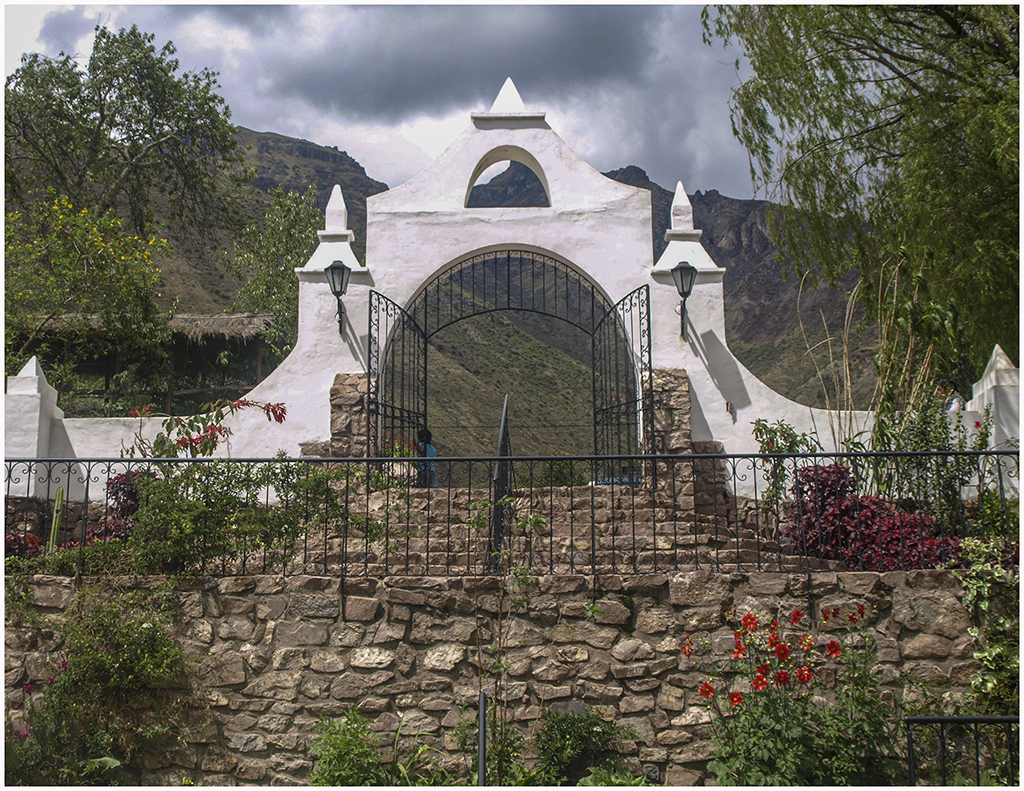
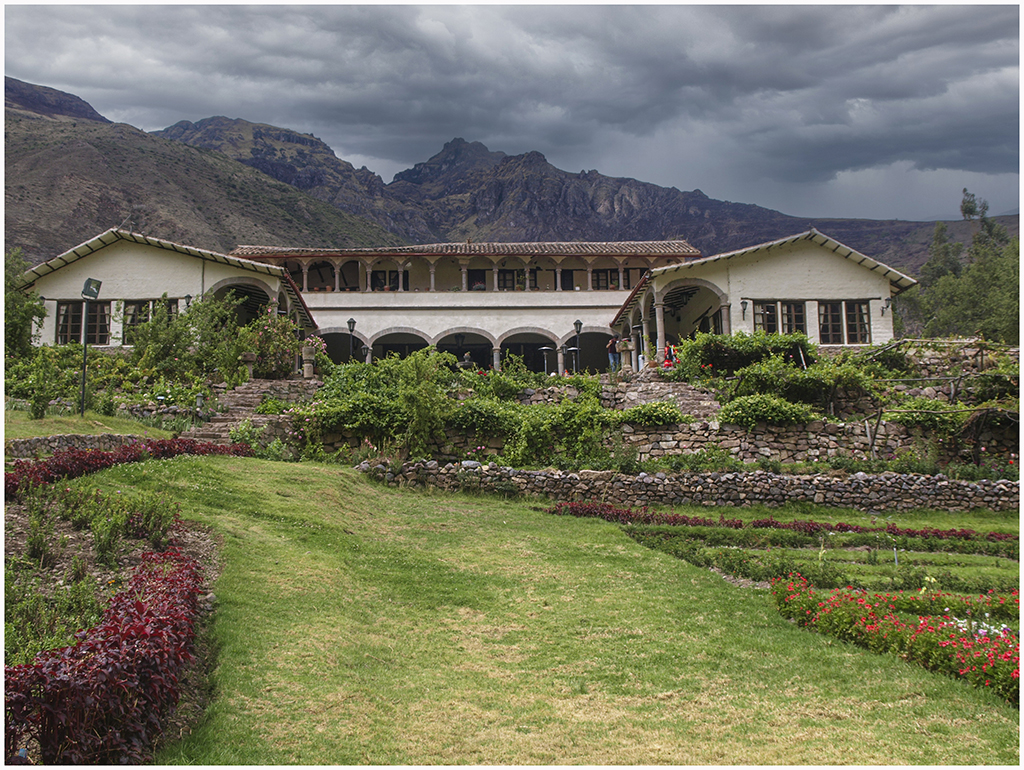
drove further down the road in the valley and stopped at the Restaurante Tunupa for a
sumptuous lunch and a wander in the gardens down to the Urubamba River that runs through
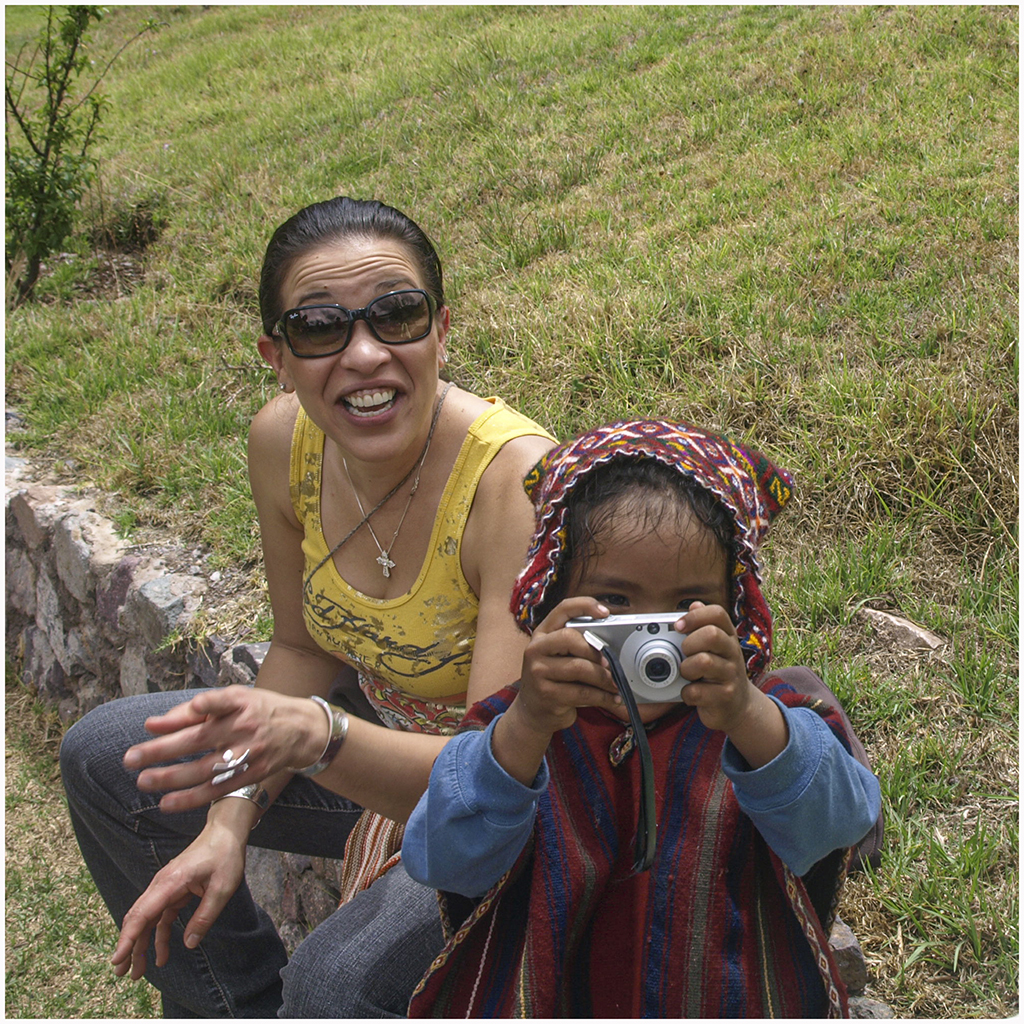
the valley. A little boy was fascinated with my small camera and I handed it to him. He
pretended that he was taking a picture but never pushed the button.
|
|
|
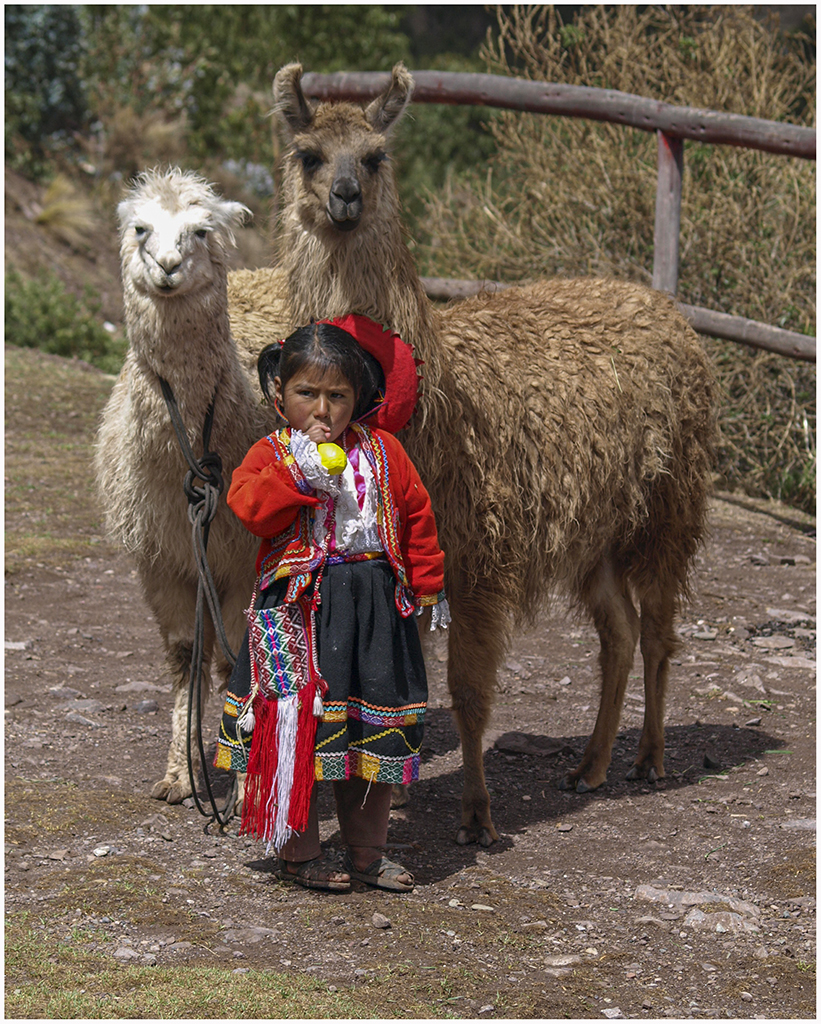
Girl with Llamas
Trish and Shirley Overlooking the Sacred Valley |
|
|
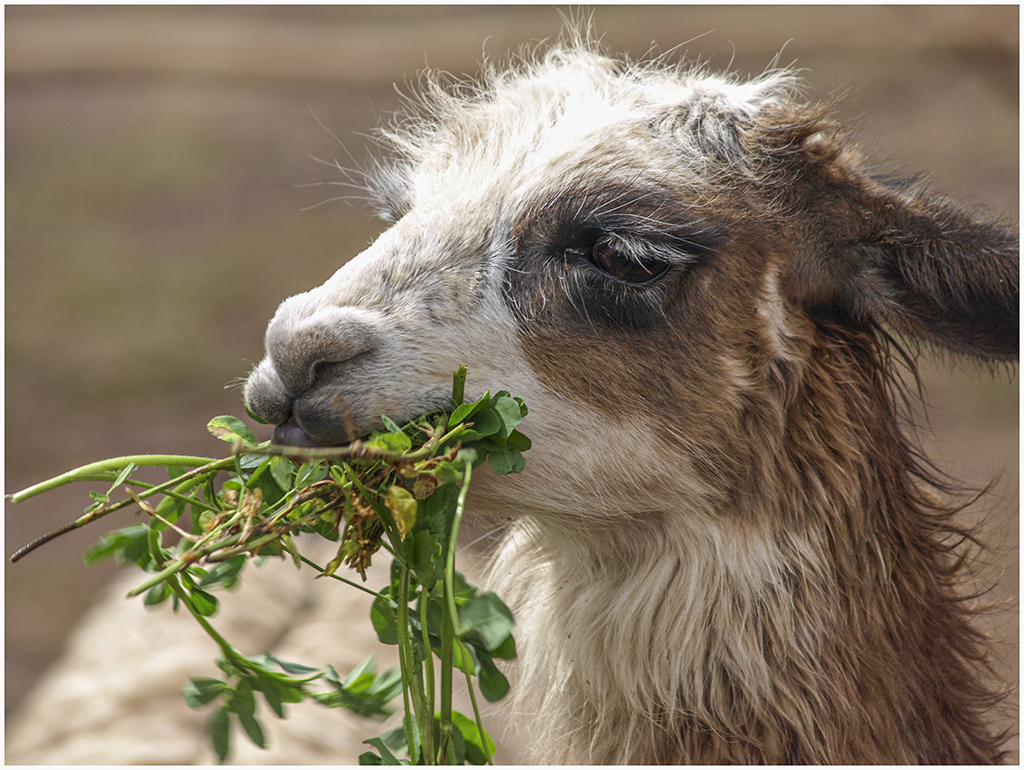
Llama Eating
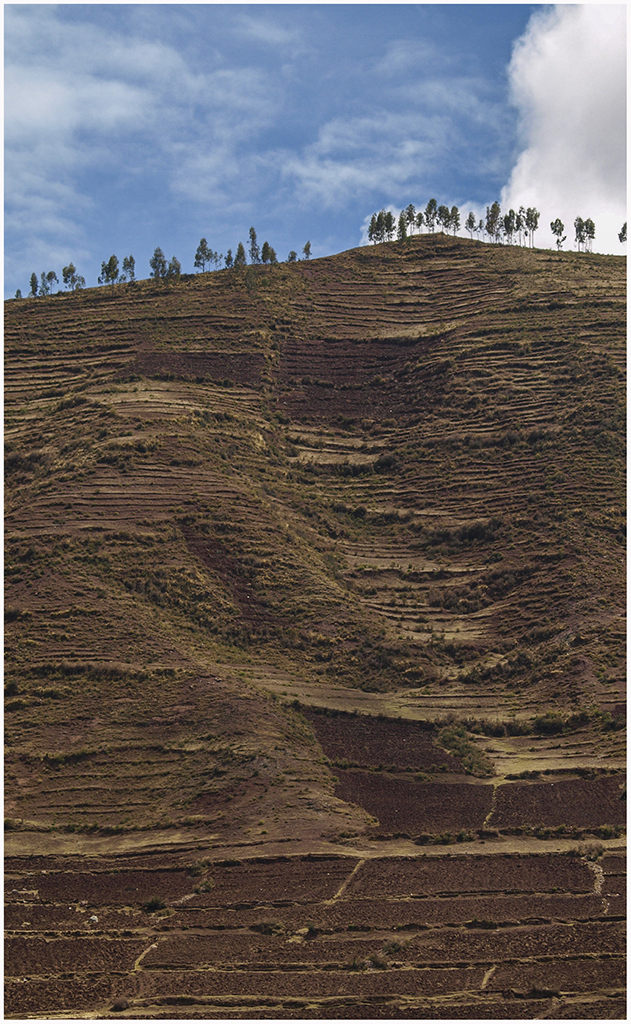
Hillside above Sacred Valley |
|
|
View of Sacred Valley
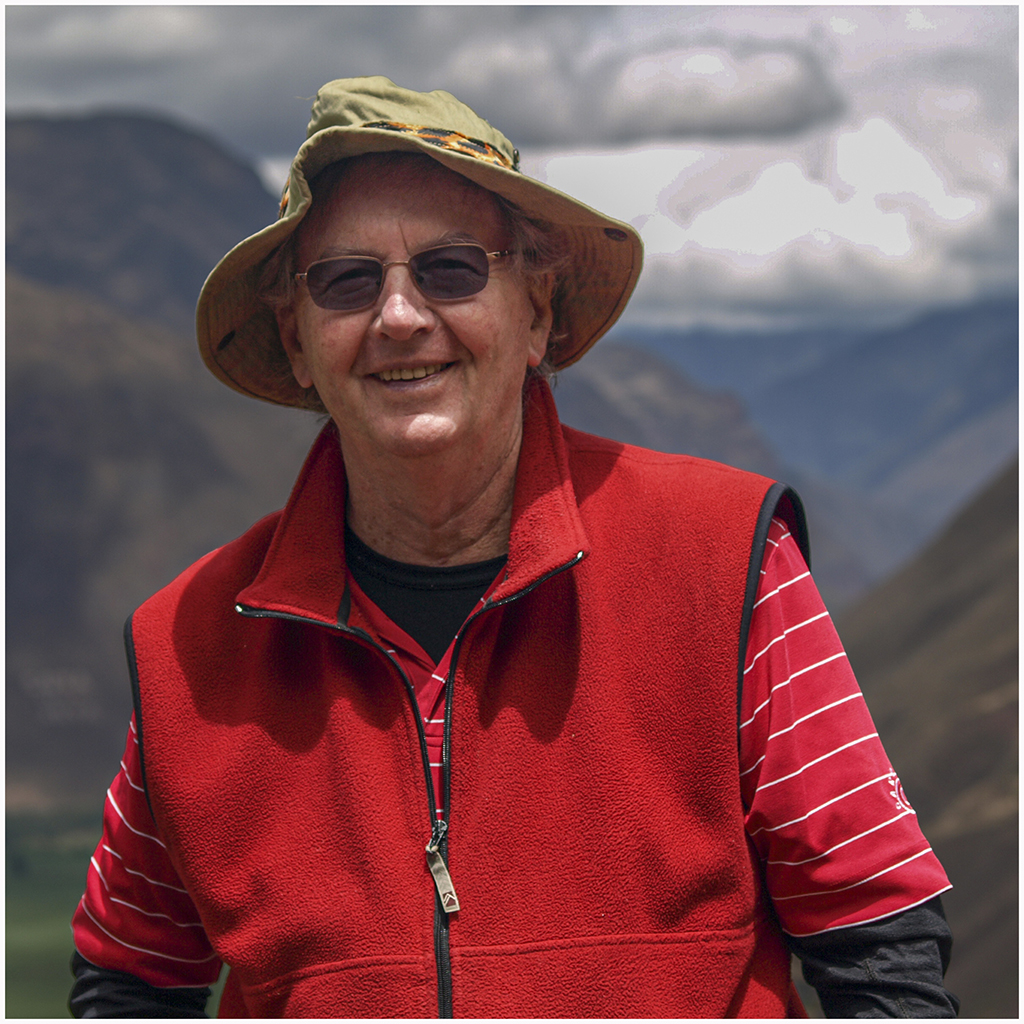
Rich at Sacred Valley |
|
|
Pisac Celebration
Pisac Dancers |
|
|
Restaurante Tunupa Gate
Restaurante Tunupa |
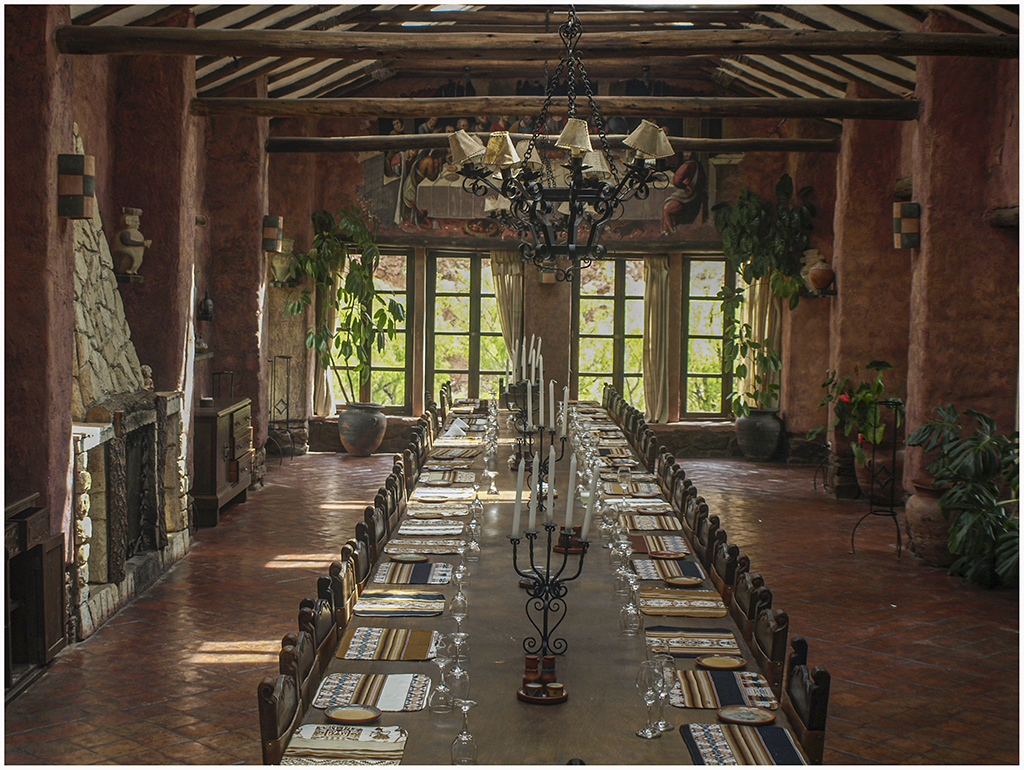
|
|
Restaurante Tunupa Dining Room
Restaurante Tunupa Boy with Camera |
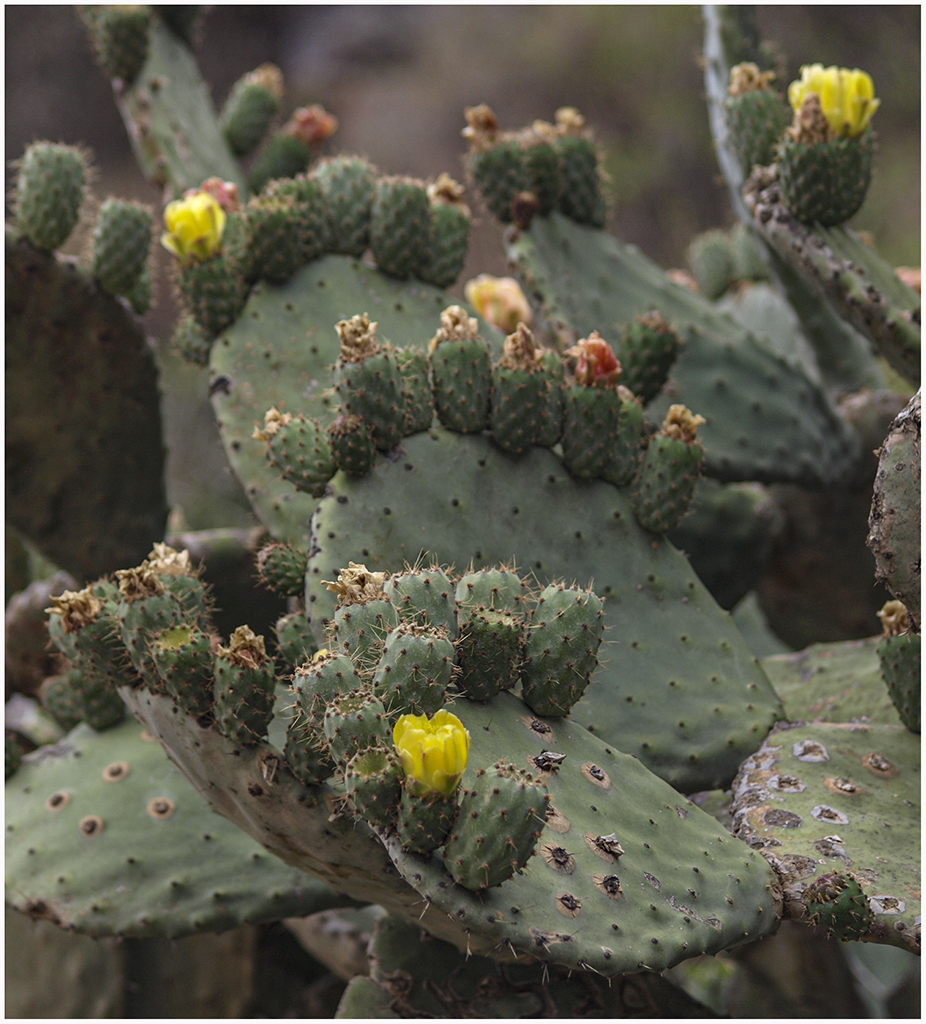
|
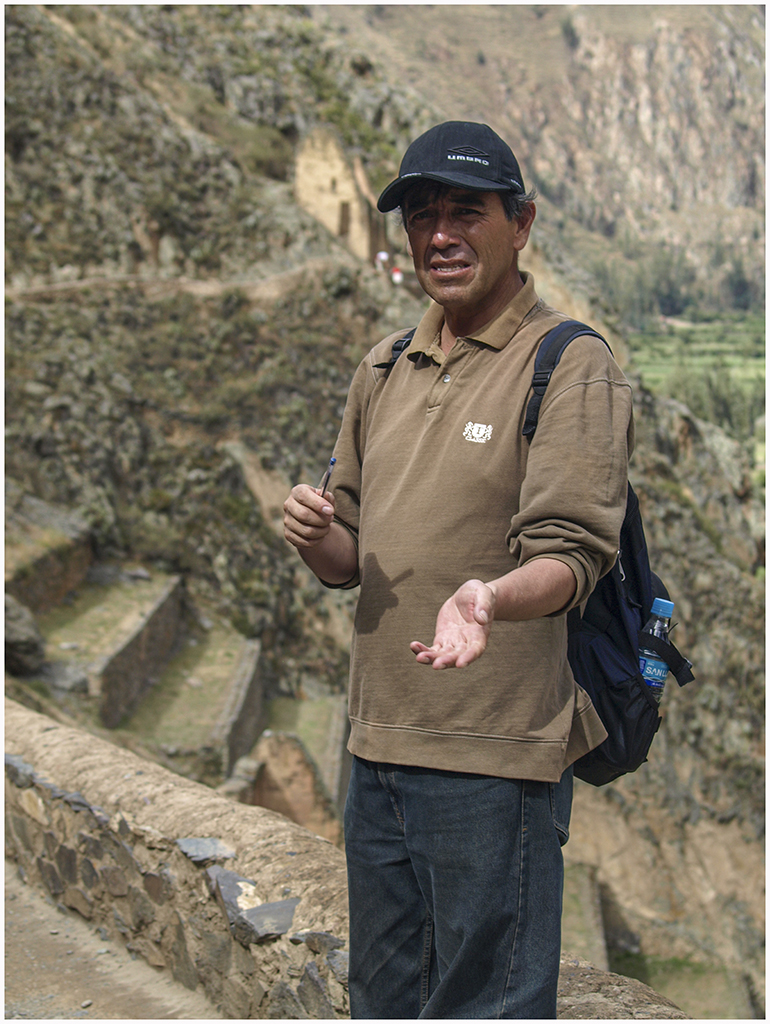
|
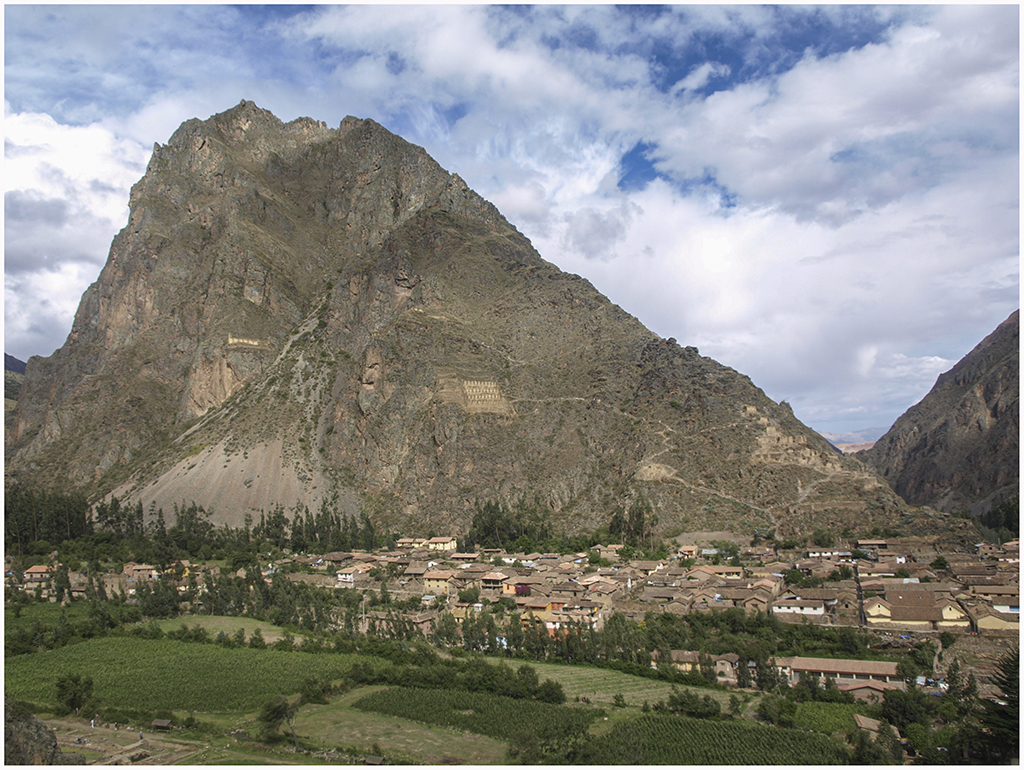
Ollantaytambo
Cacti
Ollantaytambo Guide |
|
|
Across the Valley from Ollantaytambo
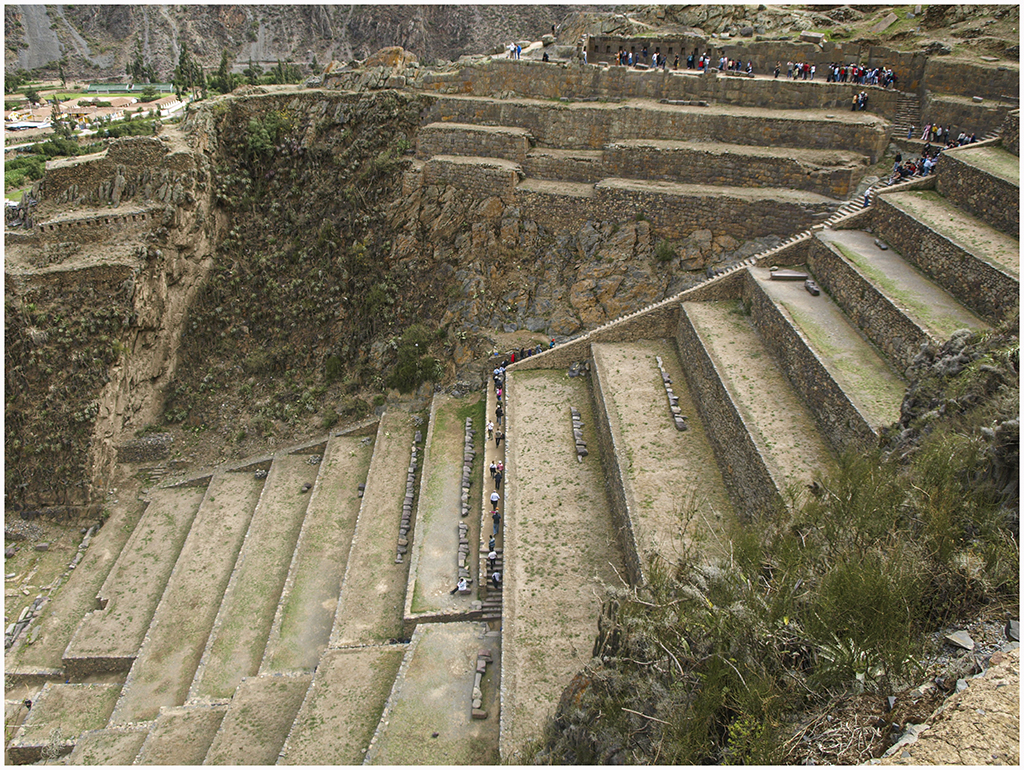
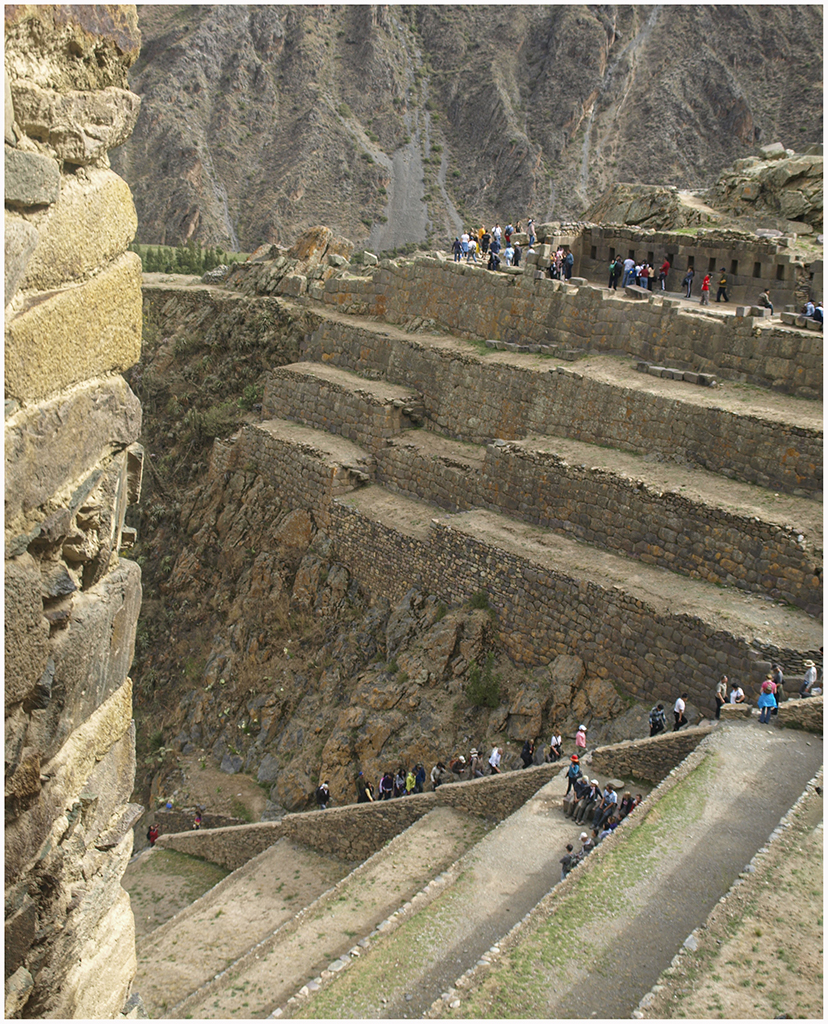
Ollantaytambo Terraces |
|
|
Ollantaytambo Terraces
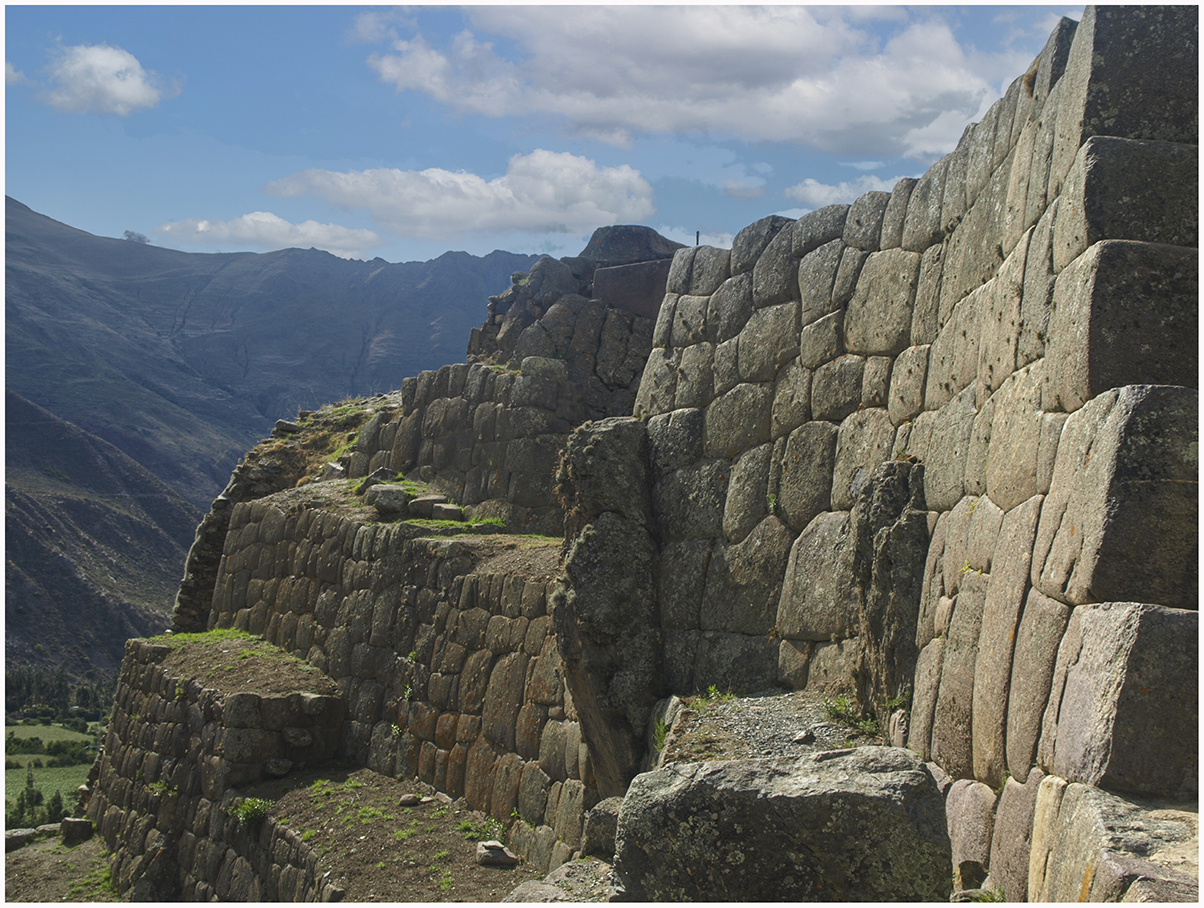
Ollantaytambo Stonework |
|
|
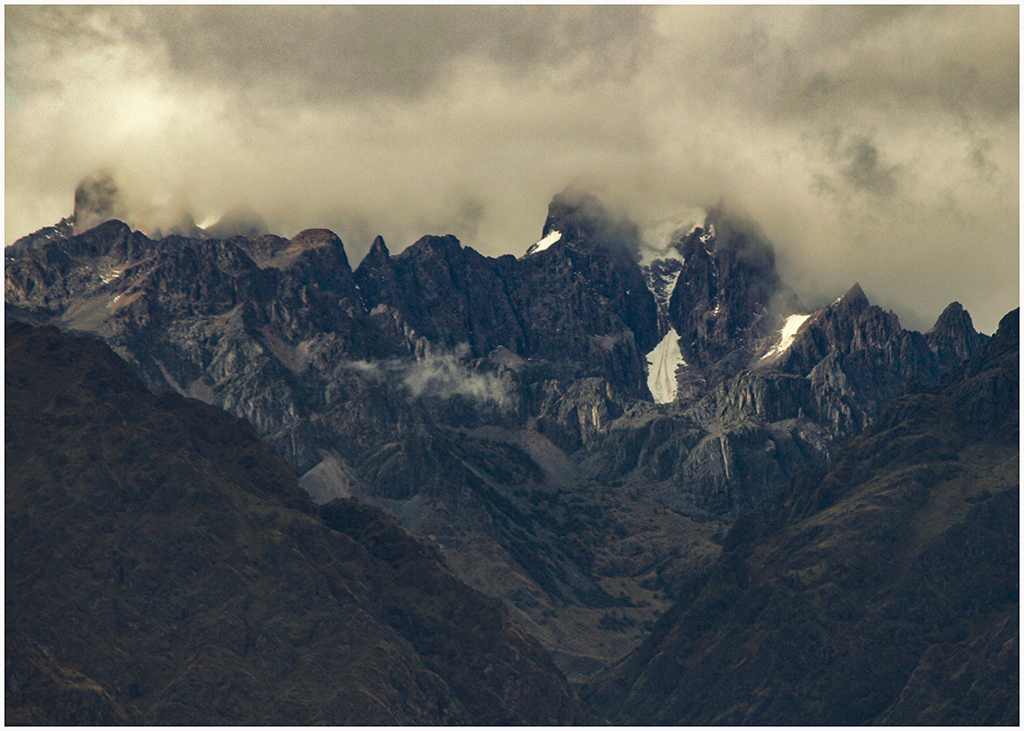
Road to Chinchero
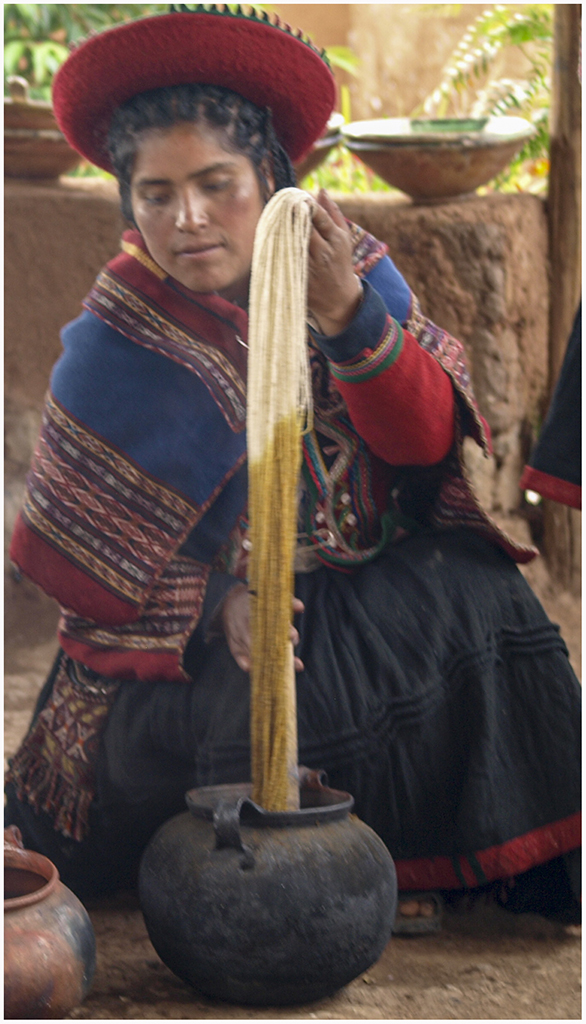
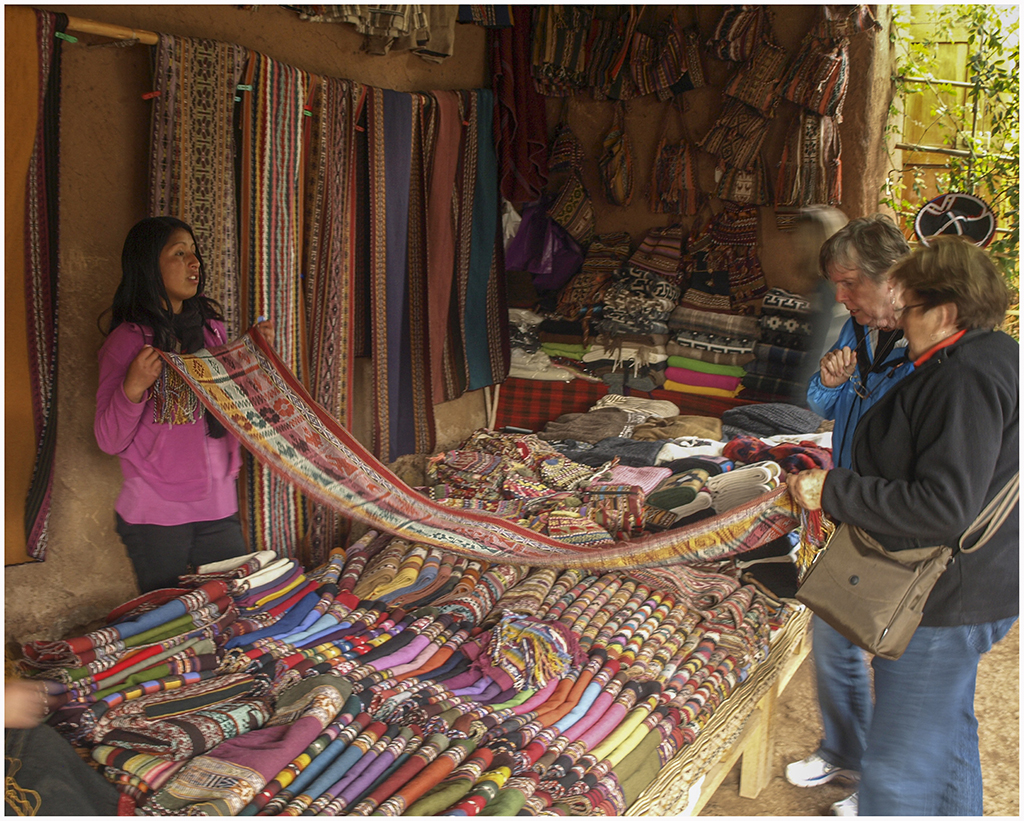
Dying Wool in Chinchero |
|
|
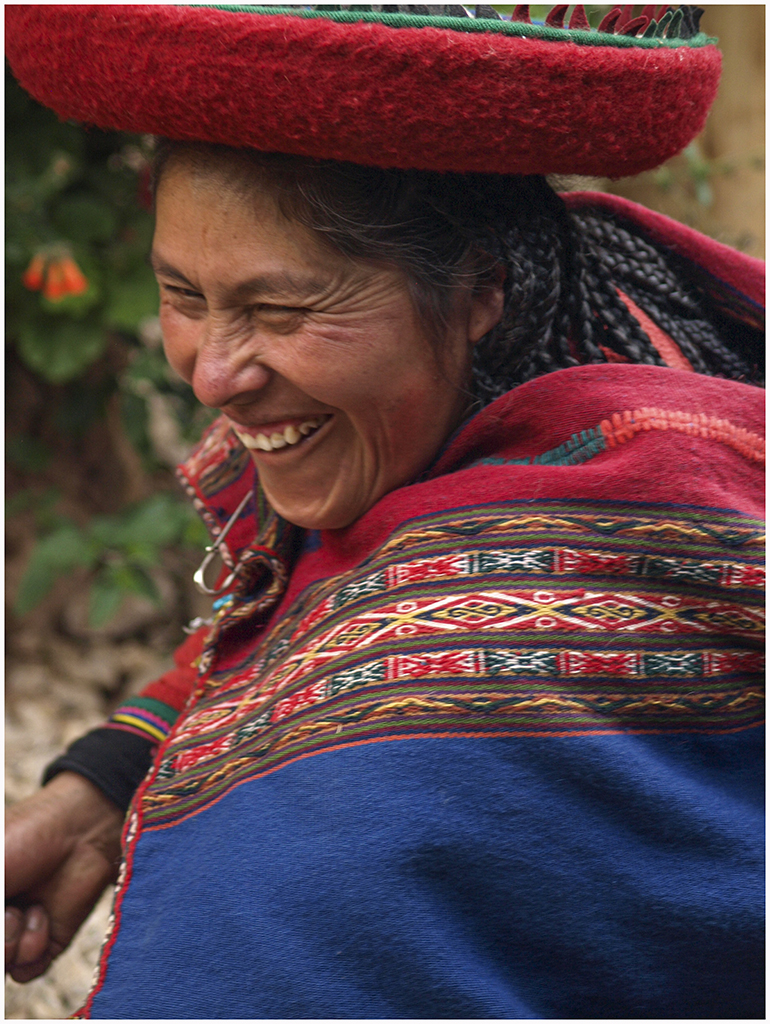
Chinchero Weaver
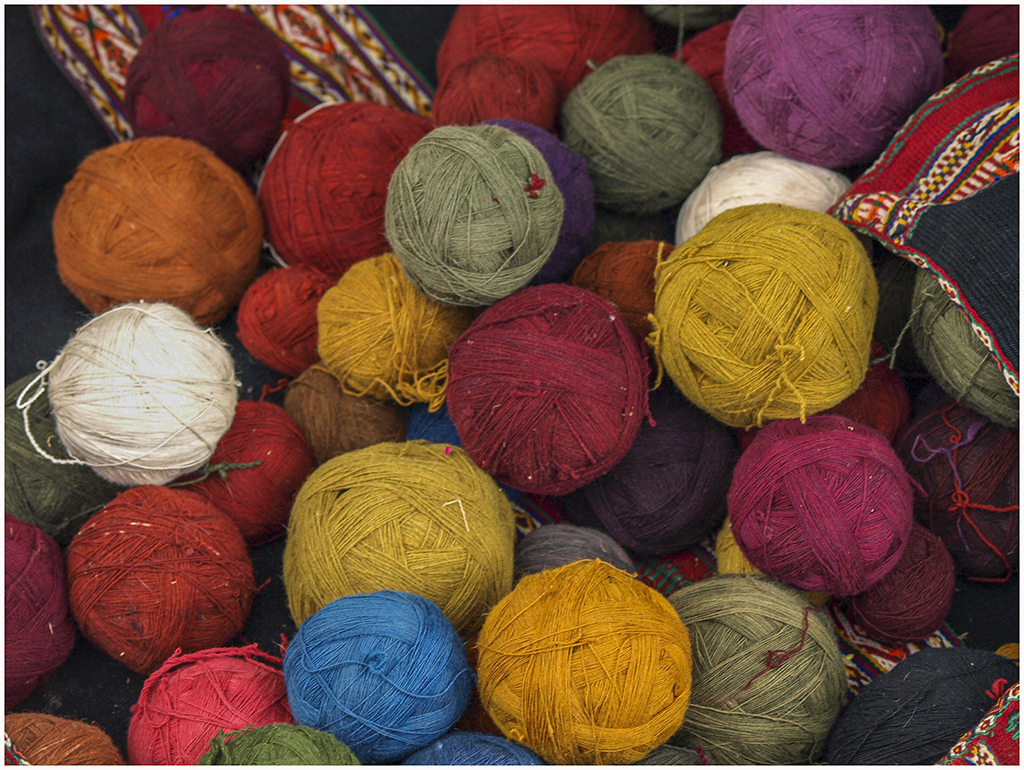
Chinchero Wool |
|
|
Shopping in Chinchero
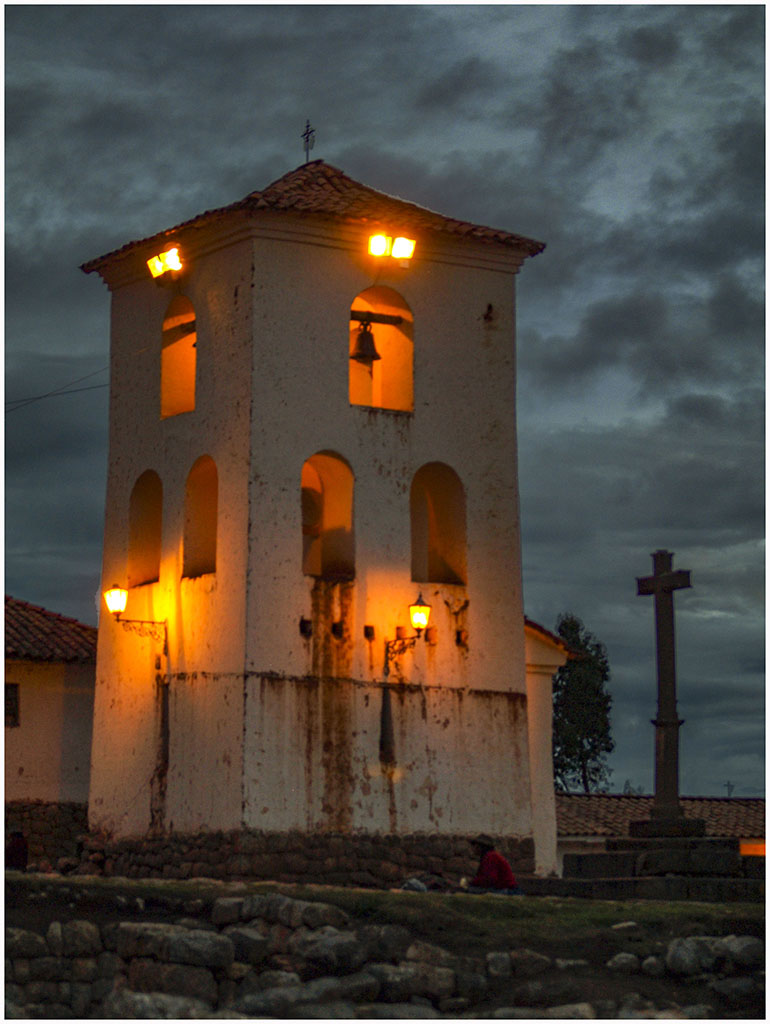
Chinchero Sunset |
Day 5: Train to Aguas Calientes, Machu Picchu
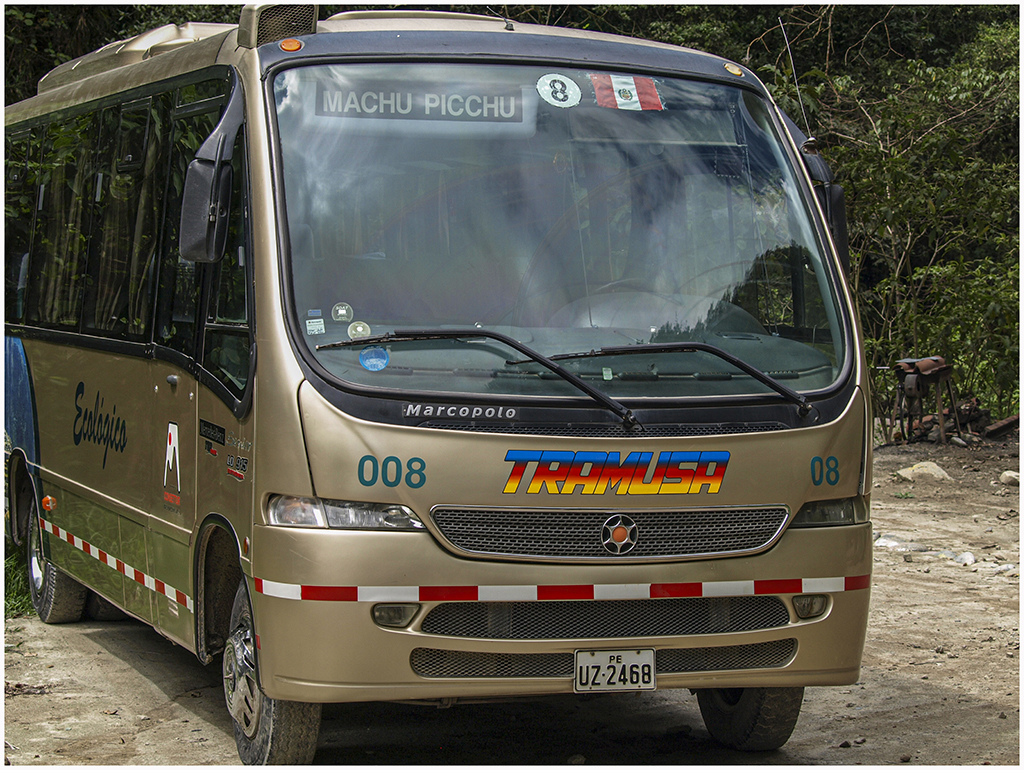
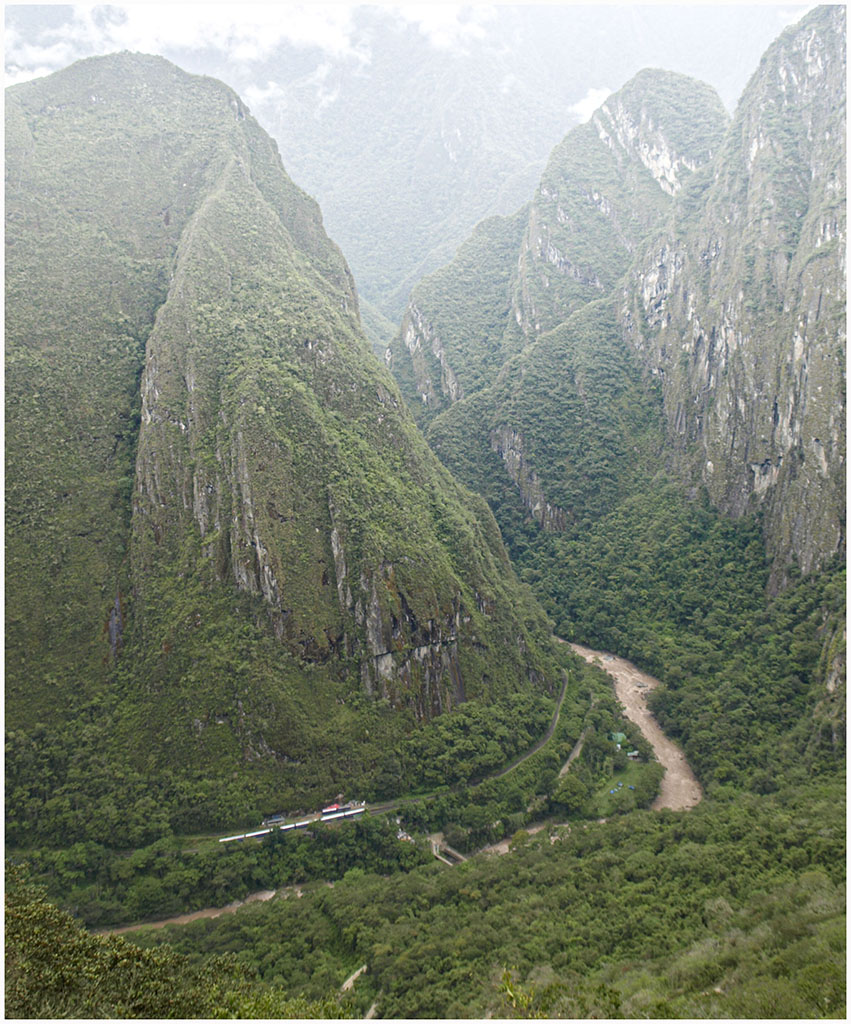
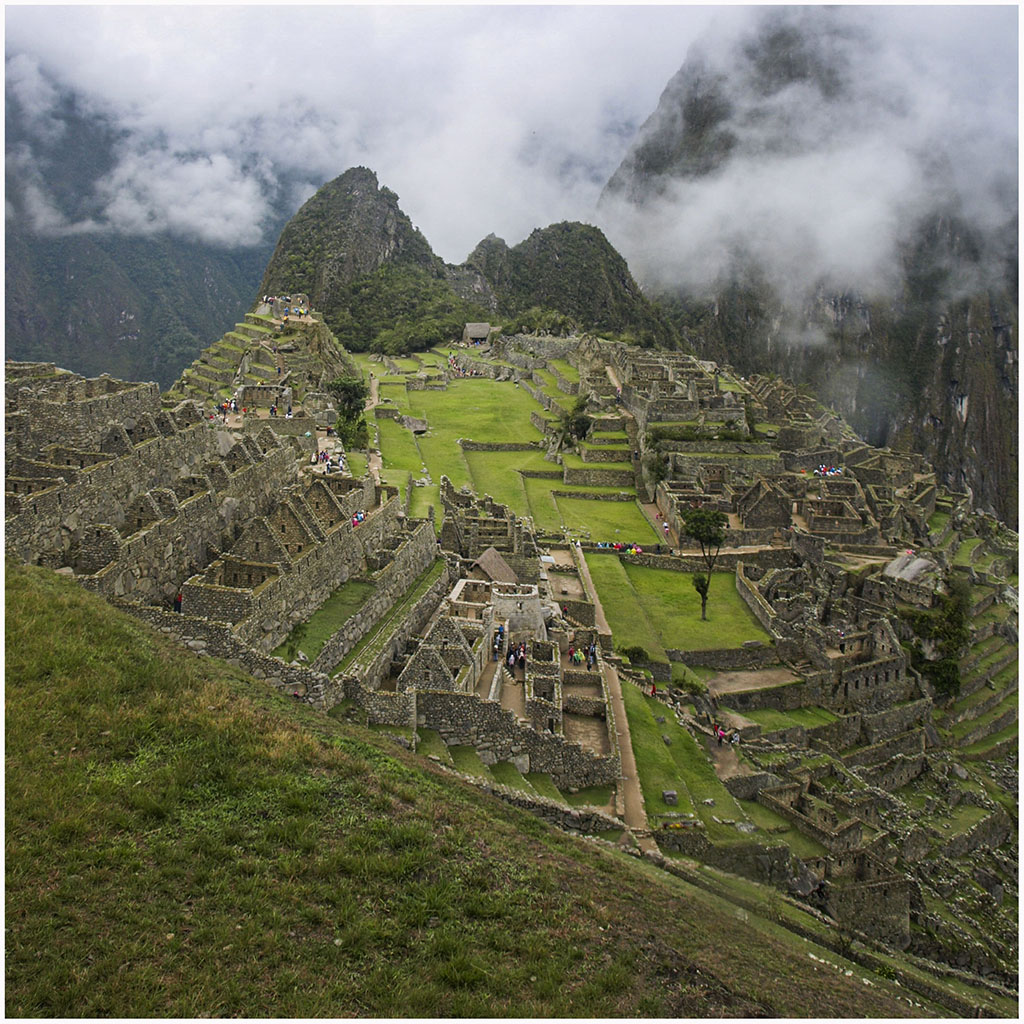
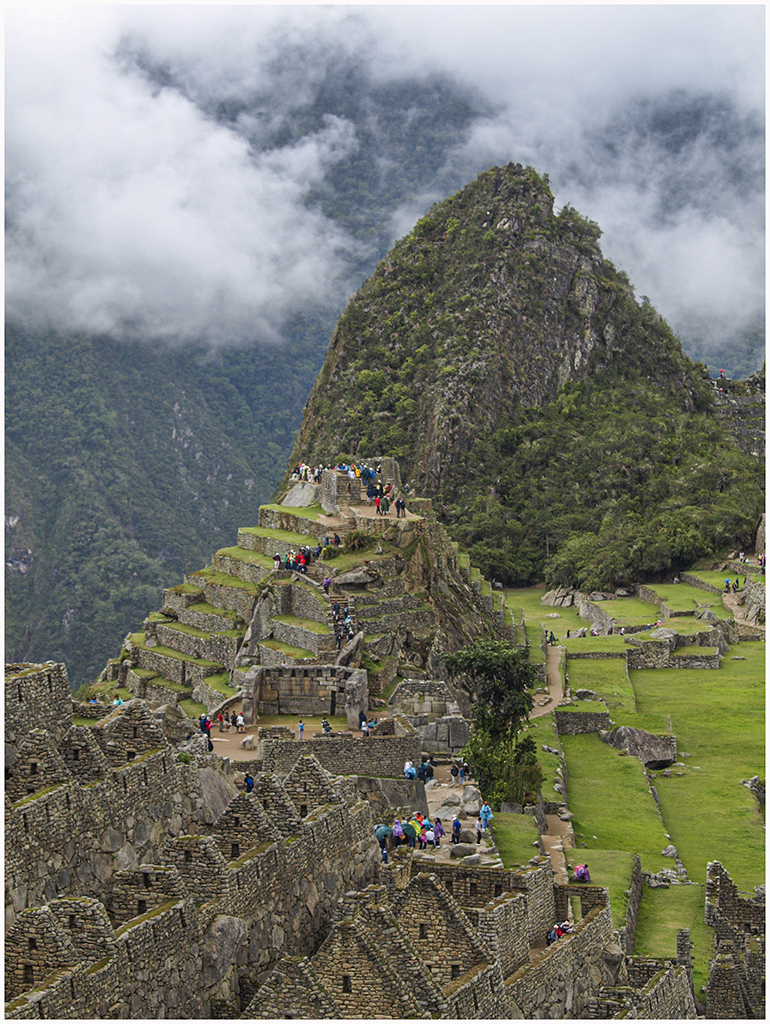
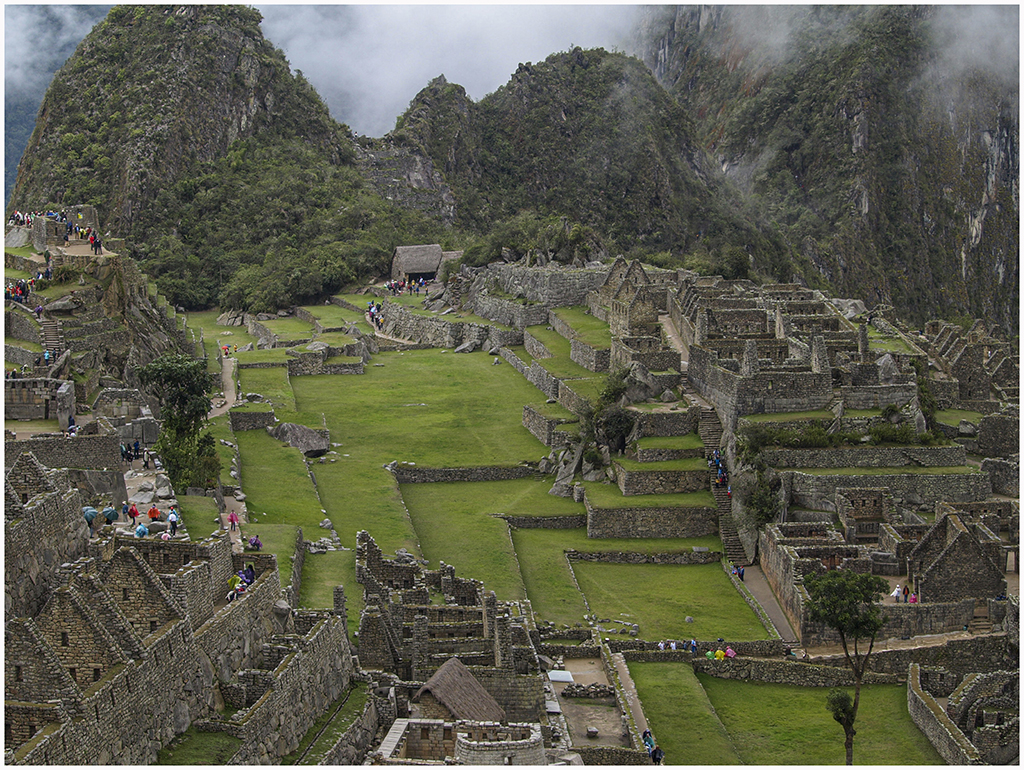
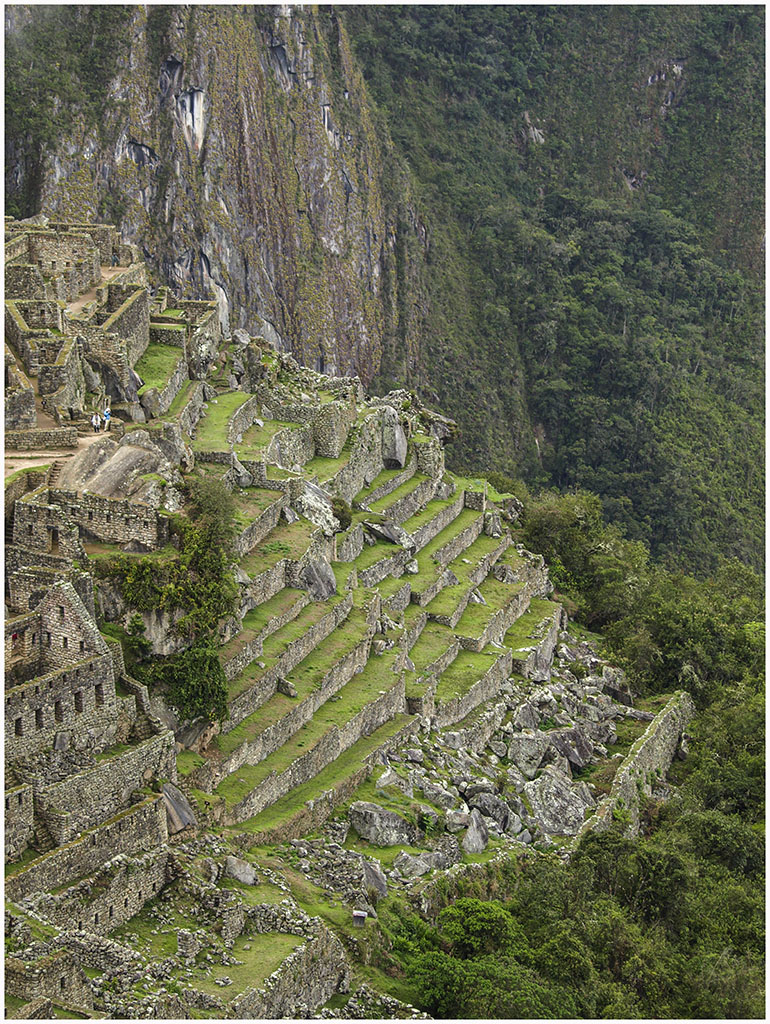
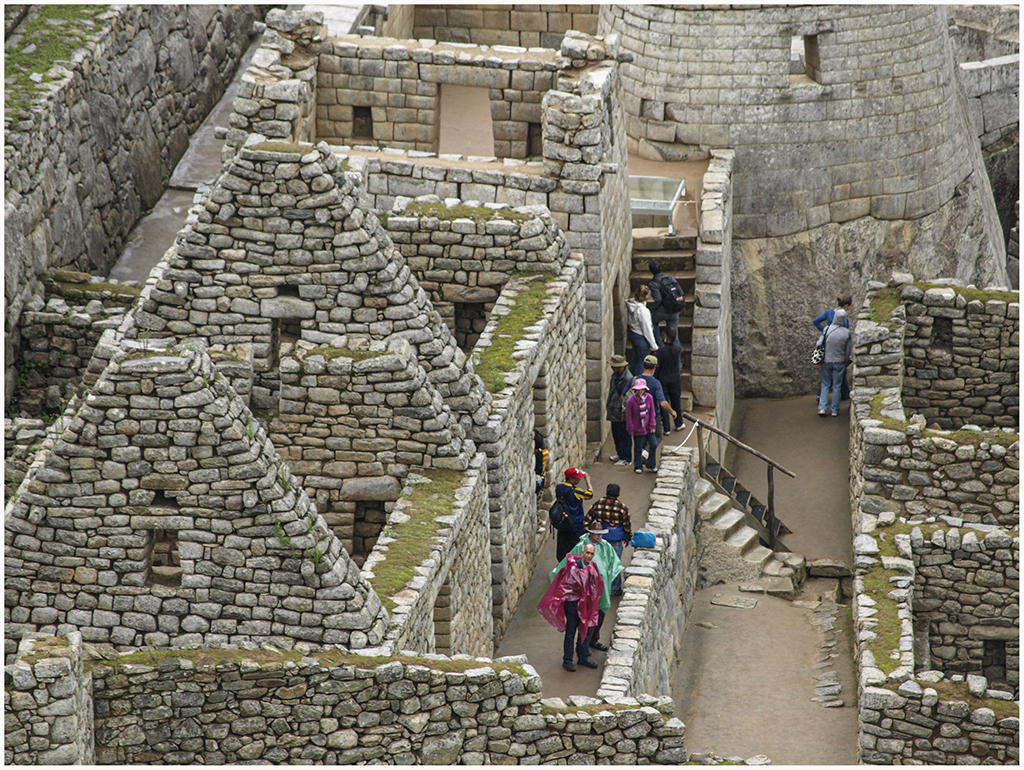
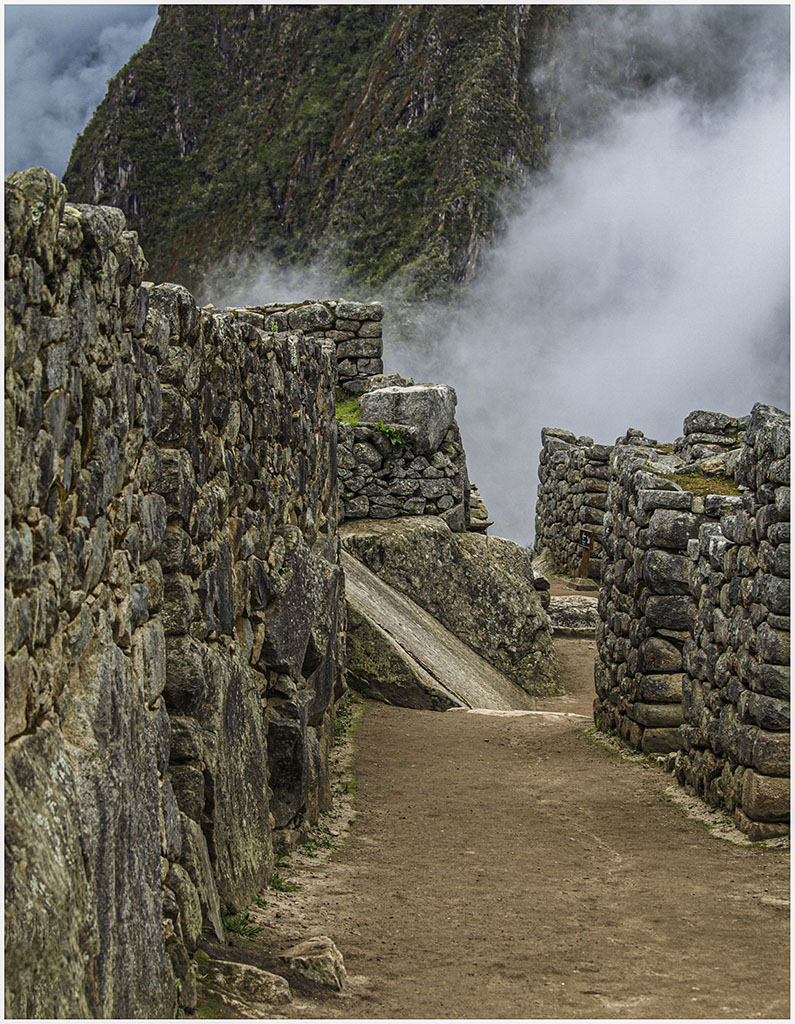
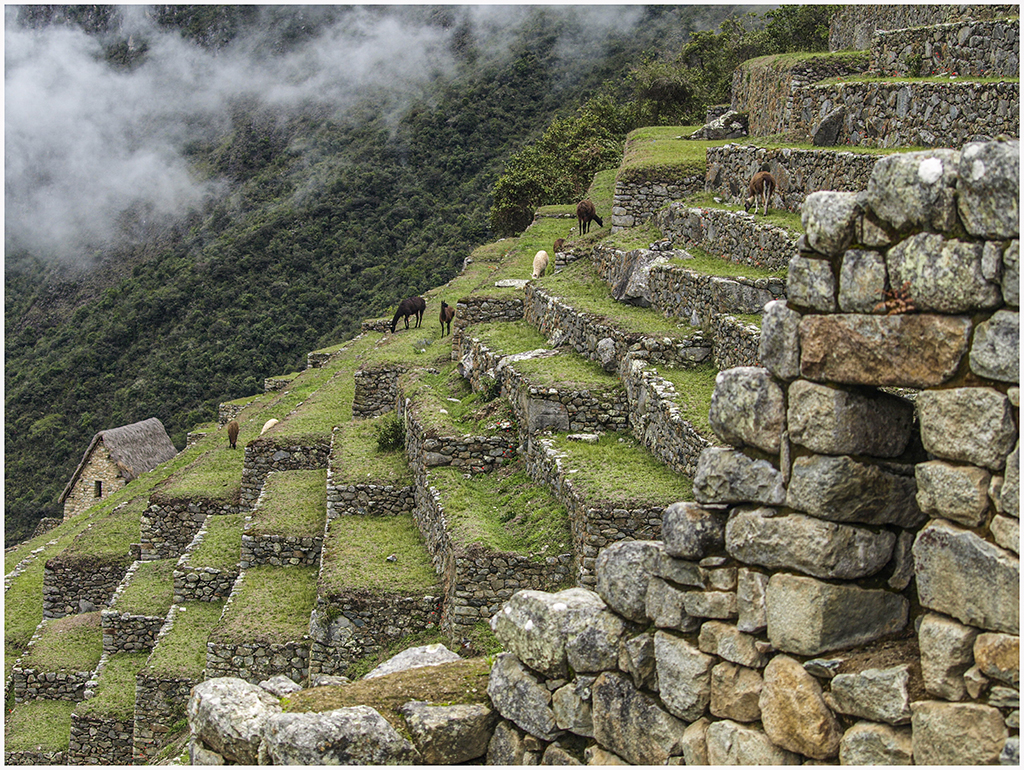
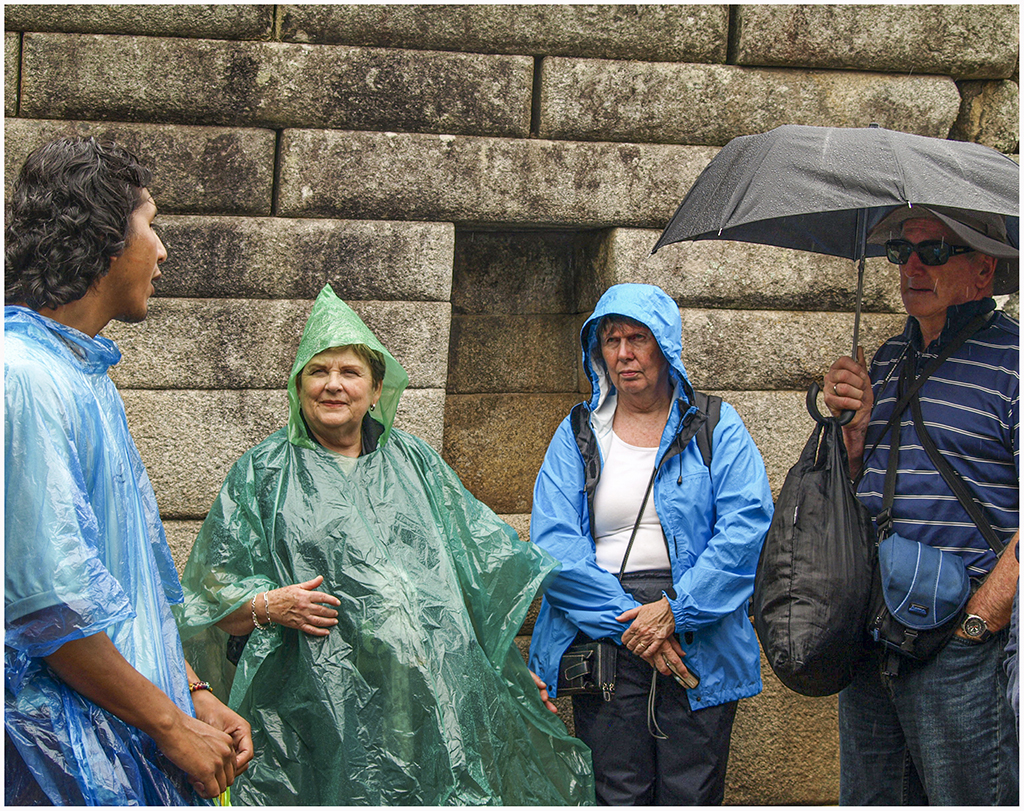
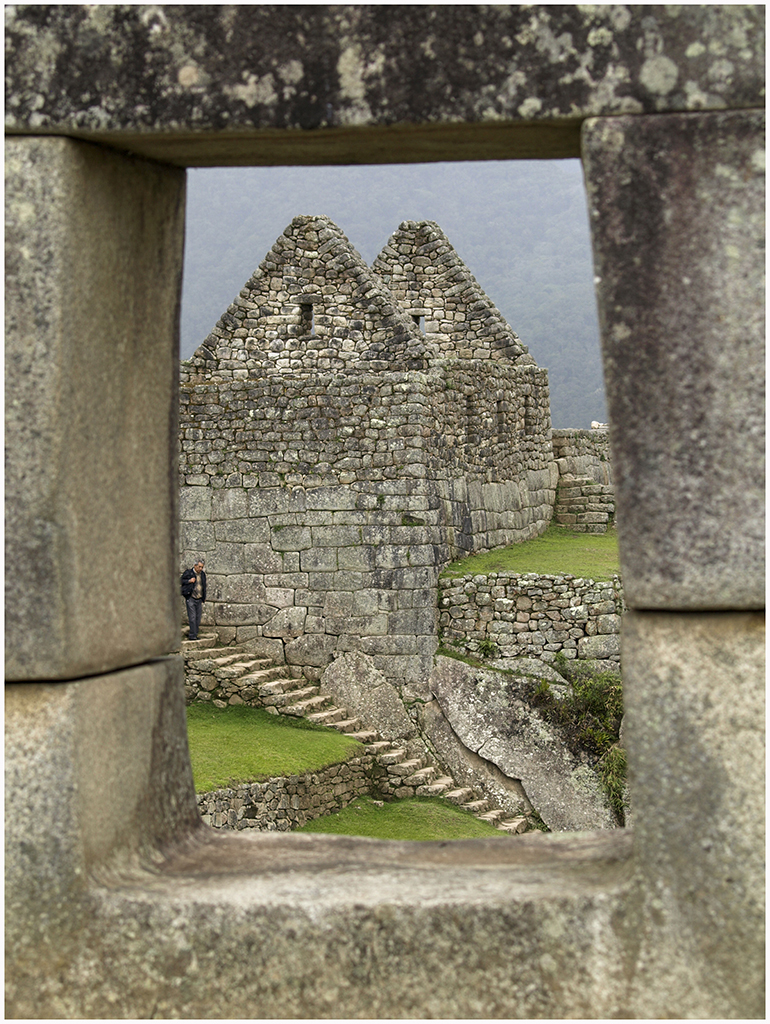
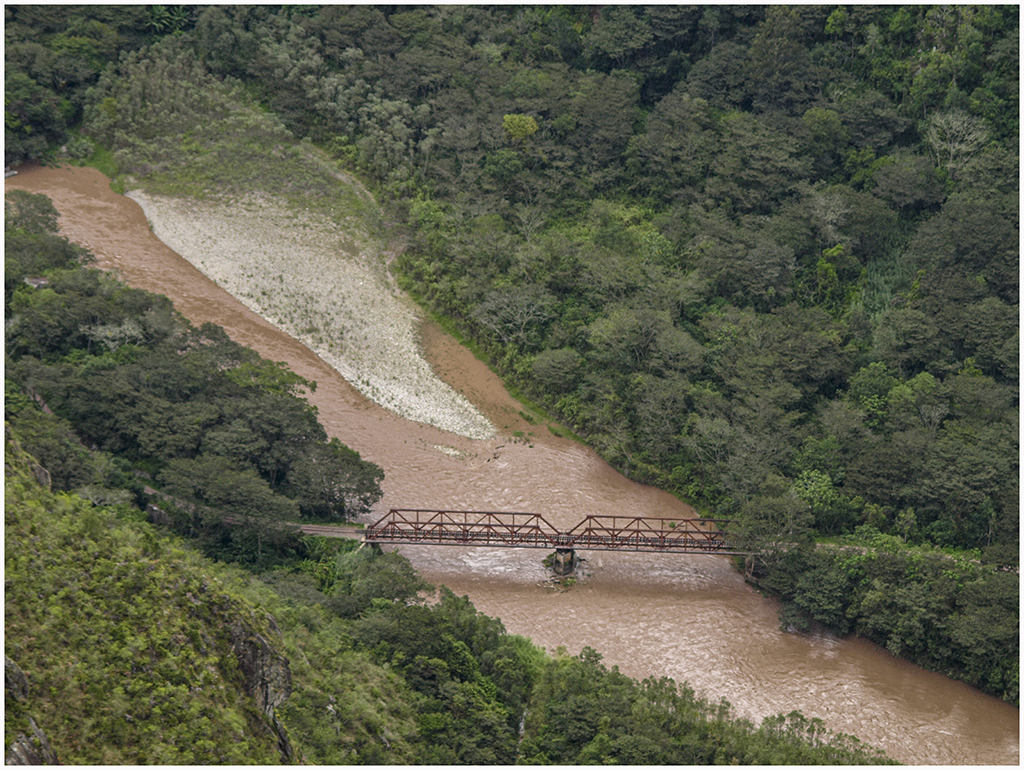
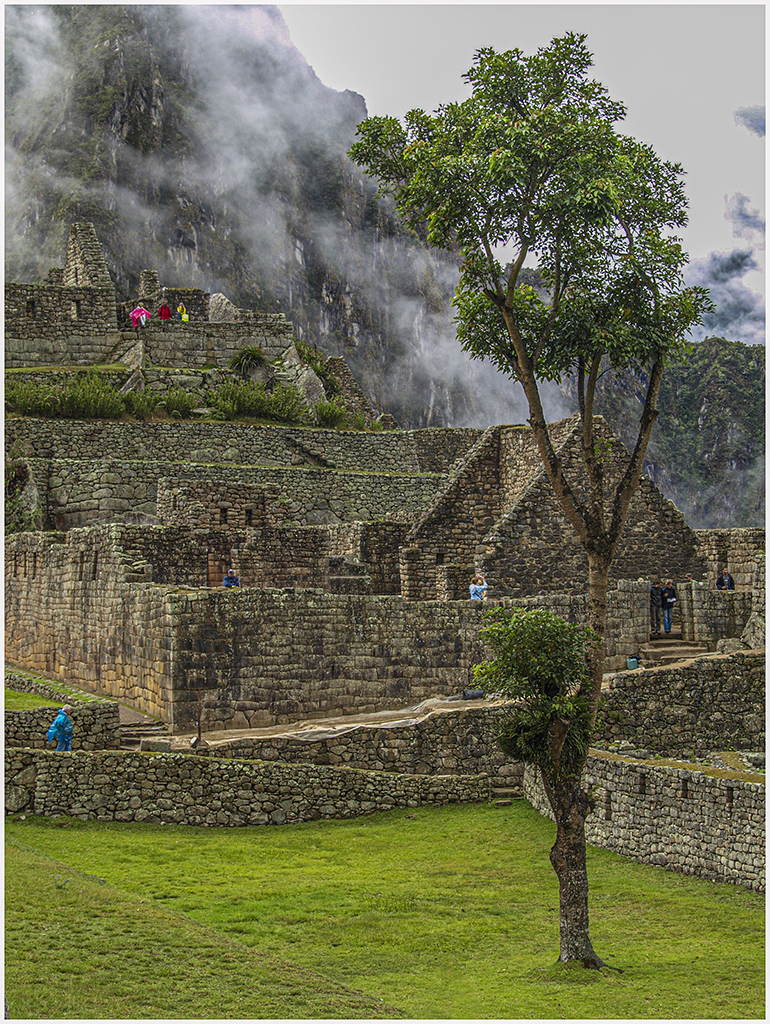
On the fifth day we again began in Cusco and this time took the train, Peru Rail, down the Sacred Valley to Aguas Calientes where we checked into a hotel overlooking the train tracks and immediately went to the starting point for the buses up the steep switchback road to Machu Picchu, the highlight of any trip to Peru. Machu Picchu is another example of incredible Incan stonework. But it is much more than that sitting atop a steep mountain peak above a bend in the Urubamba River. In the early hours it is in clouds seeming to rise from the valley below. As the day goes on the clouds rise above and the sun begins to shine. We spent our first couple of hours touring the site with a guide while wearing colorful rain coverings and umbrellas. After our tour we climbed a little higher onto the site to look down on the sun-drenched afternoon. |
|
|
Machu Picchu Bus
Machu Piccu View of Urubamba River |
|
|
Morning Clouds over Machu Picchu
Morning Clouds over Machu Picchu |
|
|
Machu Picchu View
Machu Picchu Steep Hillside |
|
|
Machu Picchu Structures
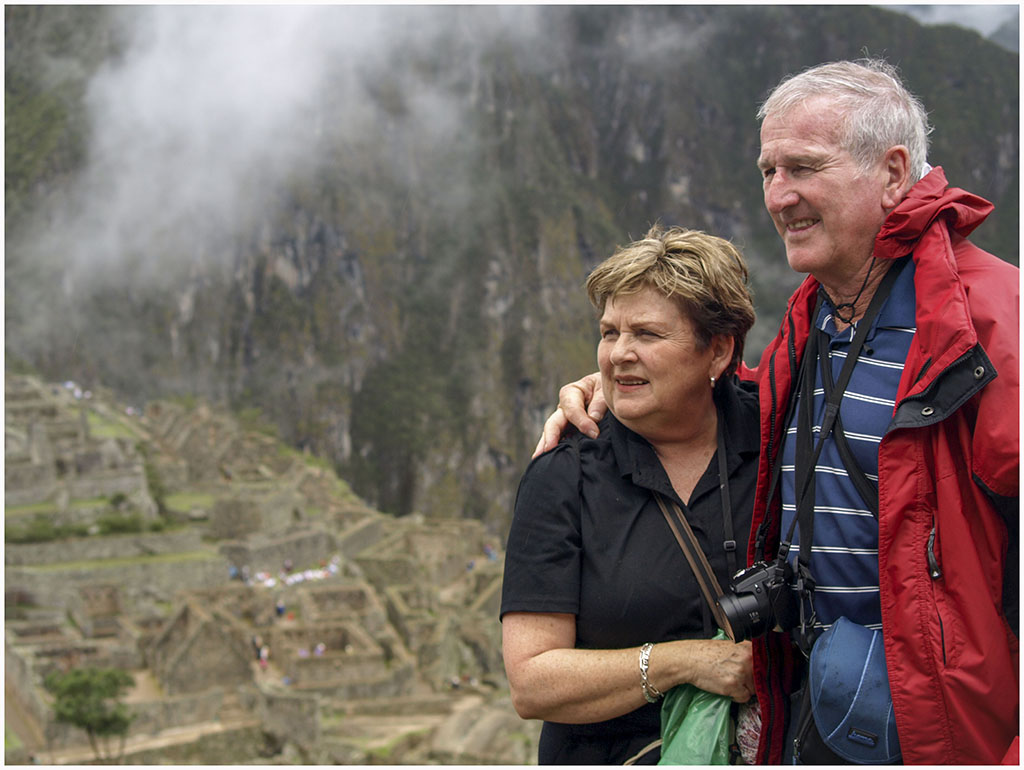
Dowds at Machu Picchu |
|
|
Machu Picchu Walkway with Clouds
Machu Picchu Terraces |
|
|
Machu Picchu In the Rain
Machu Picchu Window |
|
|
Bridge over Urubamba River
Tree at Machu Picchu |
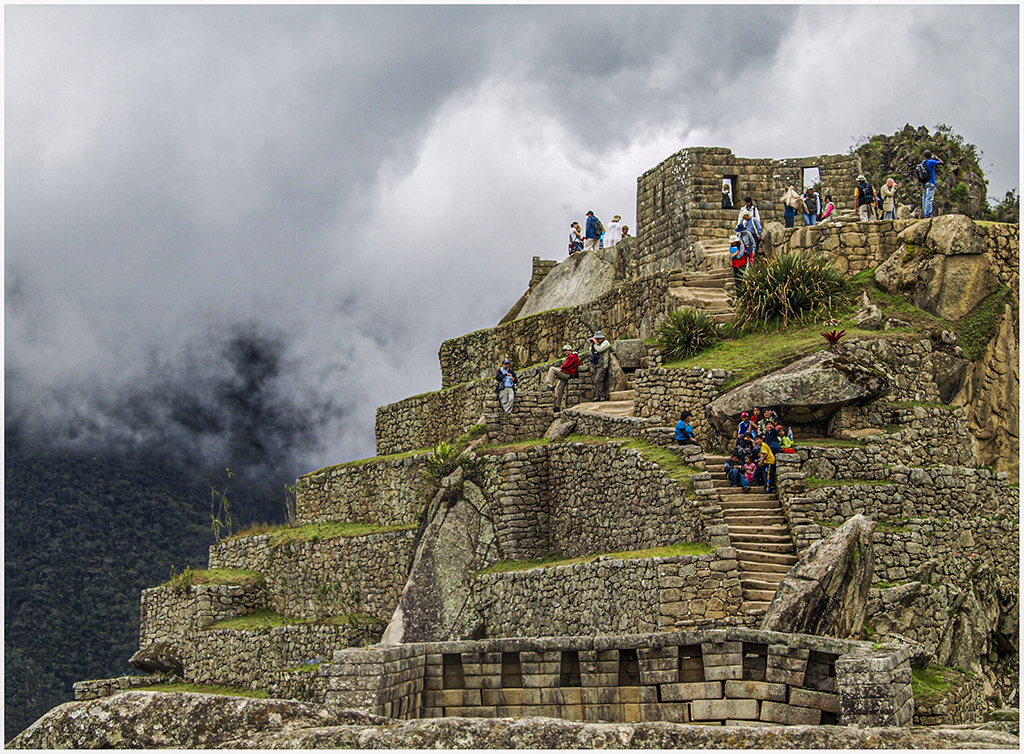
|
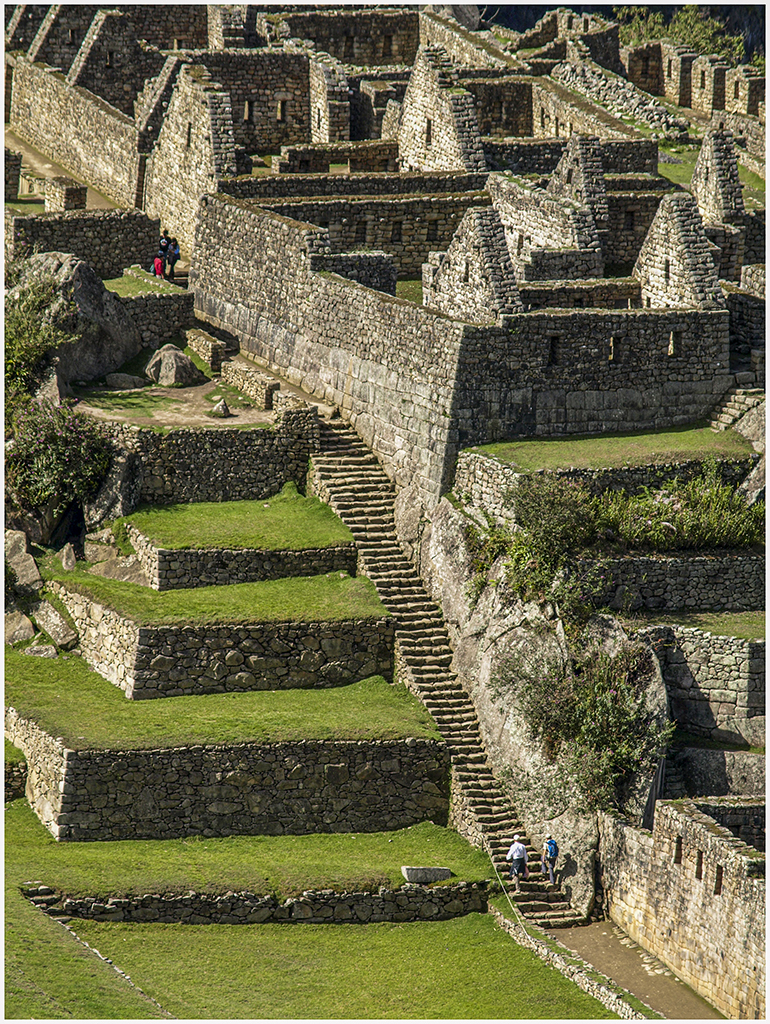
|
Climbing Machu Picchu
Many Steps at Machu Picchu |
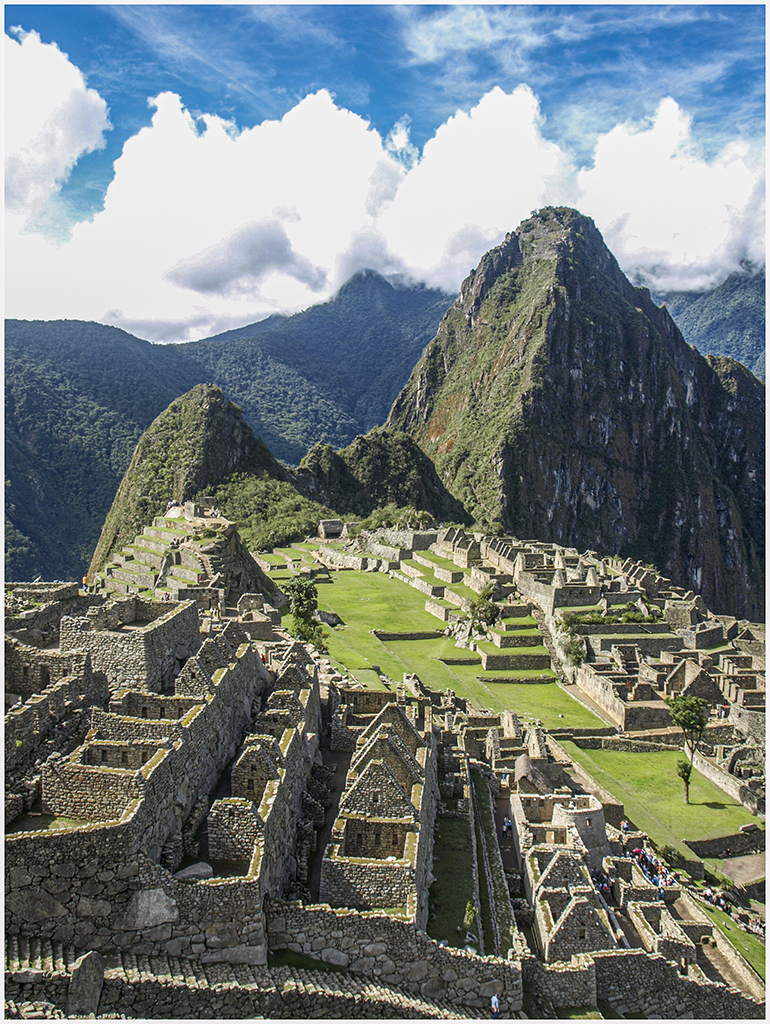
|
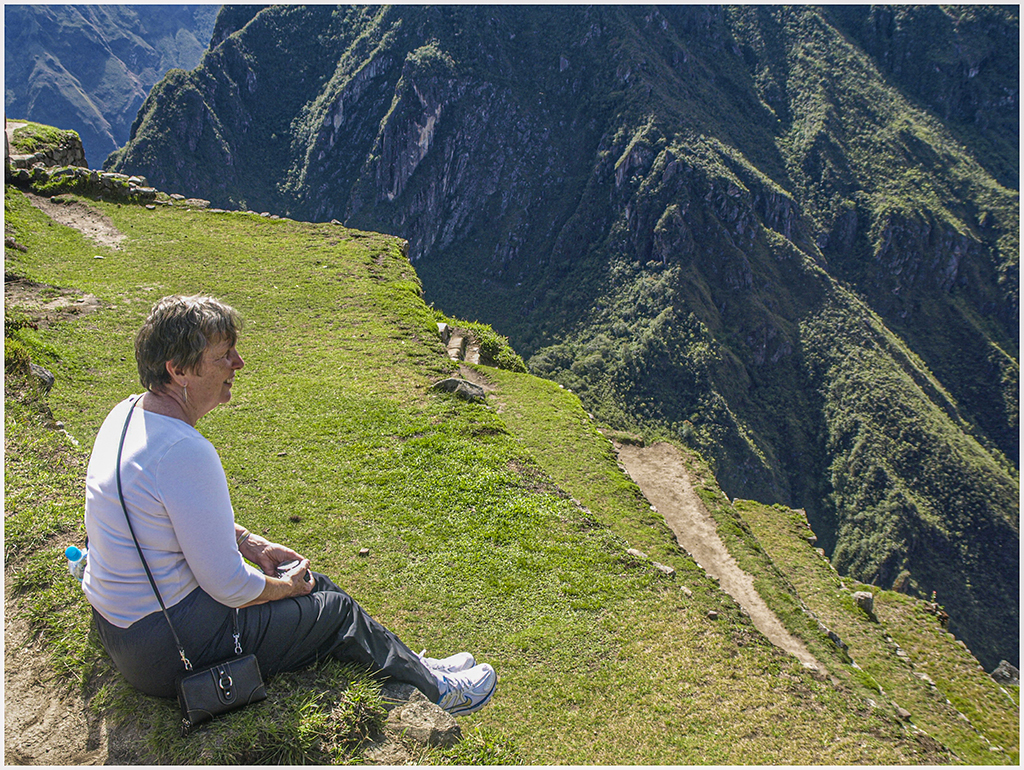
|
The Sun comes out at Machu Picchu
Shirley Enjoying the Sun at Machu Picchu |
|
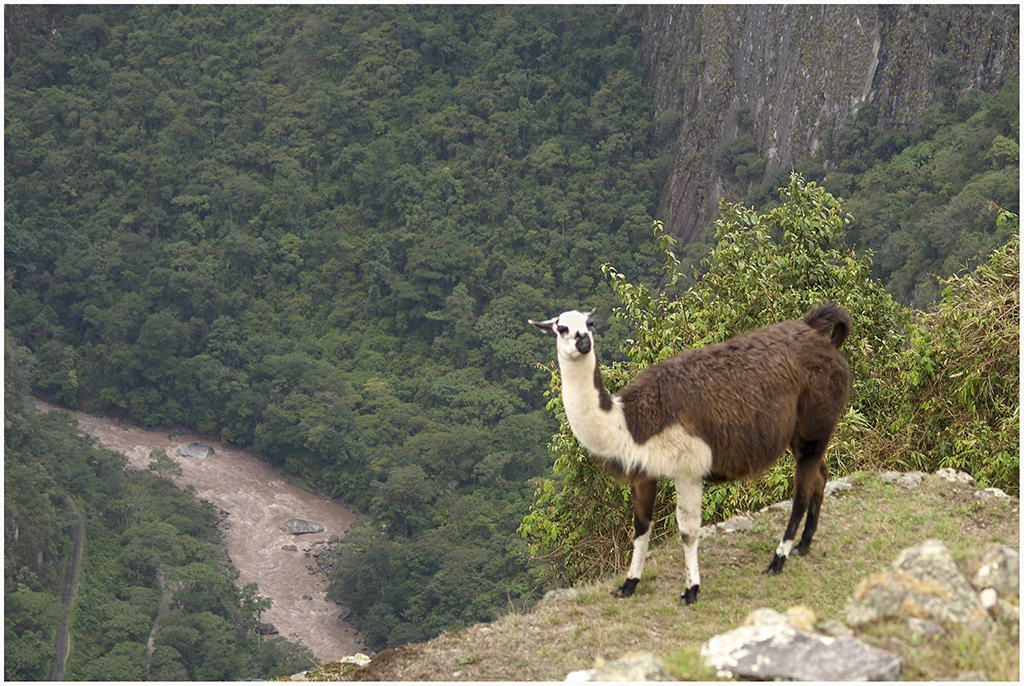
Llama on Machu Picchu |
Day 6: Aguas Calientes
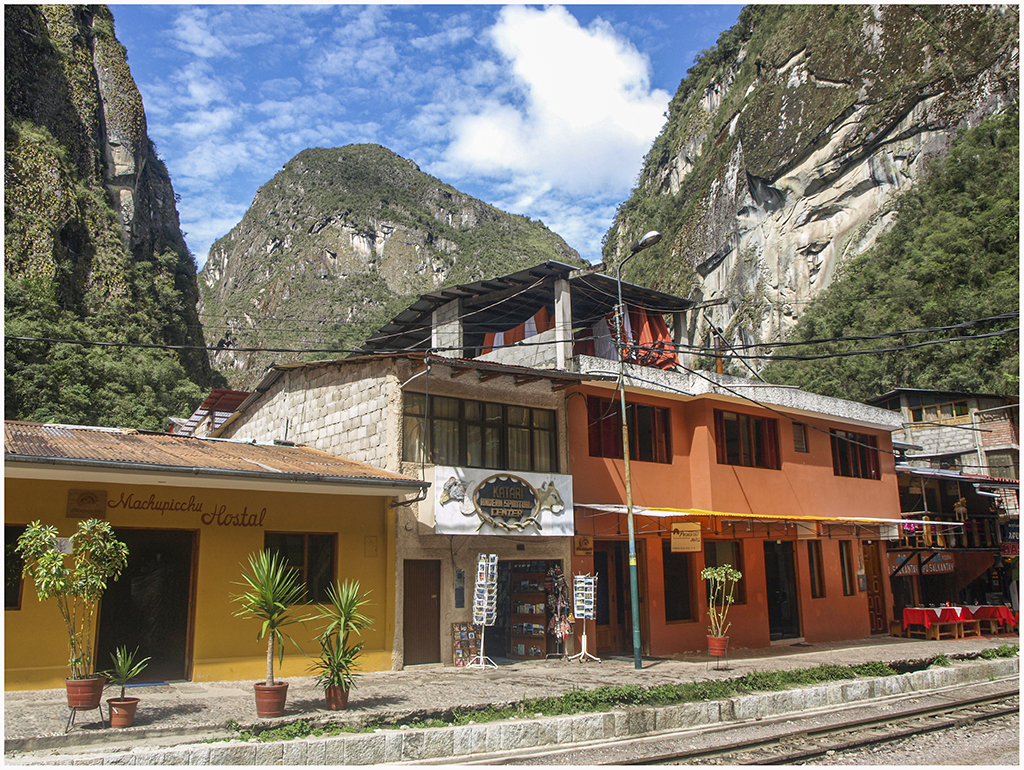
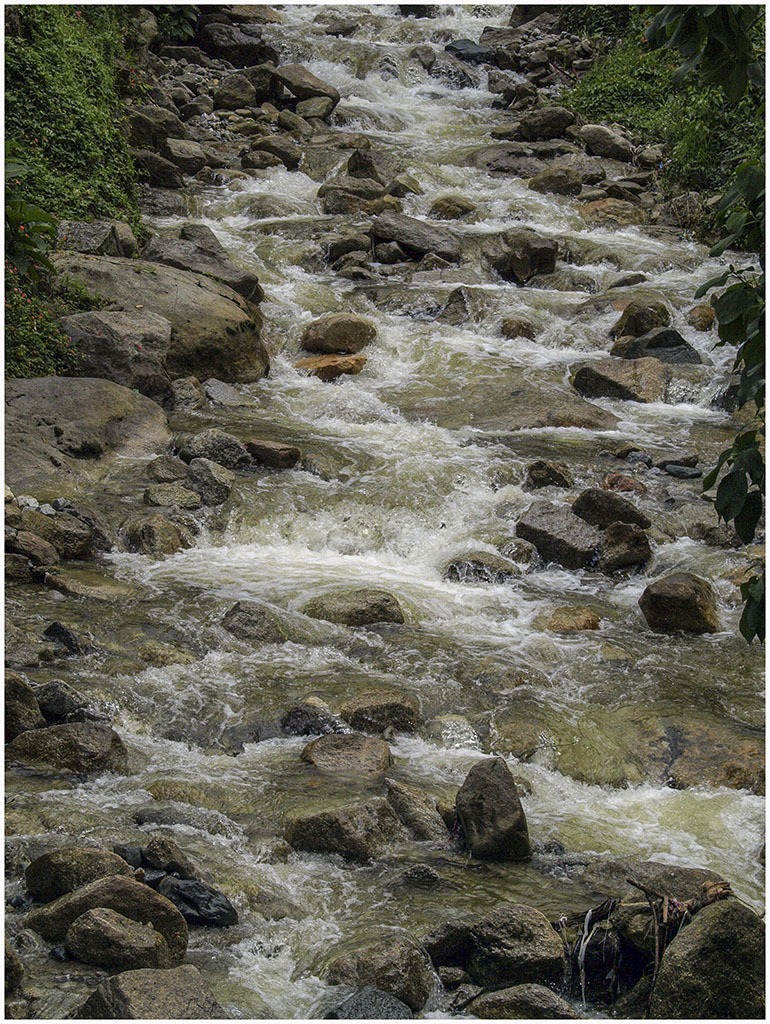
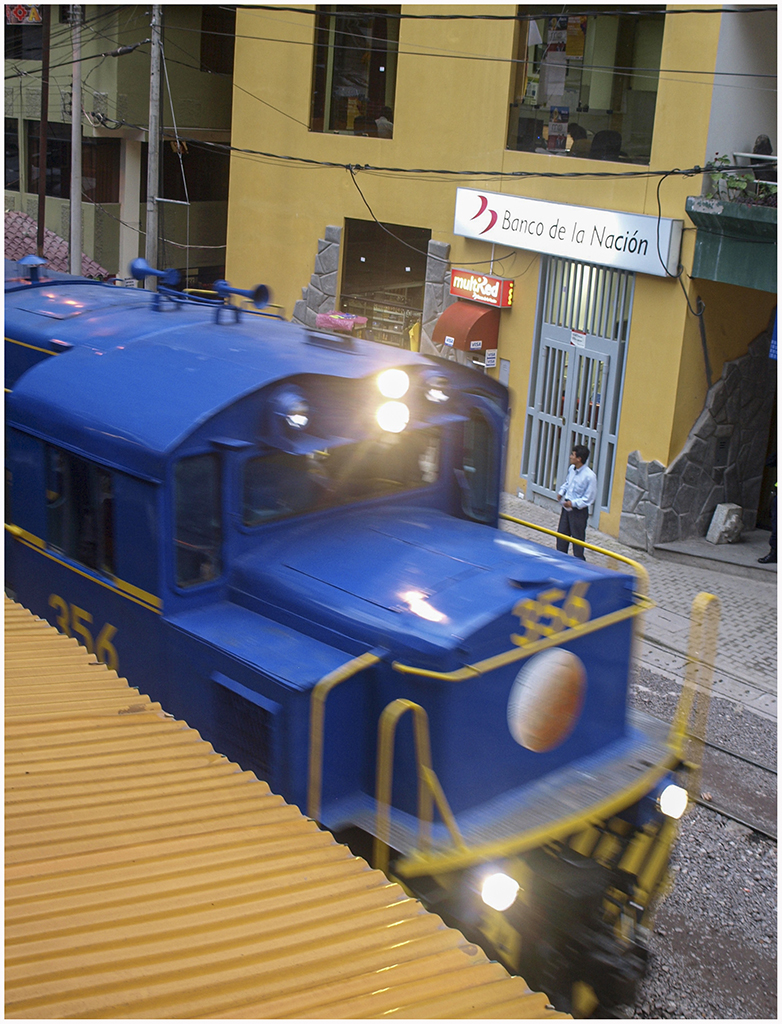
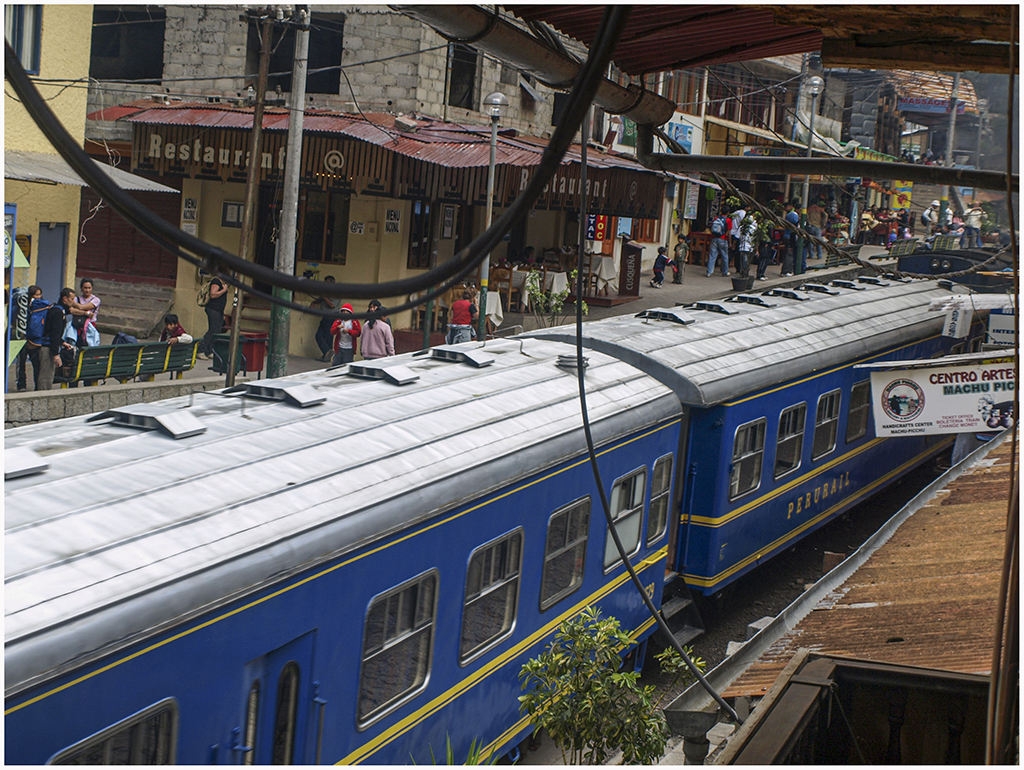
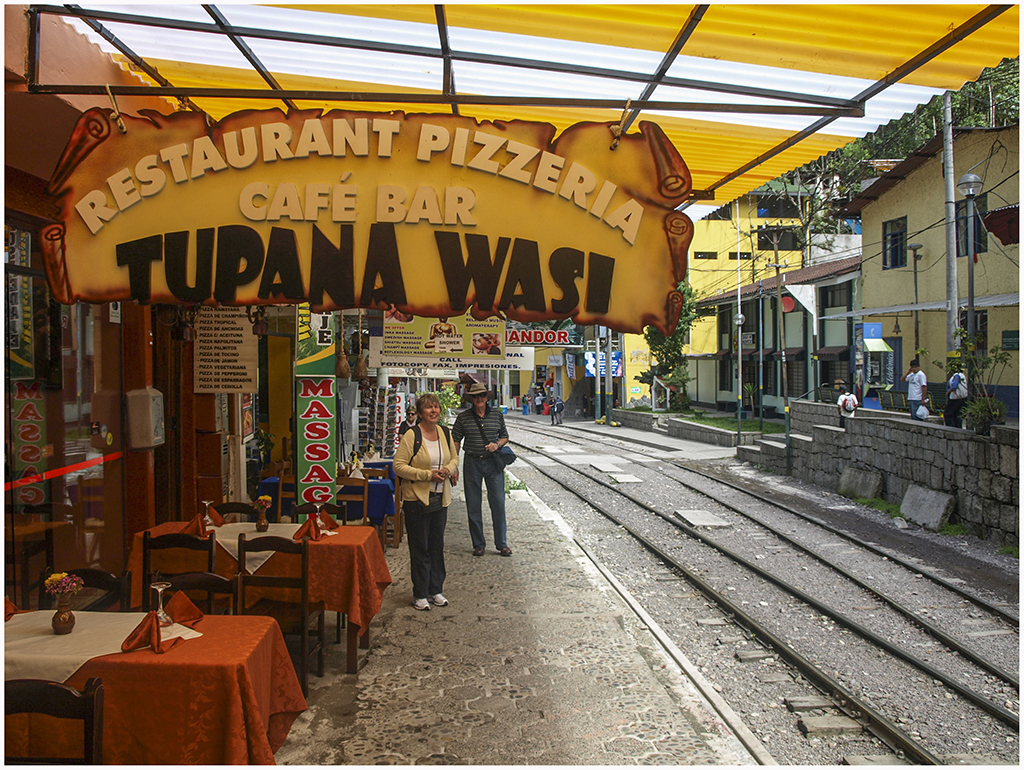
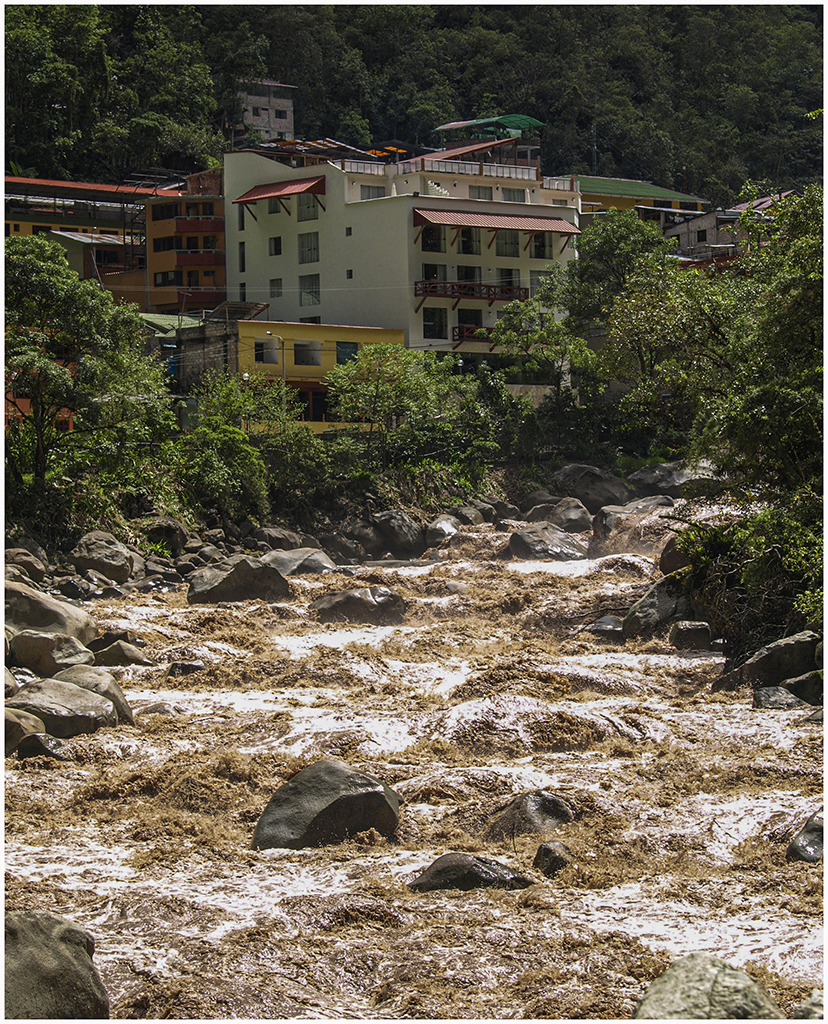
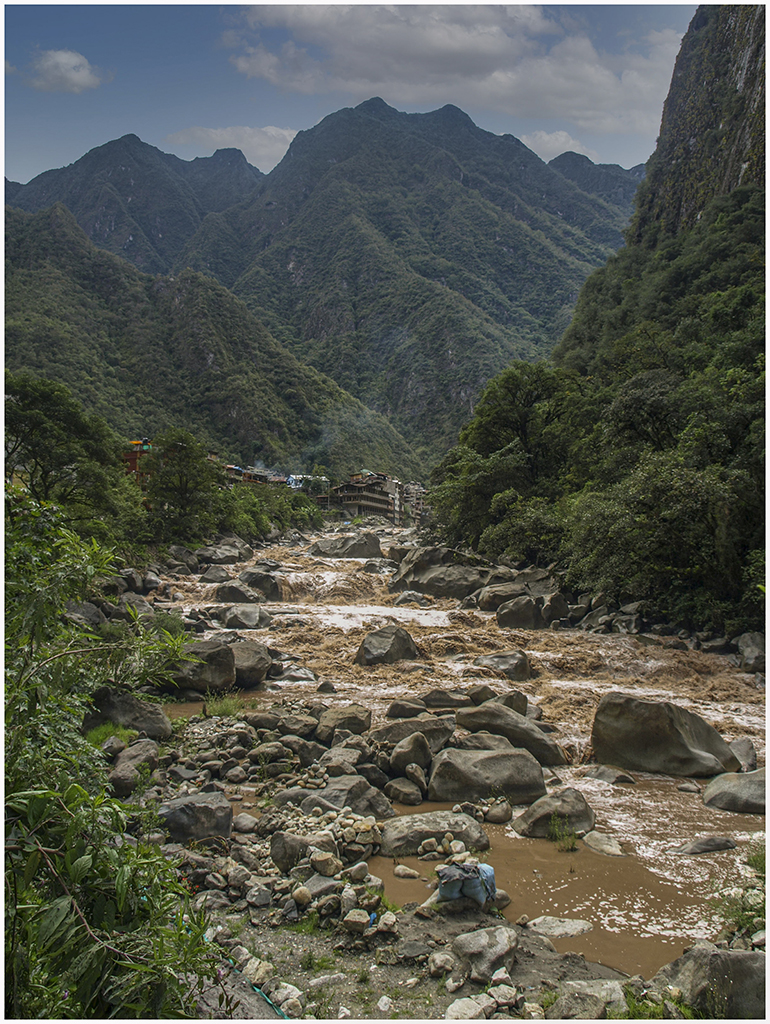
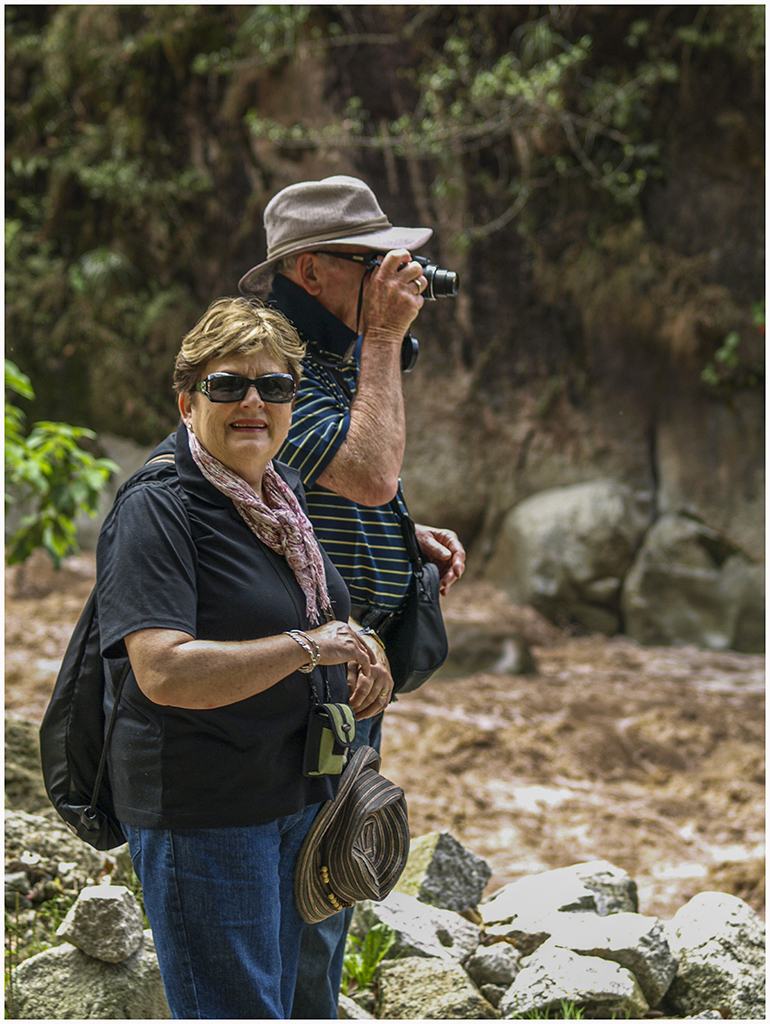
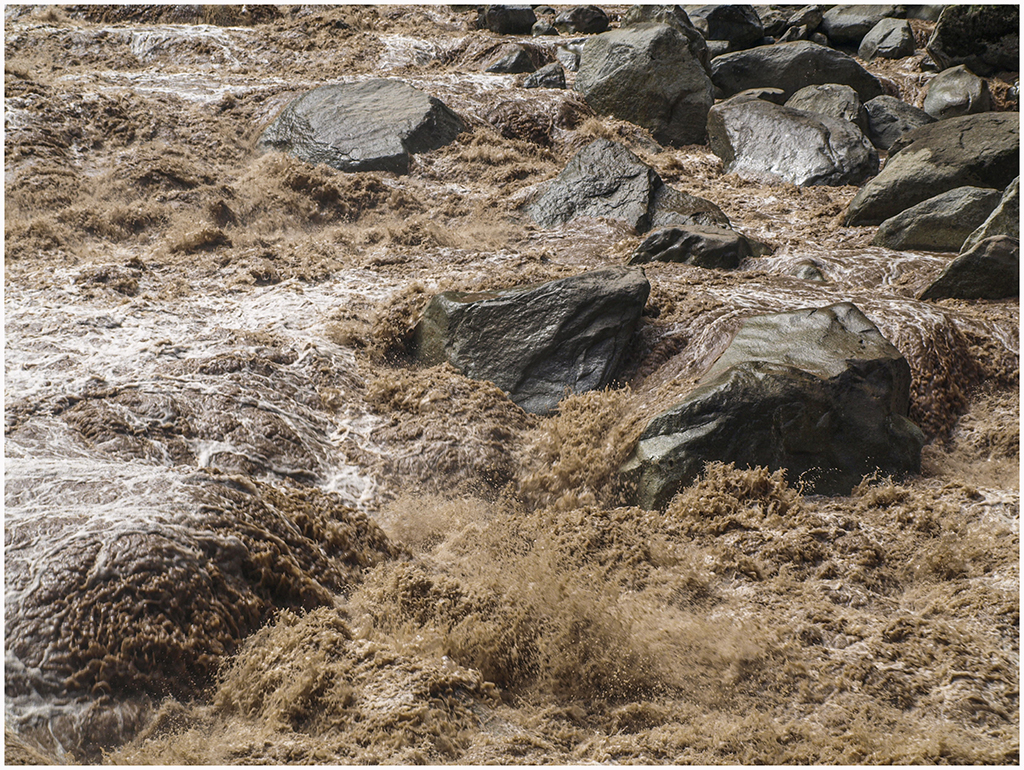
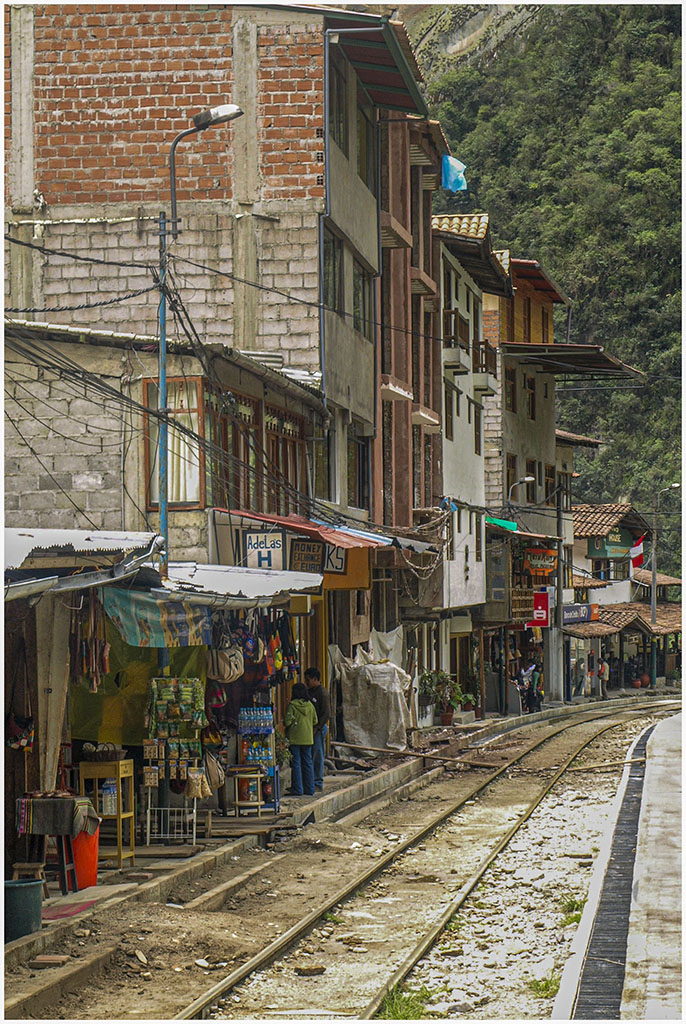
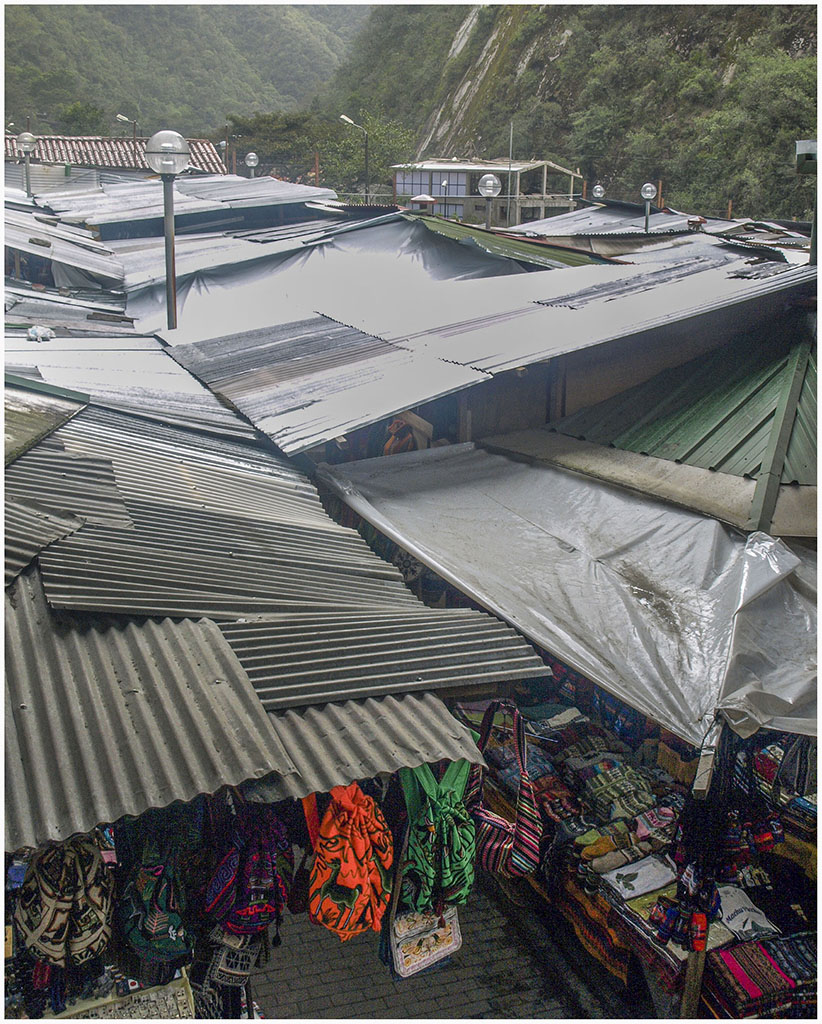
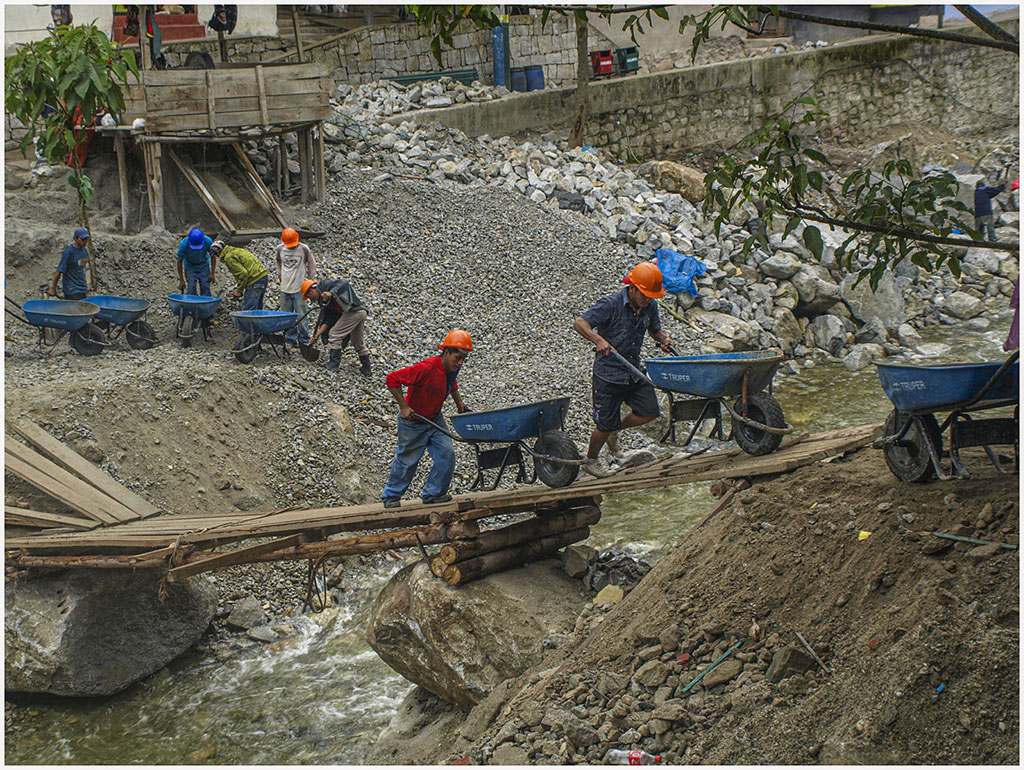
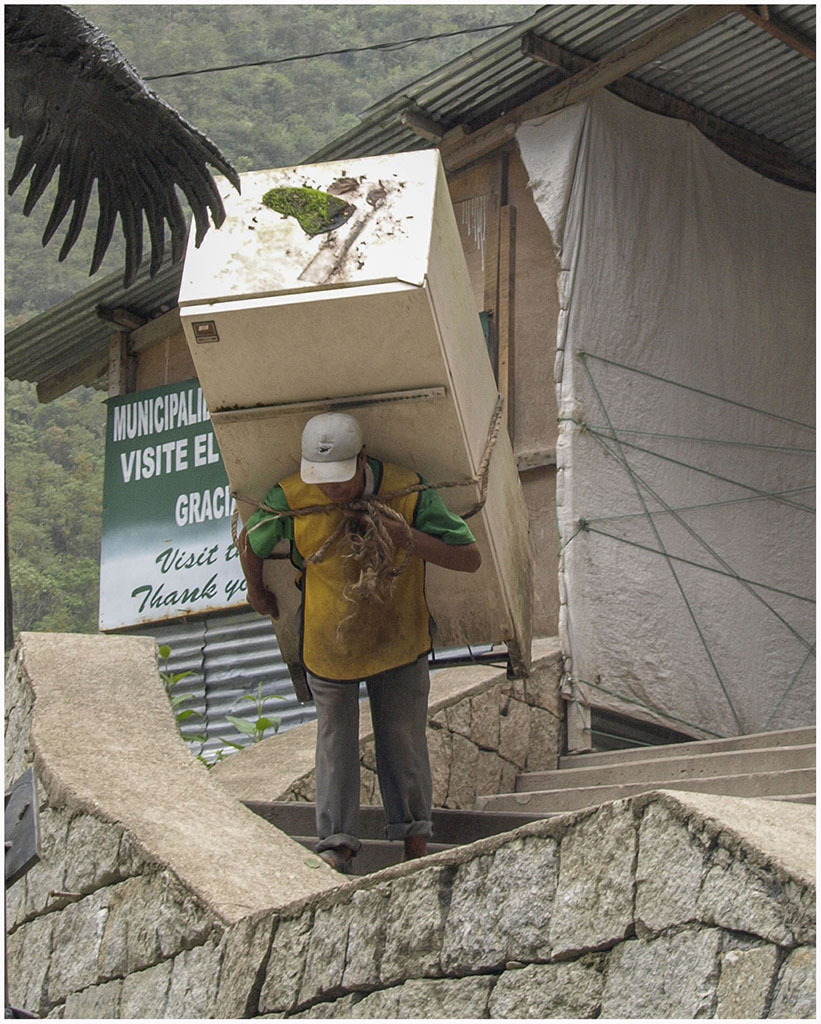
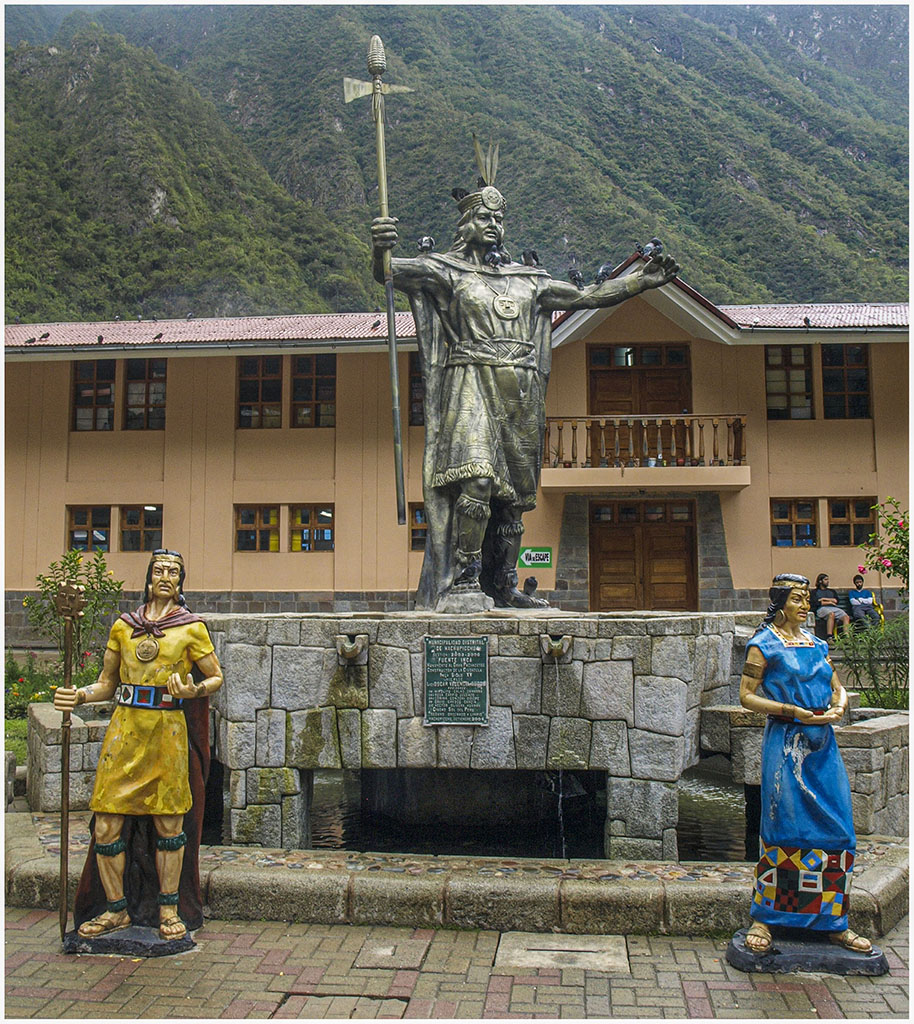
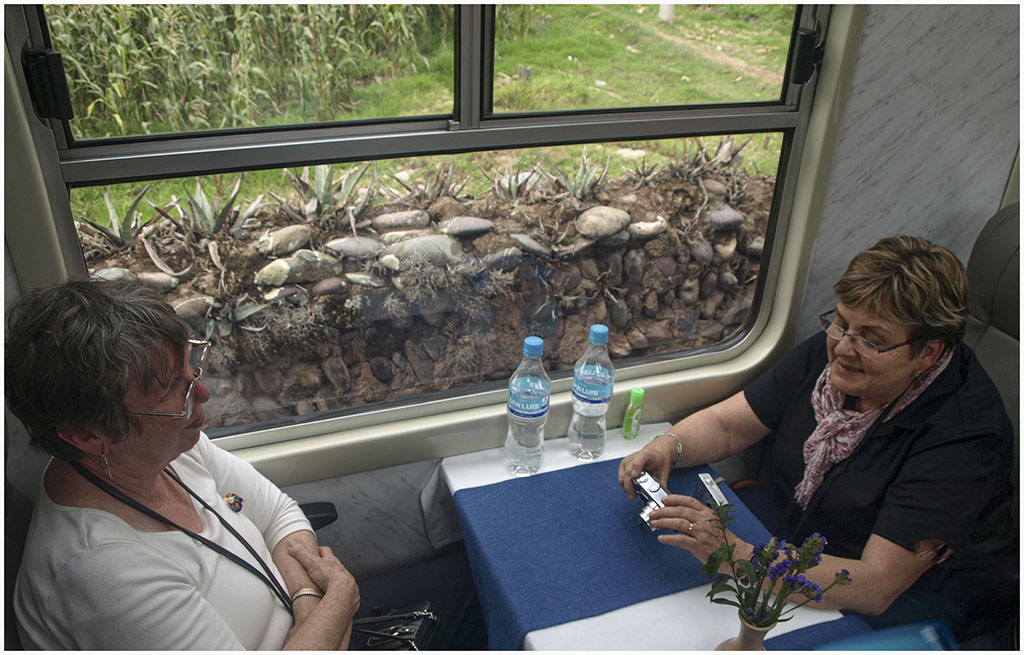
After our tour of Machu Picchu we went back to our hotel in the town of Aguas Calientes. The hotel was located on the railroad tracks with a sidewalk on either side but no actual street. We could open the window of our room and practically touch the train as it rolled down the tracks. The next day in Aguas we went down to the River Urubamba to see the turbulent, rushing, muddy river. We went across a creek into town where there was a market that was make up of outdoor shops that had corrugated iron roofs that were at various angles forming a piecemeal overall roof. Construction was going on along the creek that ran into the Urubamba with streams of workmen pushing wheelbarrows up a slope. We observed a worker leaving the market carrying a full-sized refrigerator on his back. I the afternoon we reboarded the train and headed back to Cusco. |
|
|
Hotel "Street"
Creek in Aguas Calientes |
|
|
Train from our Hotel Window
Train Street by Hotel |
|
|
Train Street
Urubamba with Hotel in Background |
|
|
Urubamba
Dowds by the Urubamba |
|
|
Rampaging Urubamba
Train Street |
|
|
Aguas Calientes Market
Aguas Calientes Construction |
|
|
Carrying a Refrigerator
Aguas Calientes Town Square with Statues |
|
|
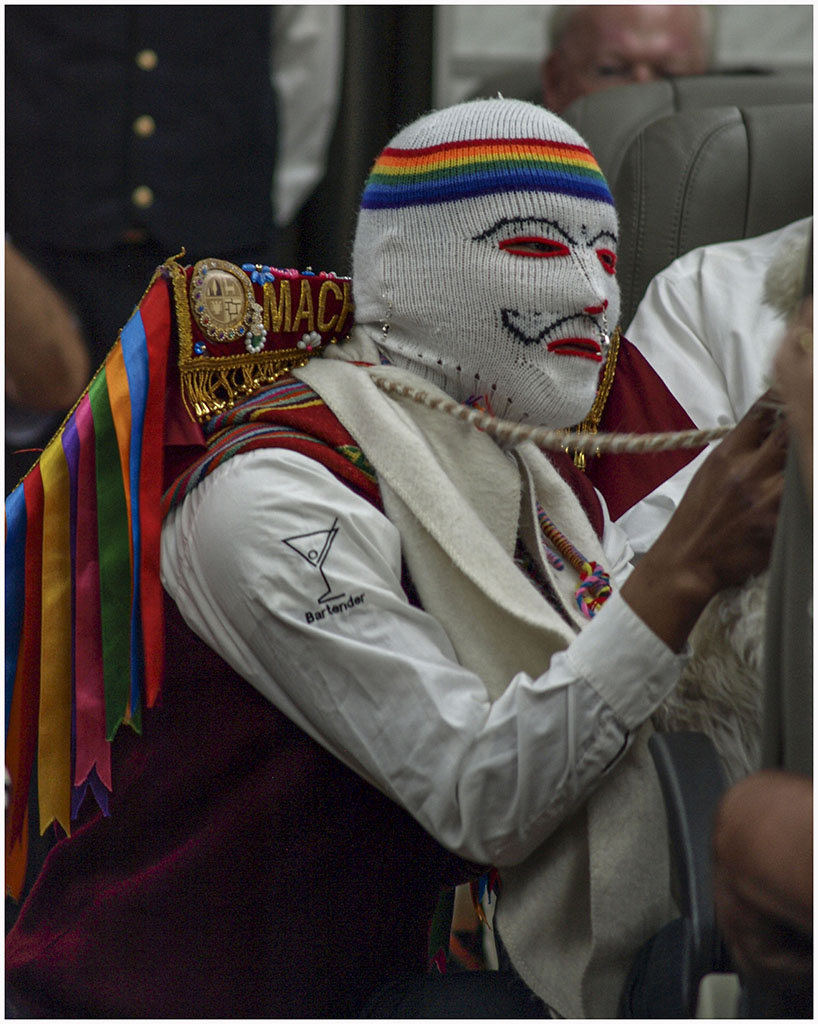
Back on the Train
Entertainer on the Train |
Days 7 & 8: Cusco
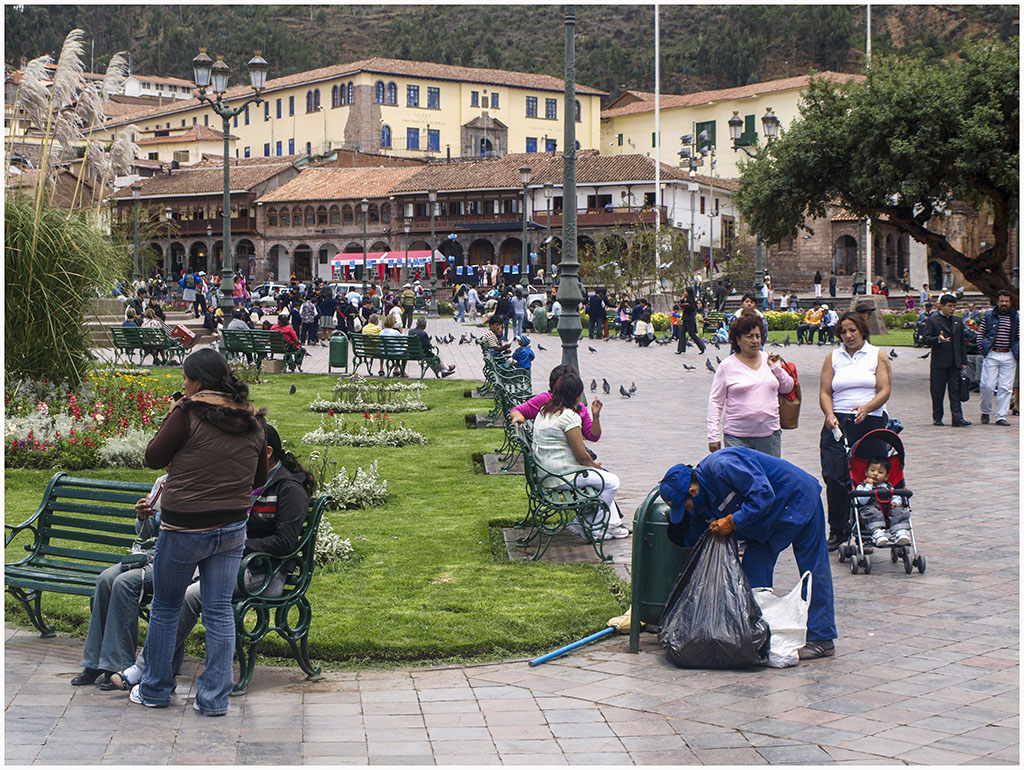
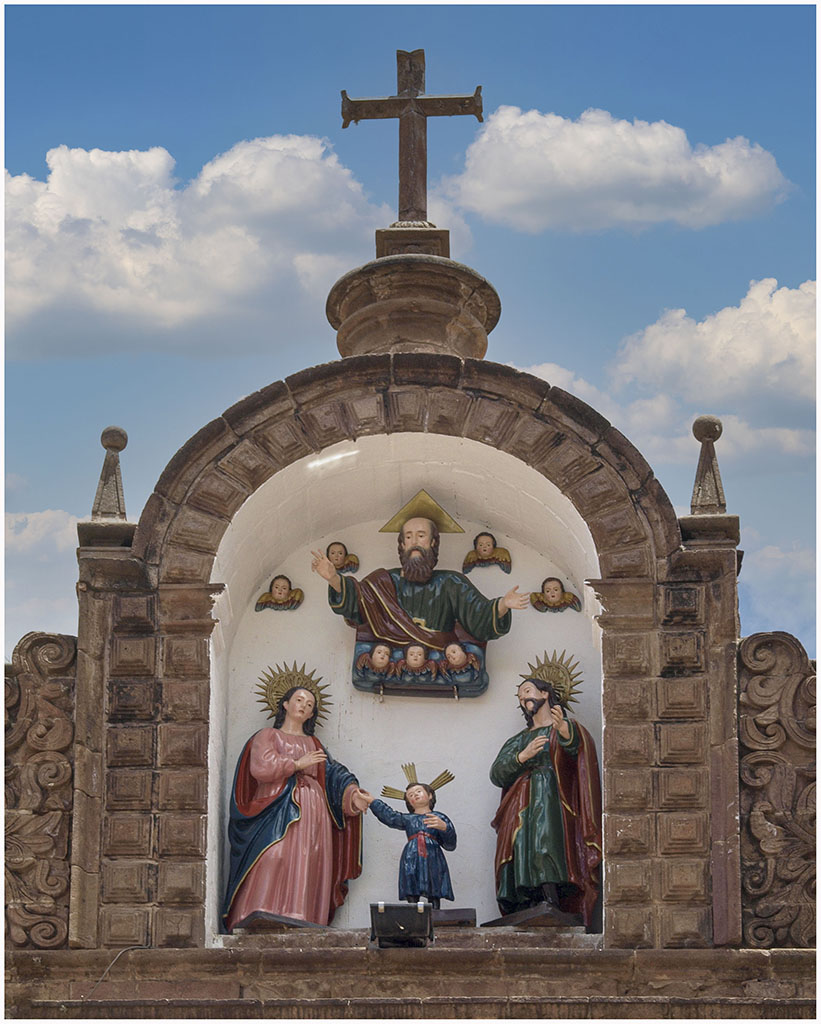
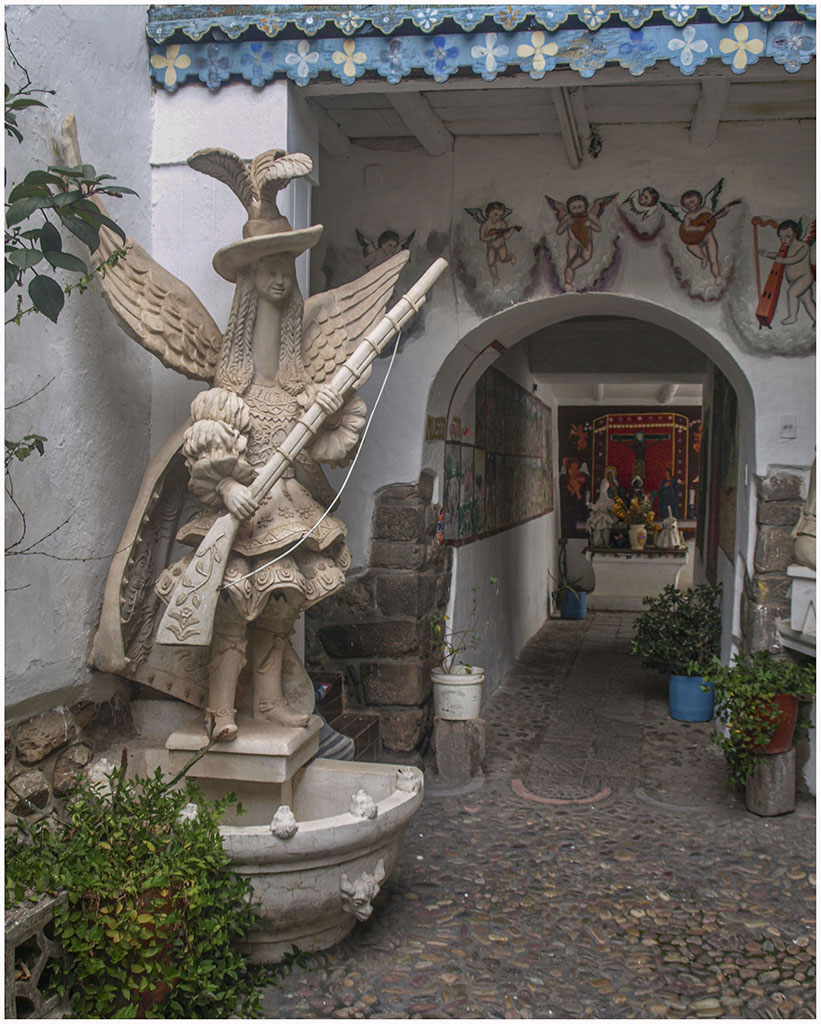
On days 7 and 8 we settled into our hotel in Cusco and began touring the local area. The
hotel was located just off the Plaza de Armas on which one could see the cathedral, Iglesia
de la Compañía de Jesús, and the Church of the Society of Jesus.
I remember touring the Church and the
Cathedral and finding out that the Spanish conquerors had local artists painting many of
the details of the religious murals and that many had inserted interesting small tokens
to their previous religion apparently unnoticed by the Spanish. |
|
|
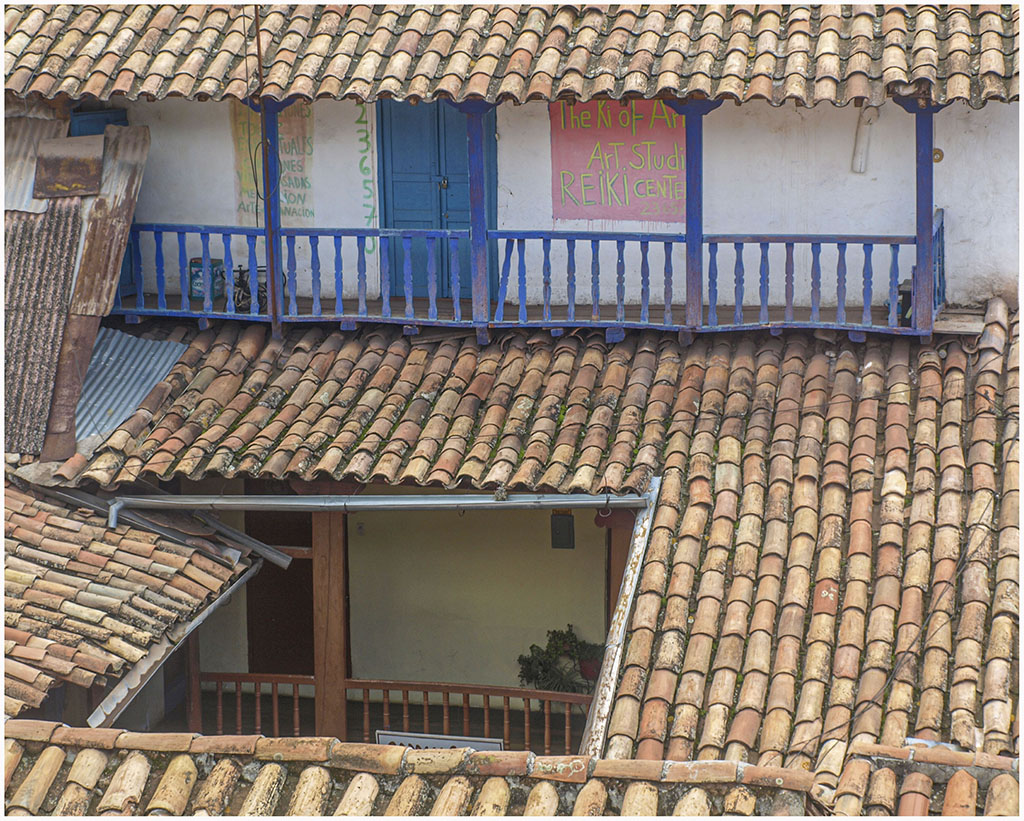
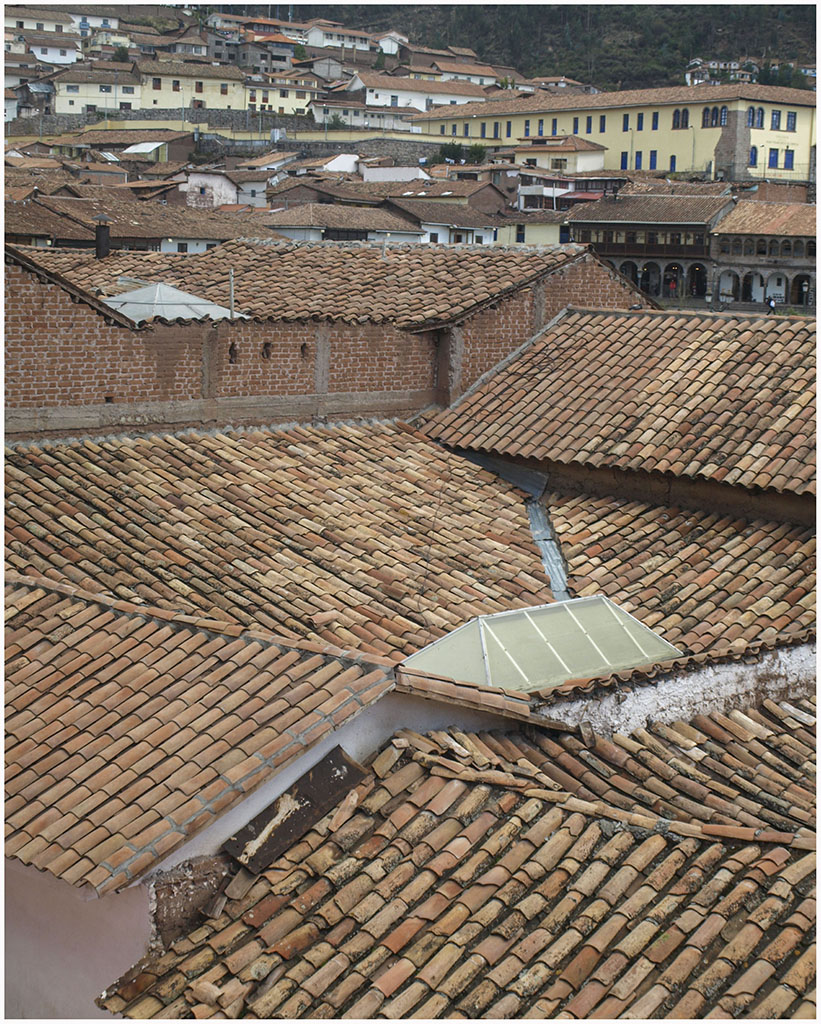
Tile Roofs Outside our Hotel
Tile Roofs of Cusco |
|
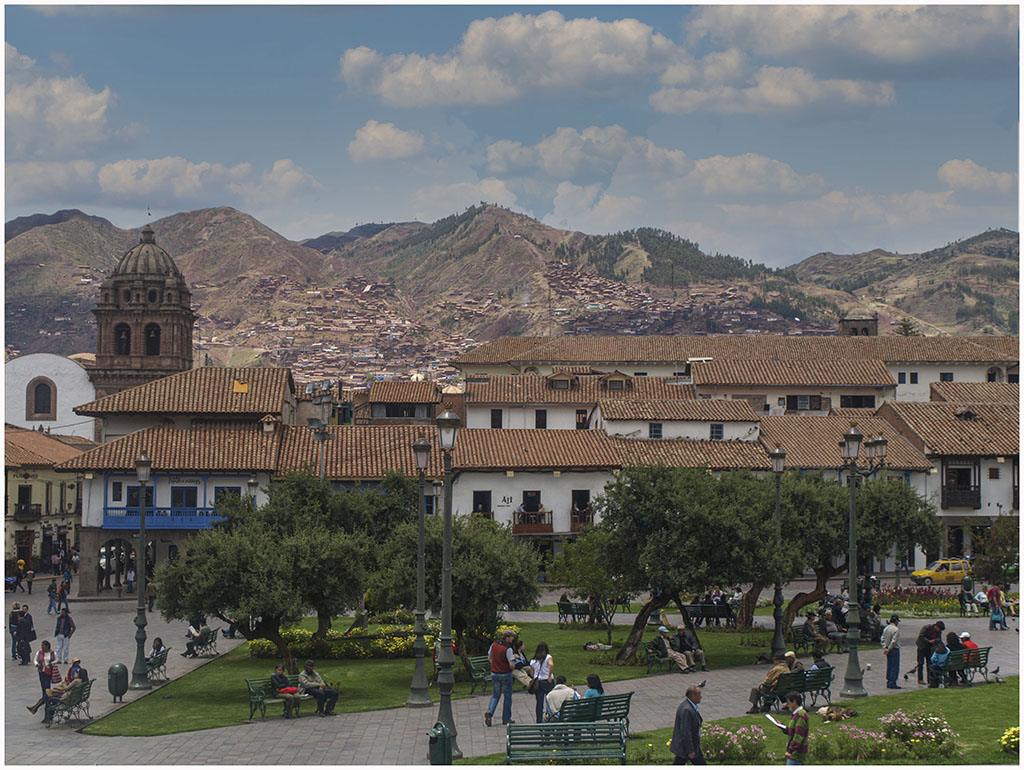
|
Plaza de Armas Cusco
Plaza de Armas Cusco |
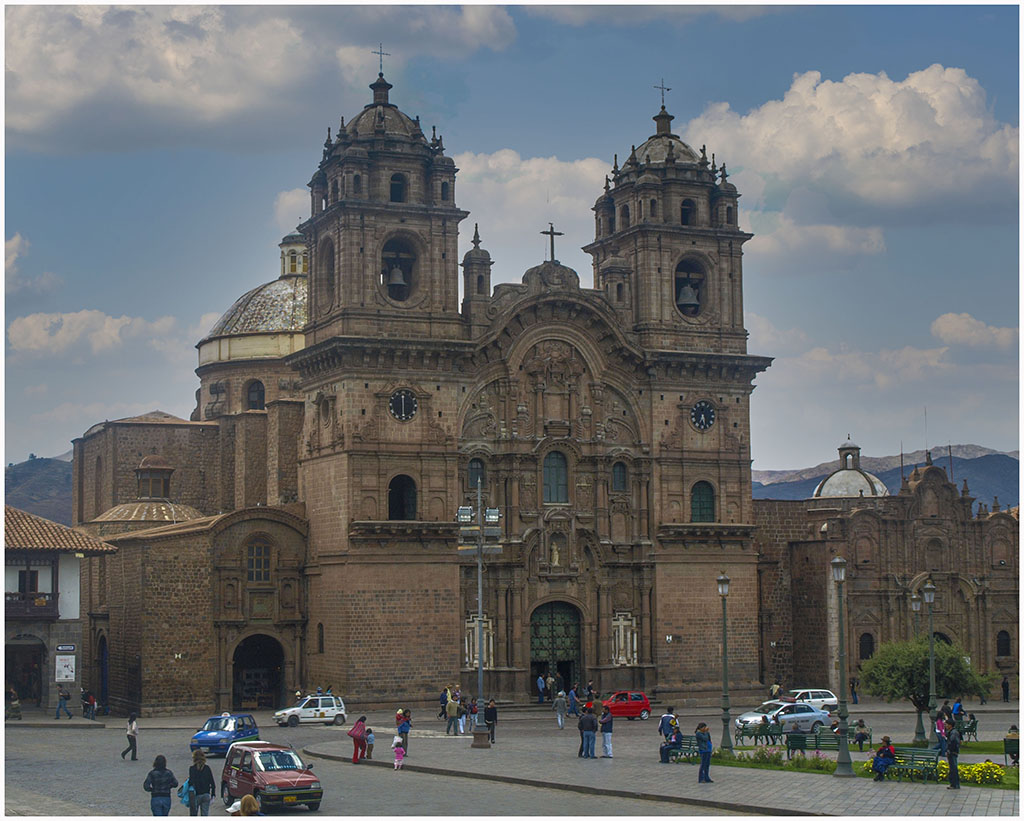
|
|
Iglesia de la Compañía de Jesús (Cusco Cathedral)
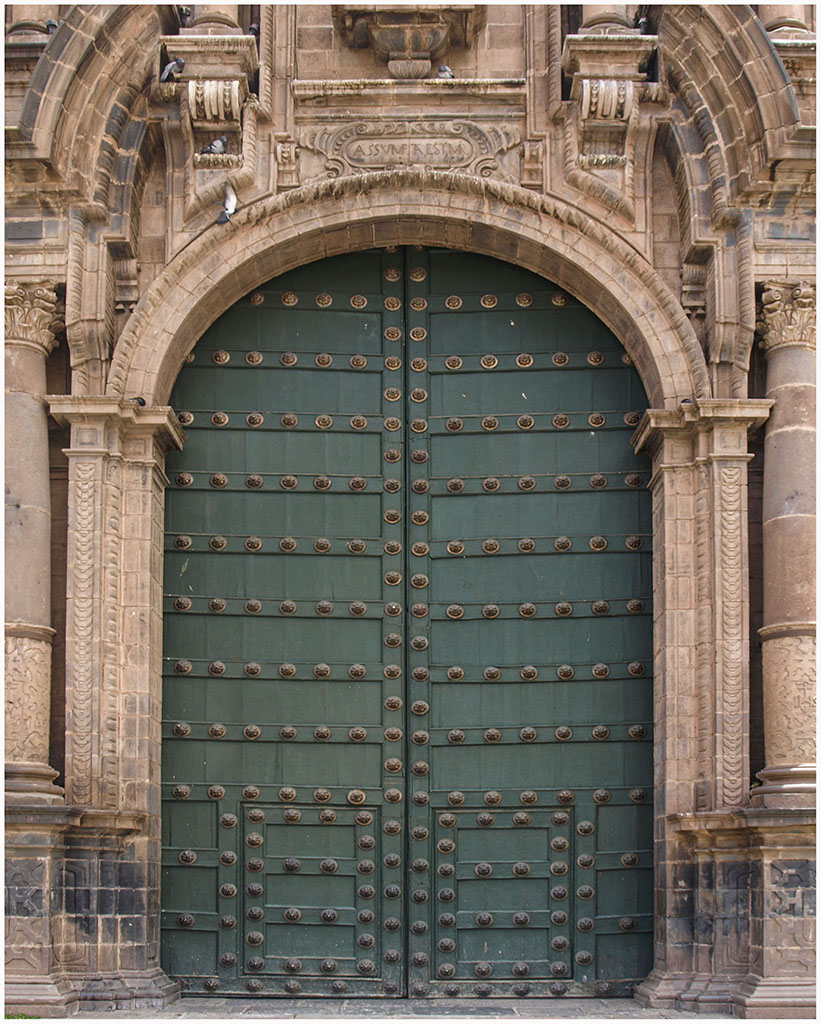
Cathedral Doors |
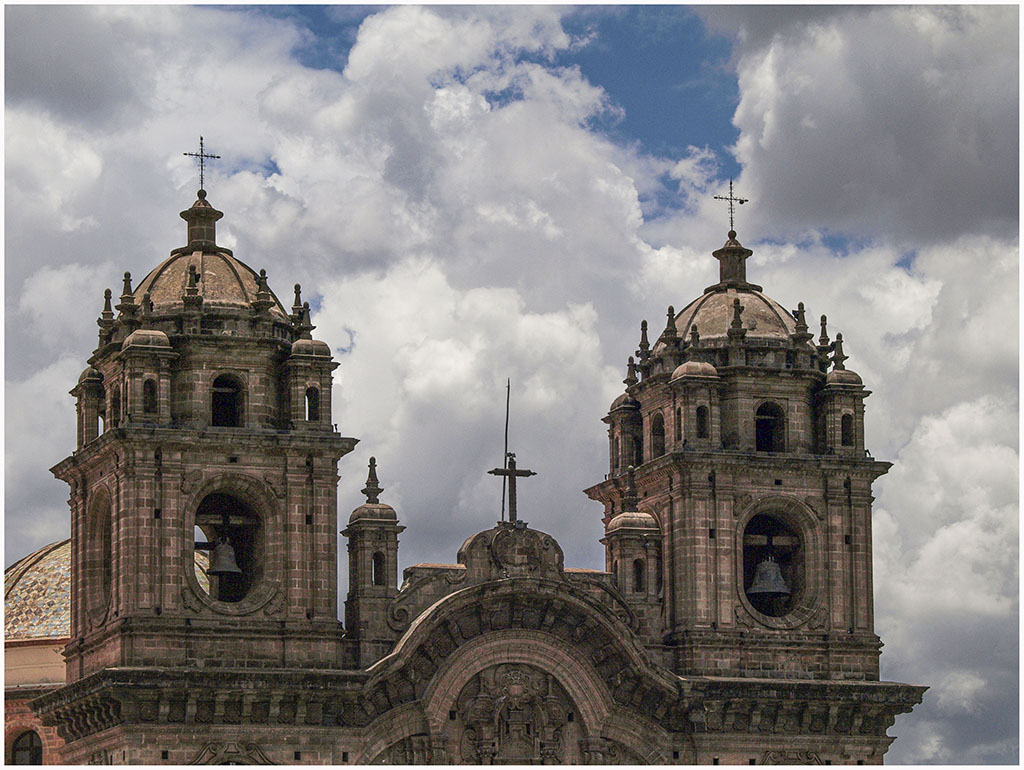
|
|
Cusco Cathedral
Cusco Shrine |
|
|
Saqsaywaman Sign
Saqsaywaman Stonework |
|
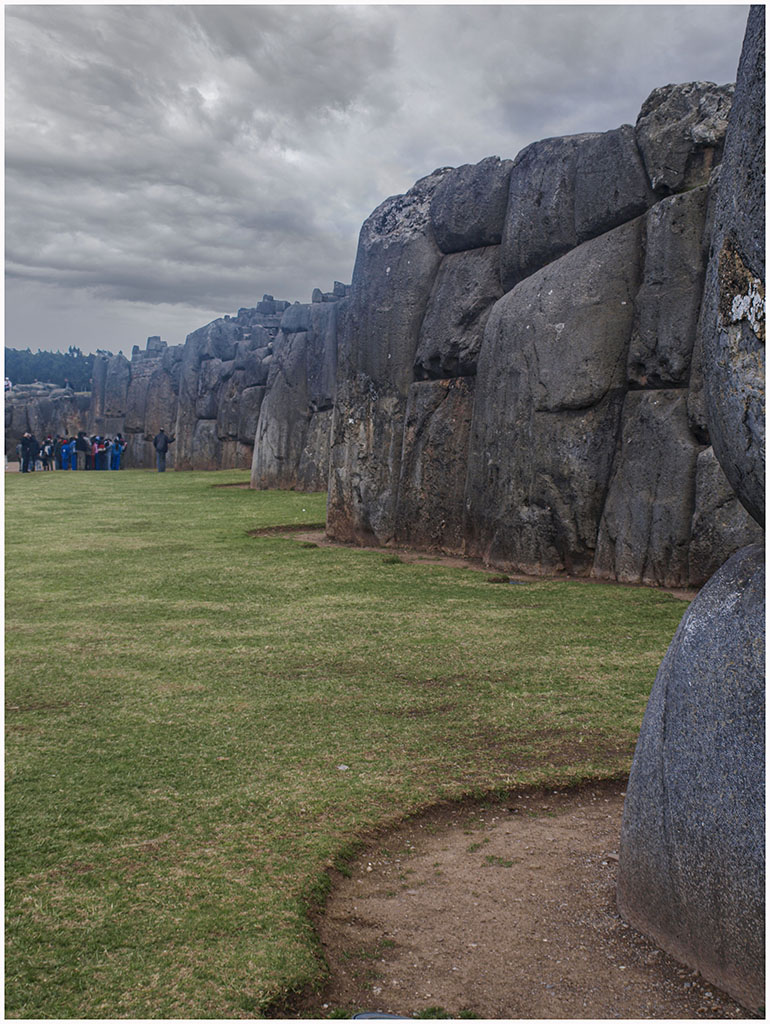
|
Saqsaywaman
Saqsaywaman |
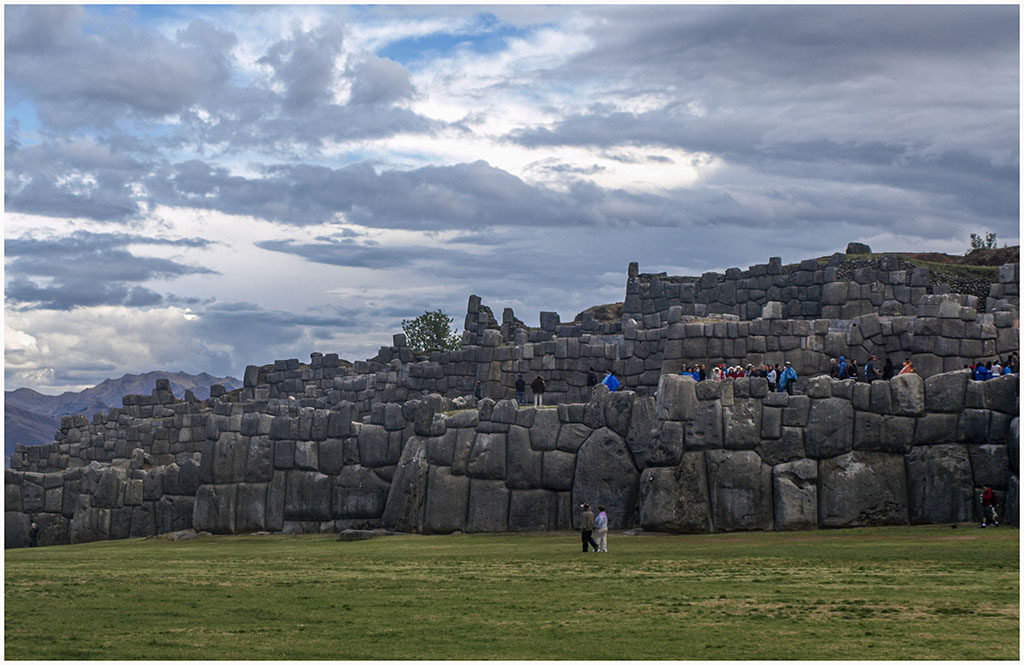
|
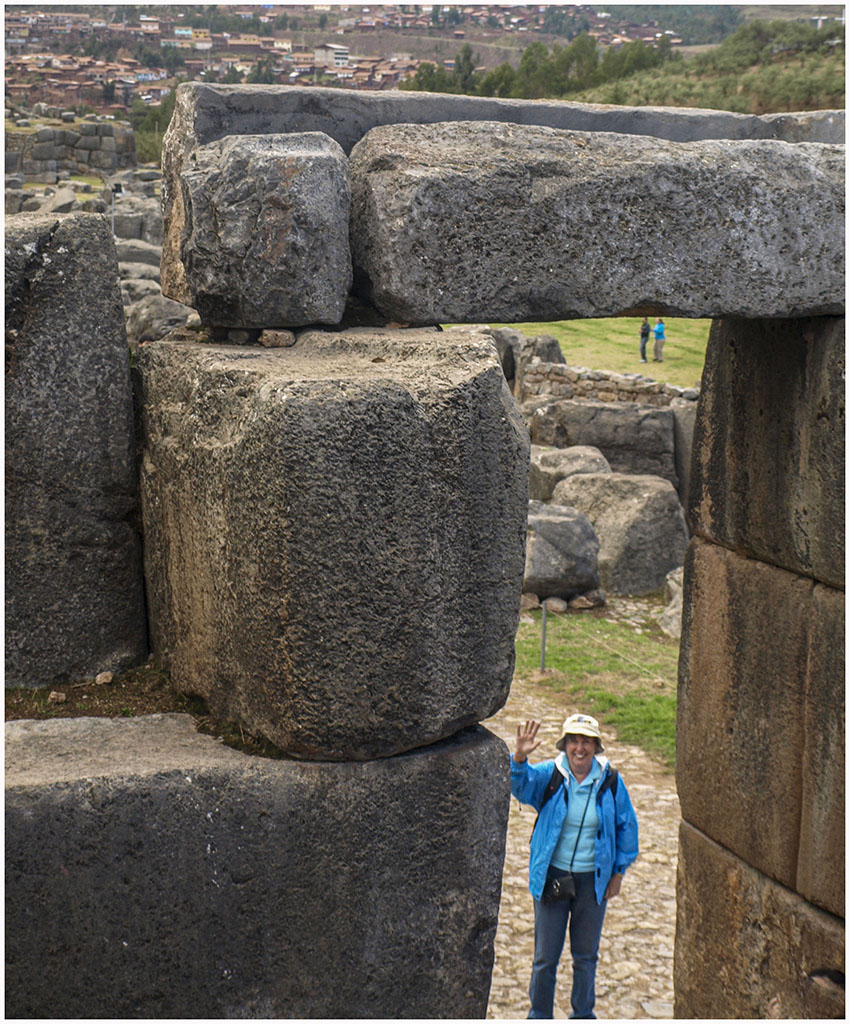
|
Saqsaywaman
Shirley at Saqsaywaman |
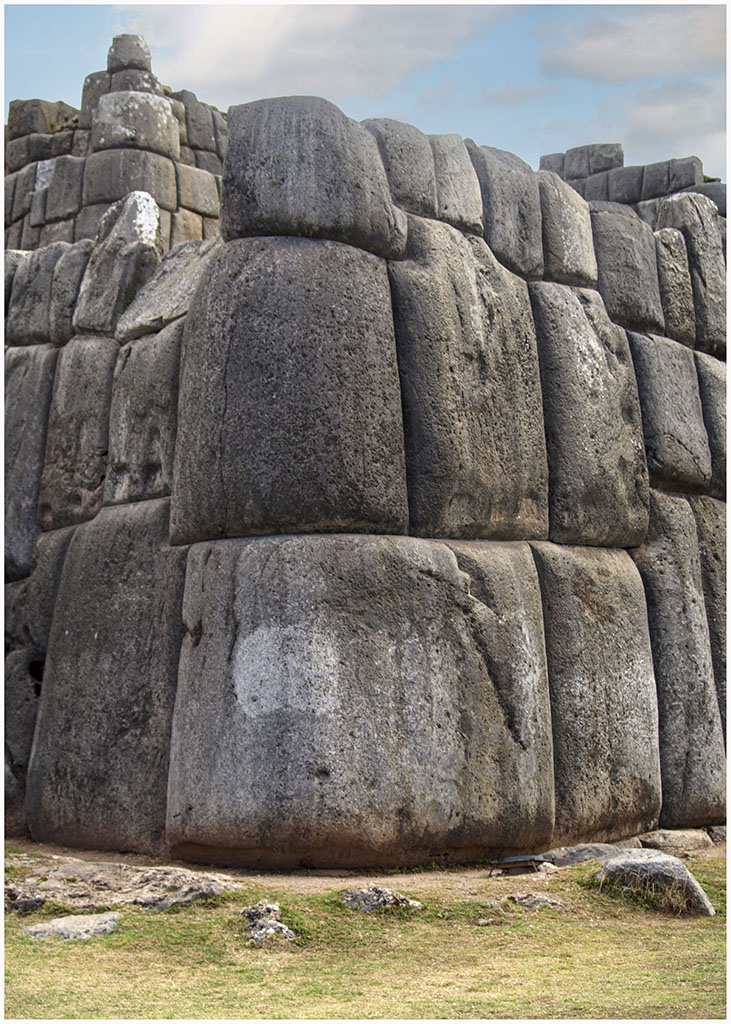
|
|
Saqsaywaman
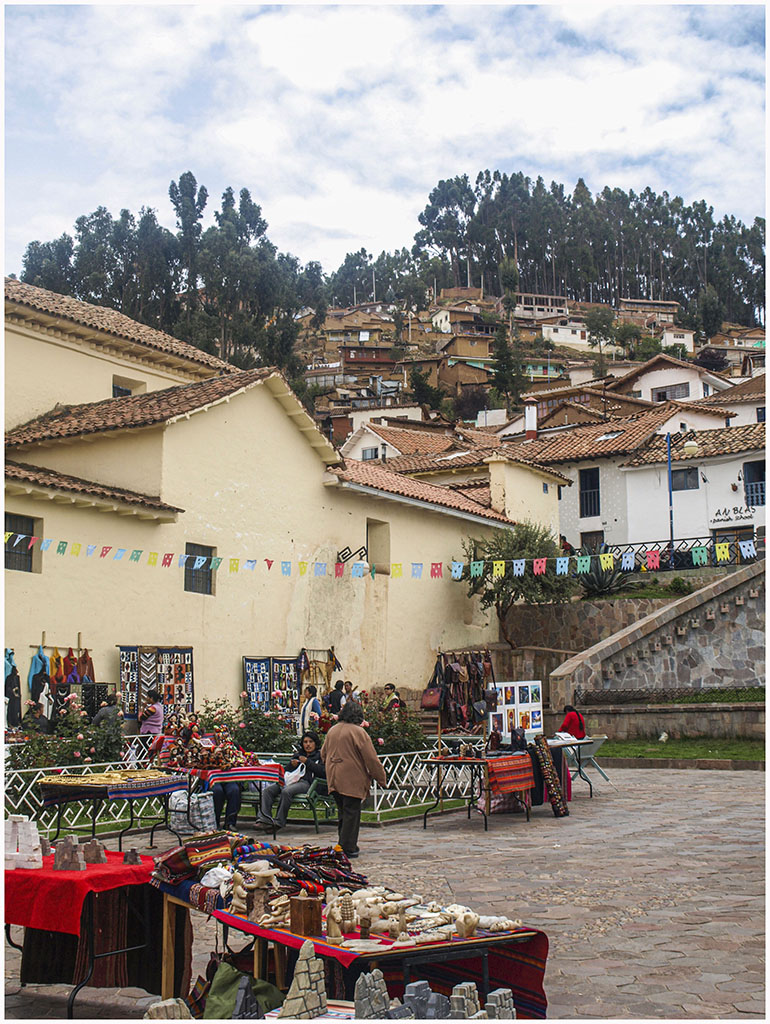
Cusco Restaurante |
|
|
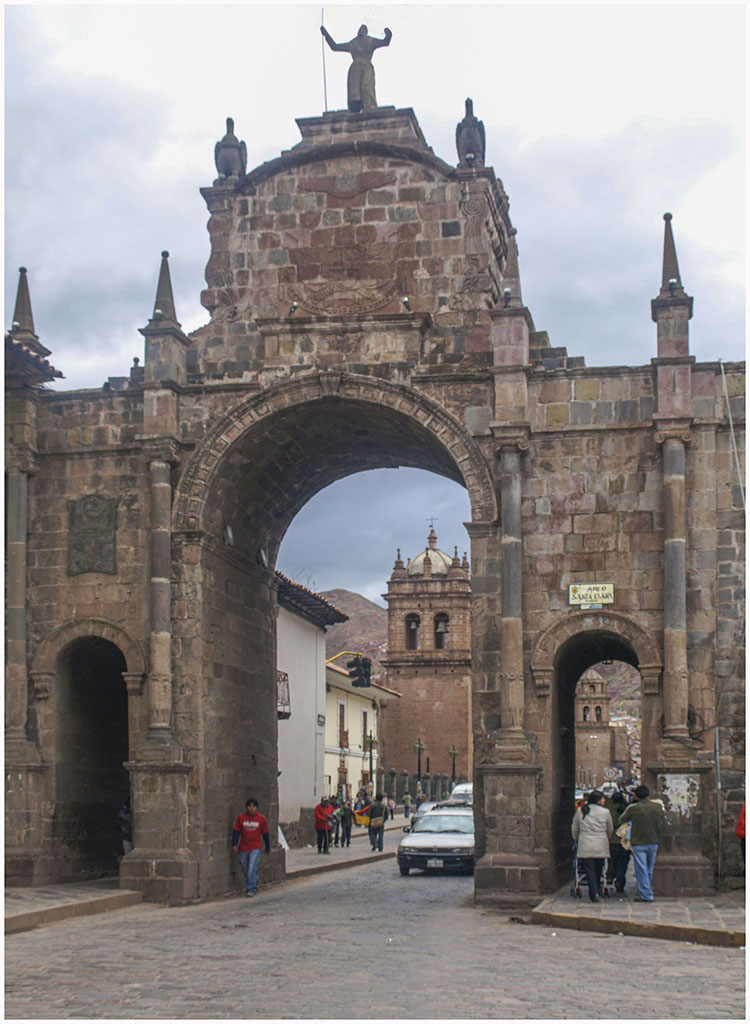
Cusco Neighborhood
Cusco Gateway |
Day 9: Back to Lima, Birthday Dinner
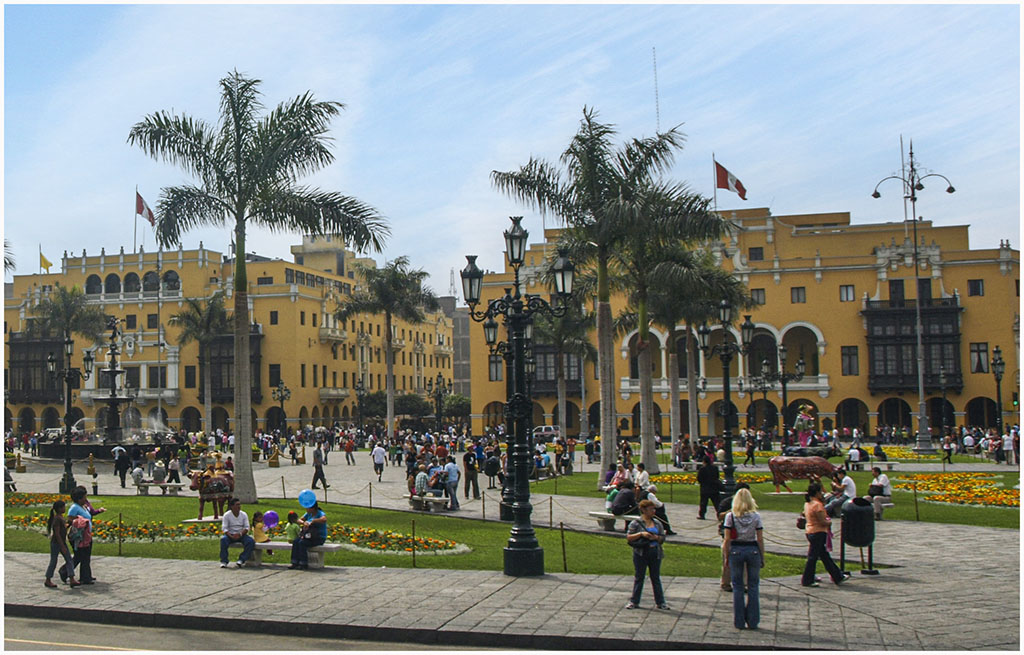
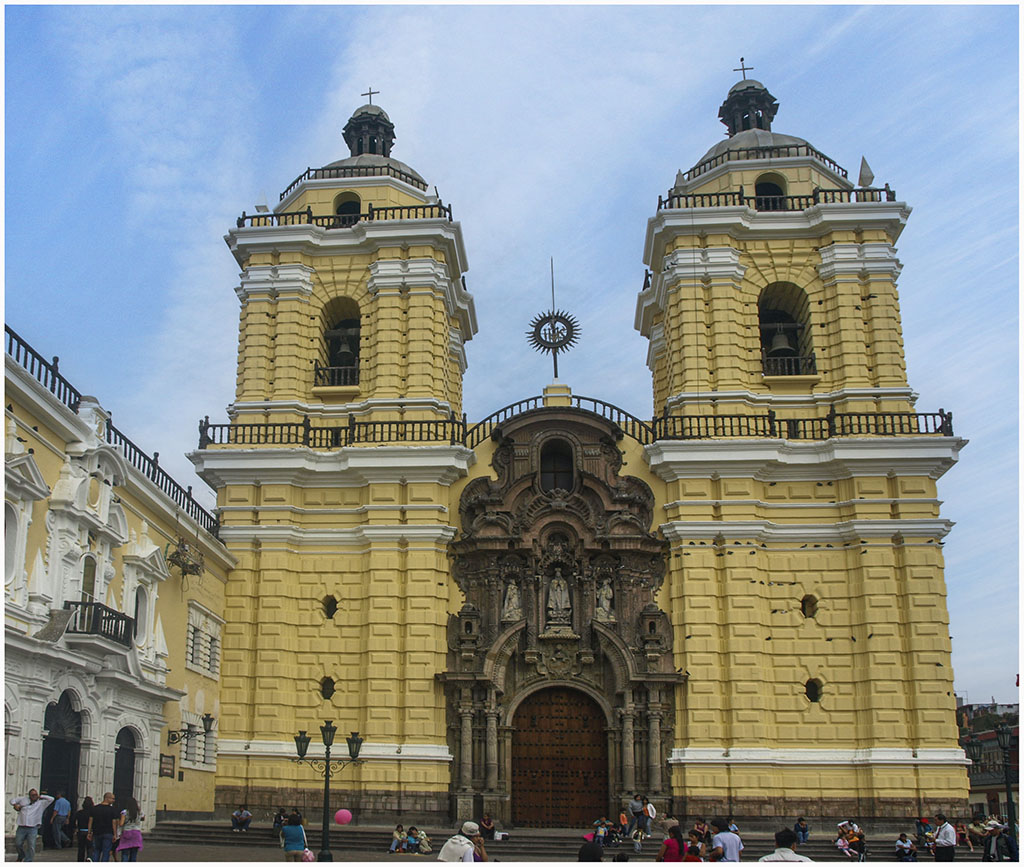
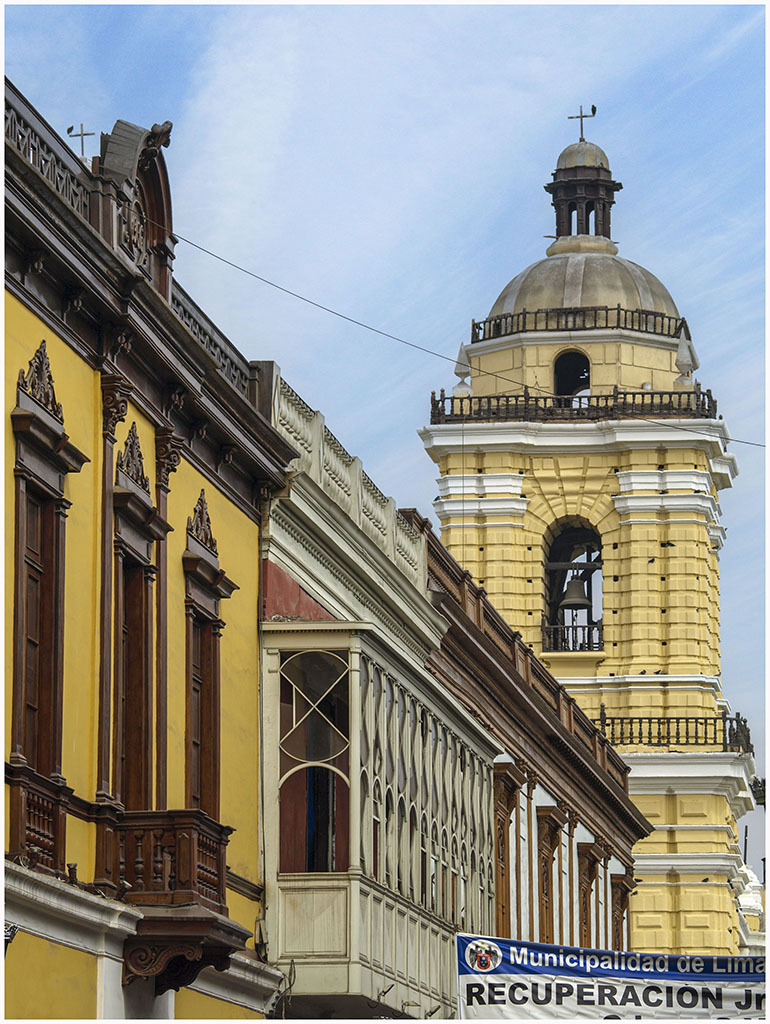
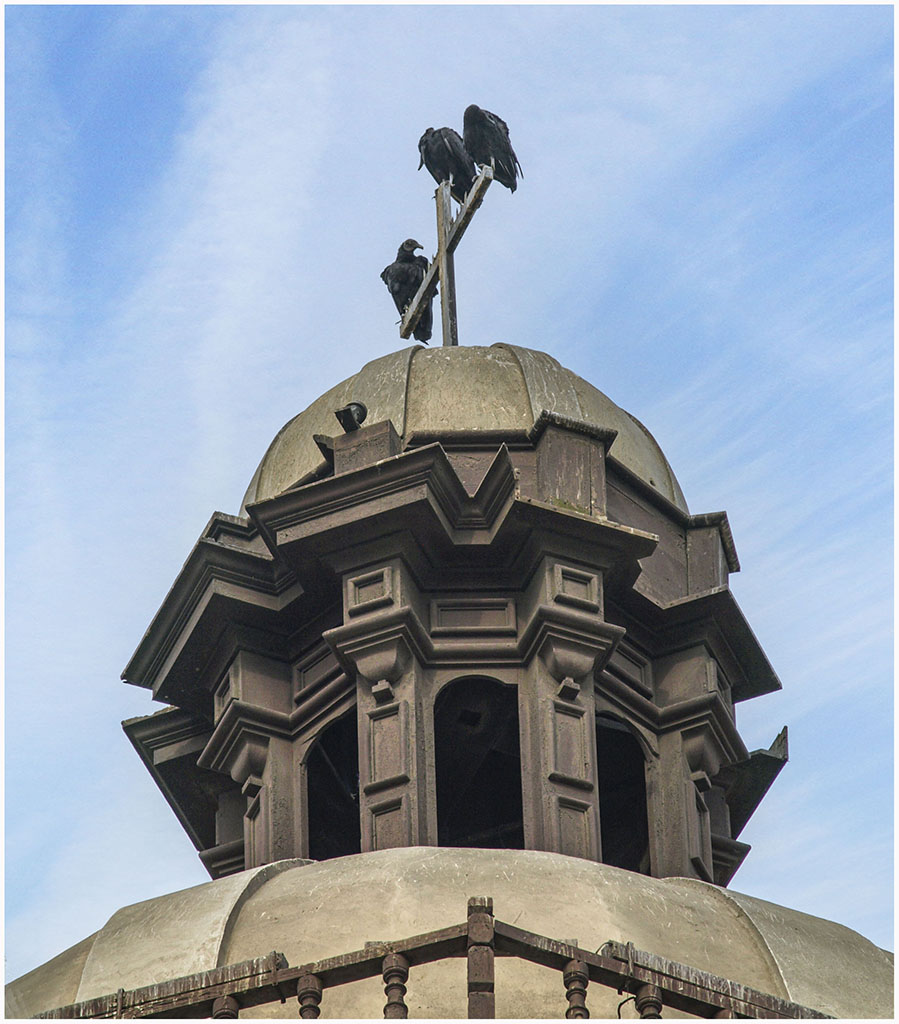
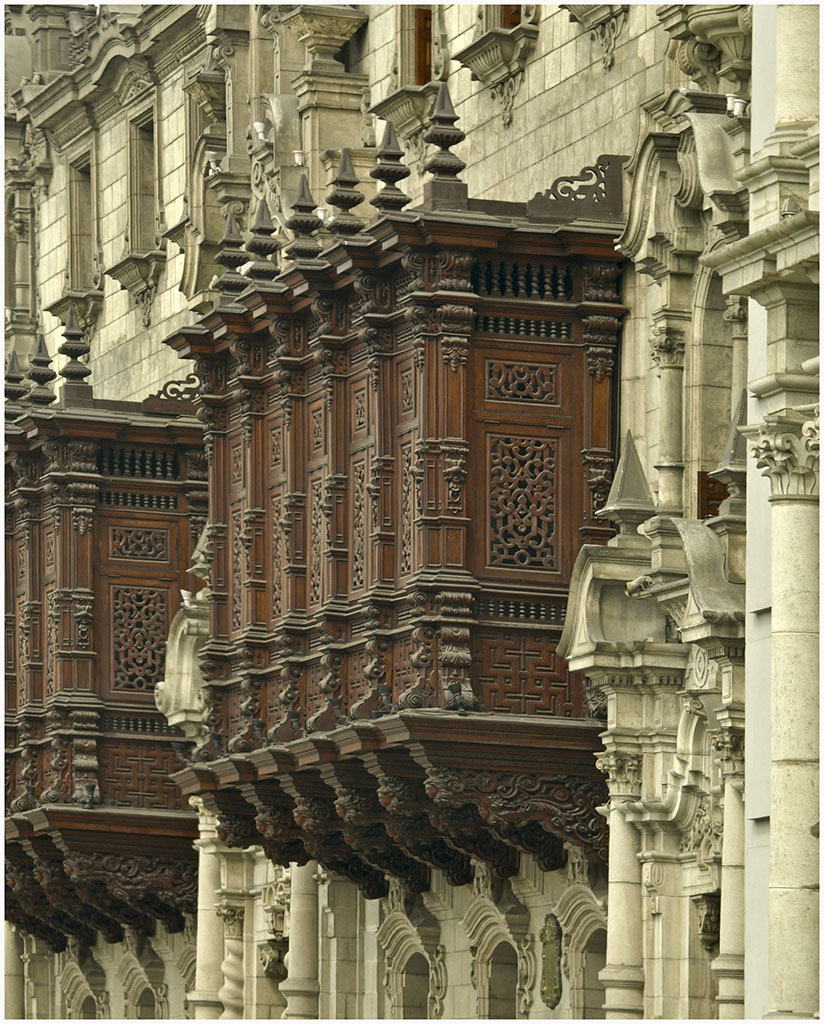
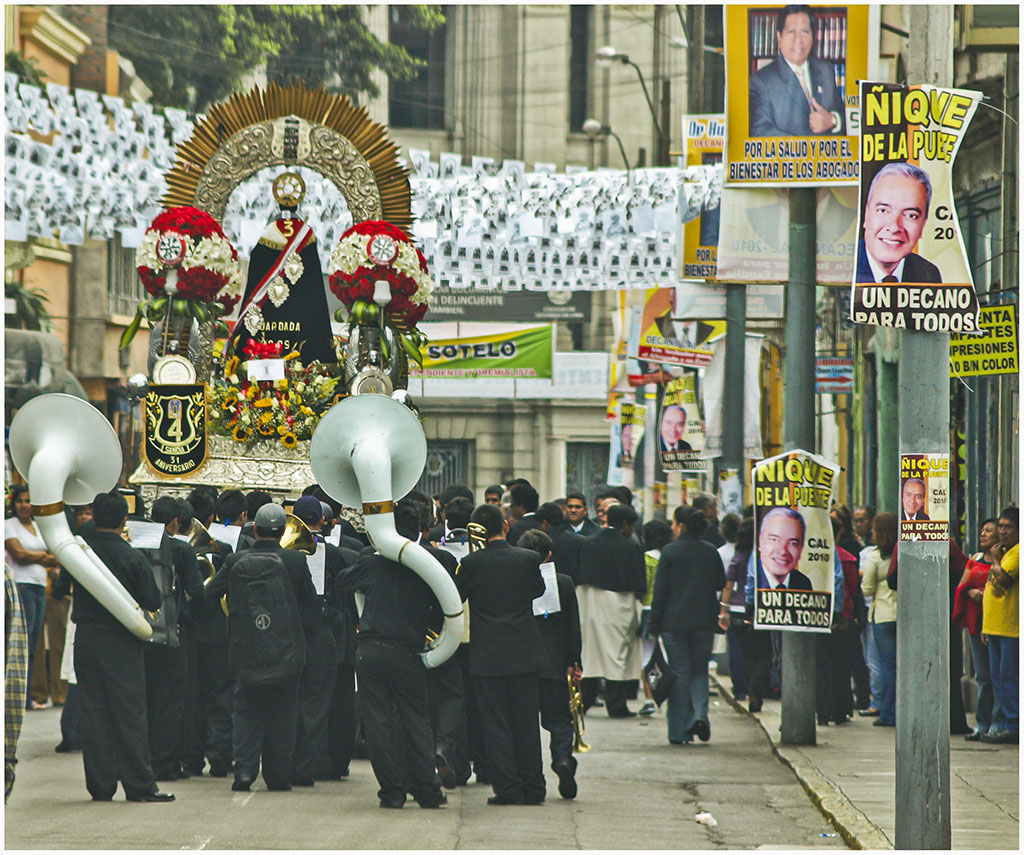
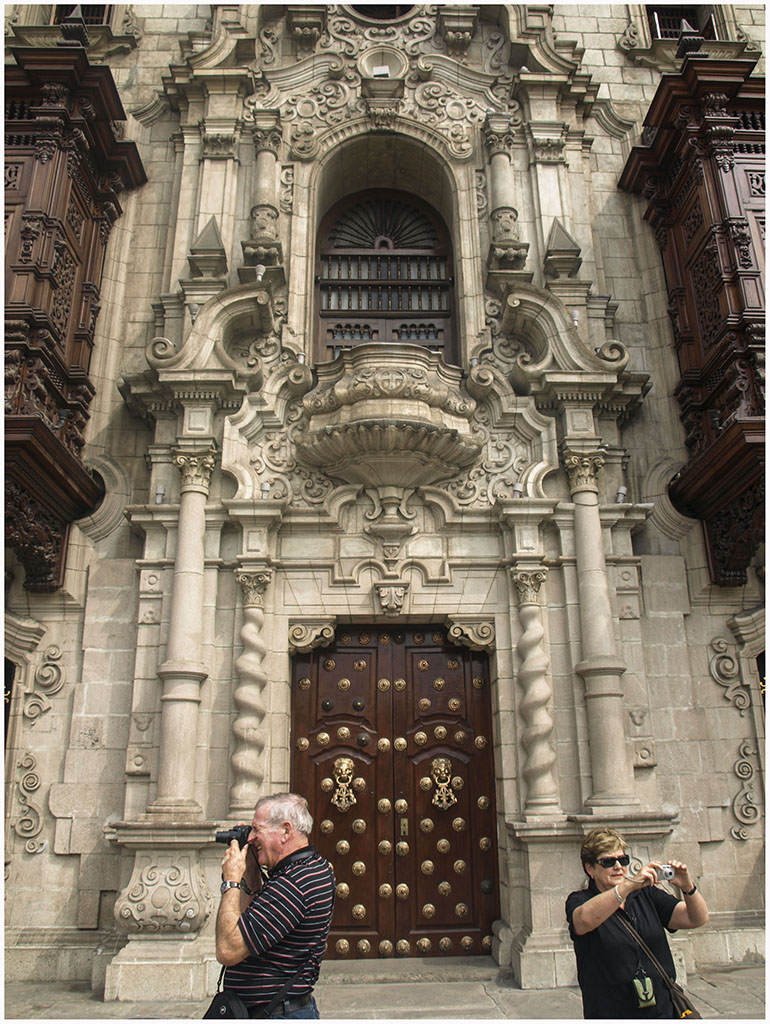
Day 9 we flew back to Lima to spend a day touring the town, particularly an area around
the historic city center including the Basílica y Convento de San Francisco de Lima and
the Municipal Palace. Among
many other things we saw band marching through the streets and many cite around the Plaza
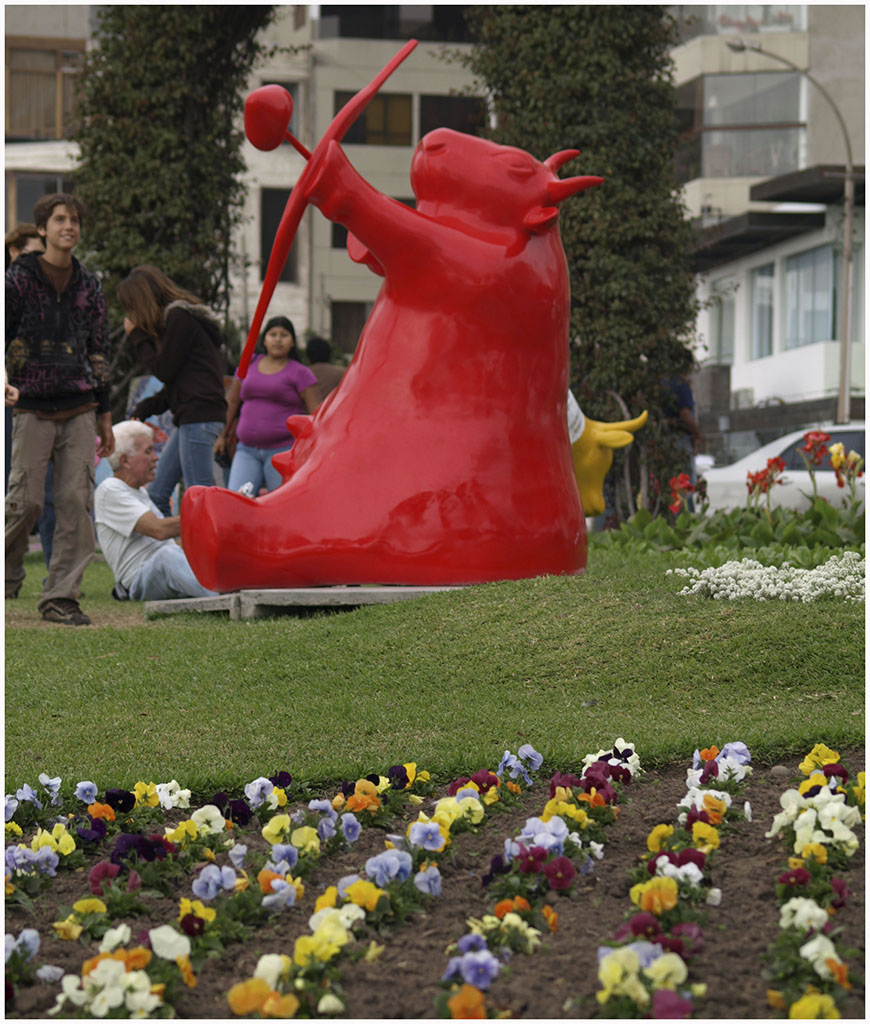
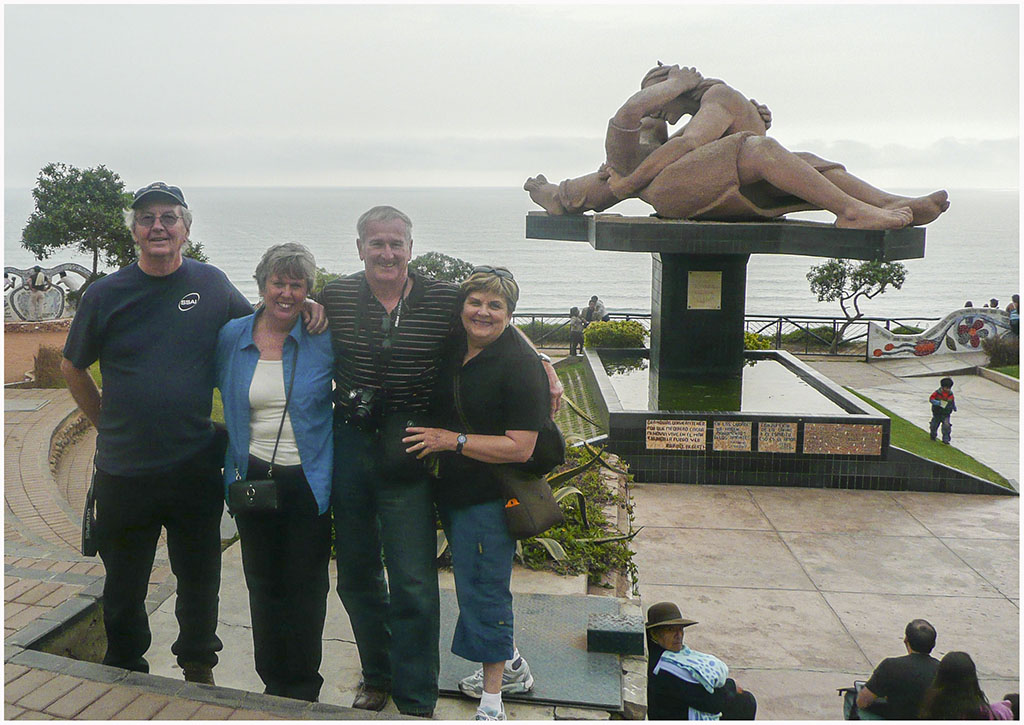
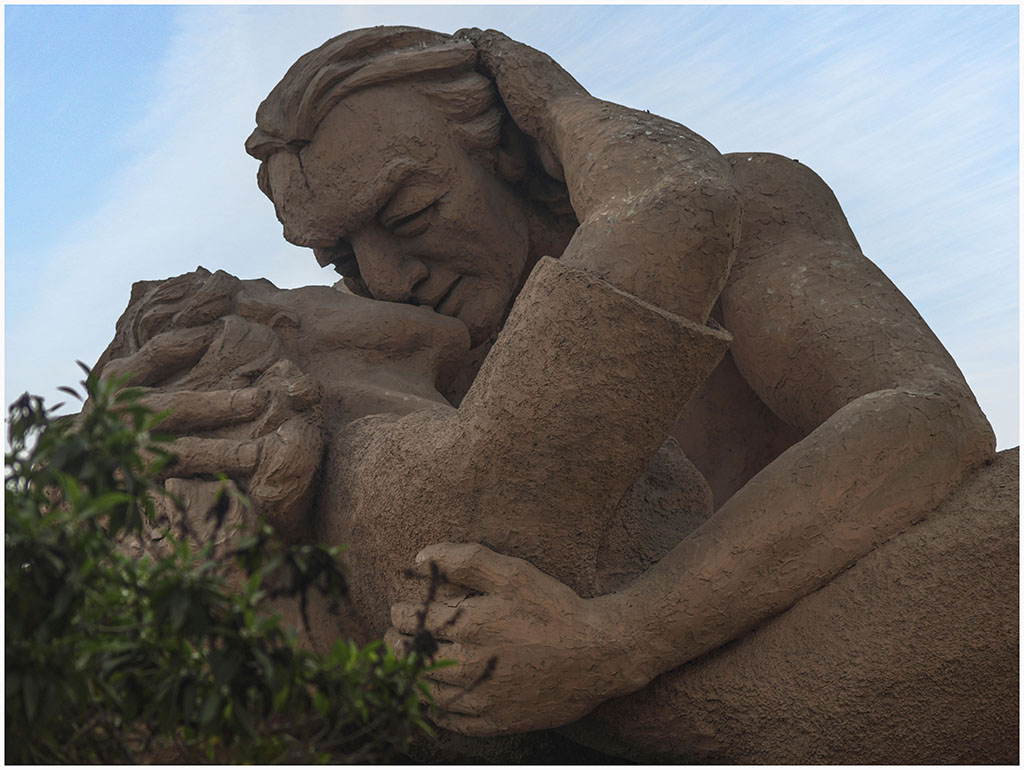
de Armas de Lima. We finished the tour by visiting the Parque del Amor on the coast in
the city where we saw the statue of "The Kiss" and the red cow. |
|
|
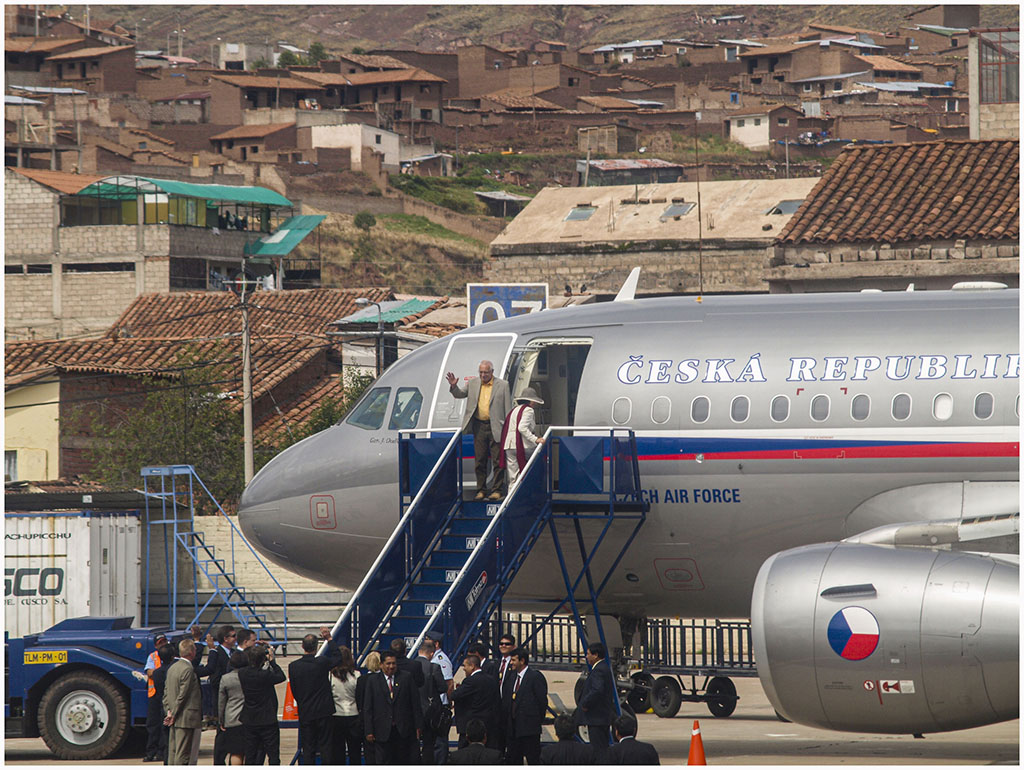
Arriving in Lima: A Czech VIP?Plaza de Armas, Lima |
|
|
Lima Basilica
Another View of Basilica |
|
|
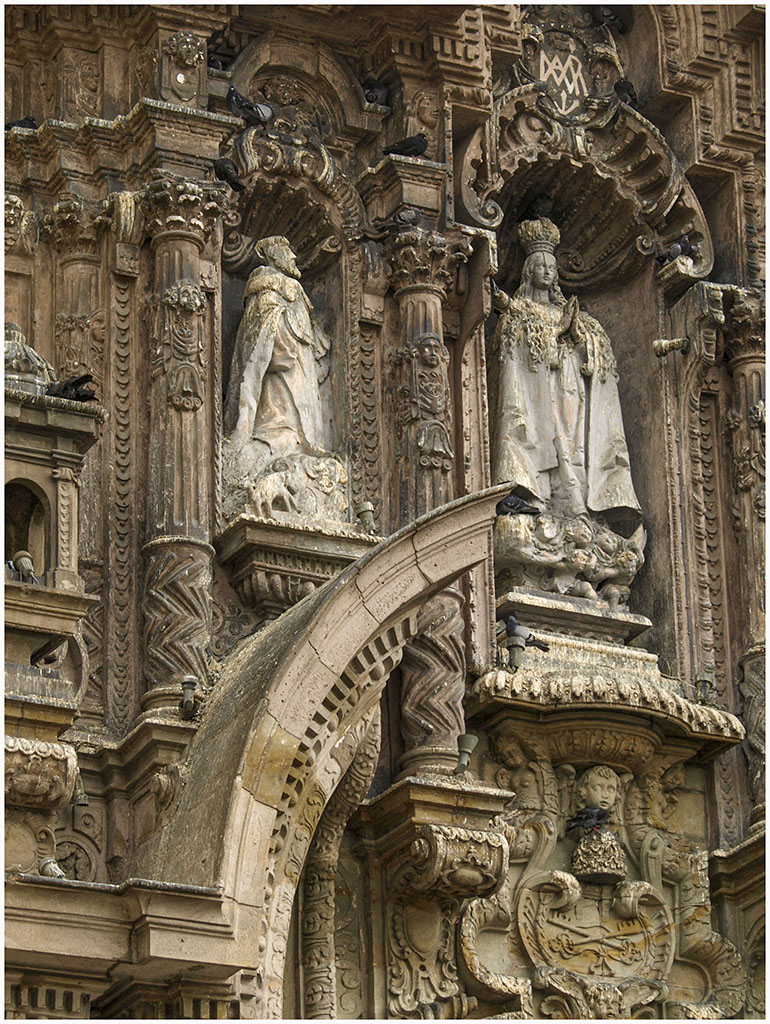
Lima Basilica Interior Artwork
Basilica Dome with Birds |
|
|
Facade of Lima Municipal Palace
Marching Band in Lima Streets |
|
|
Photographing in Front of Basilica
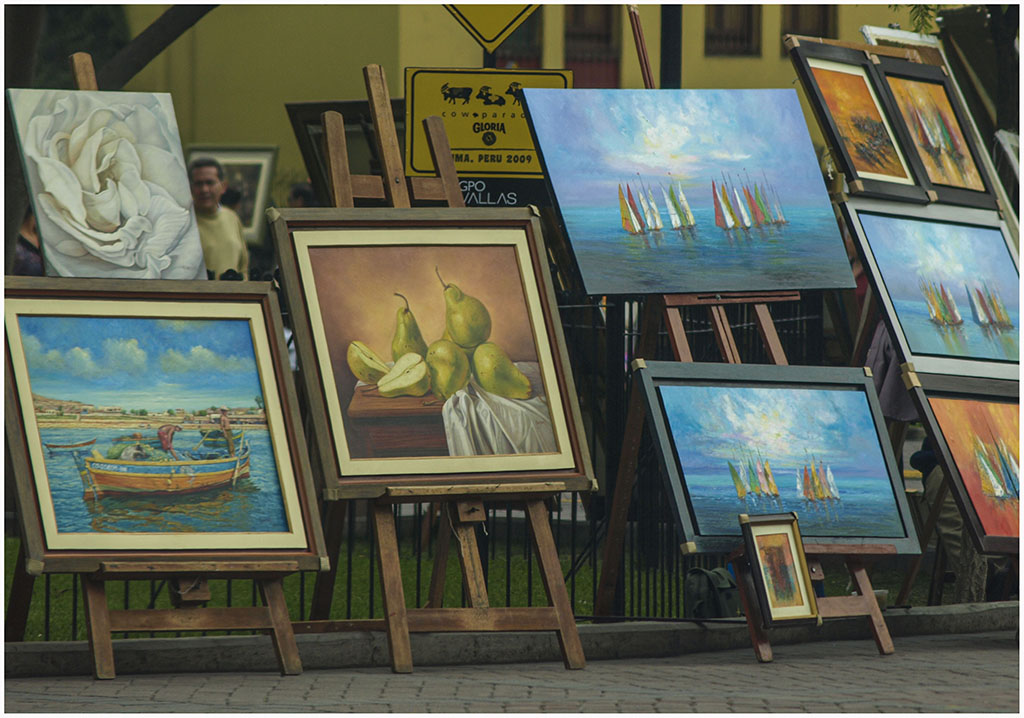
Street Art Sale |
|
|
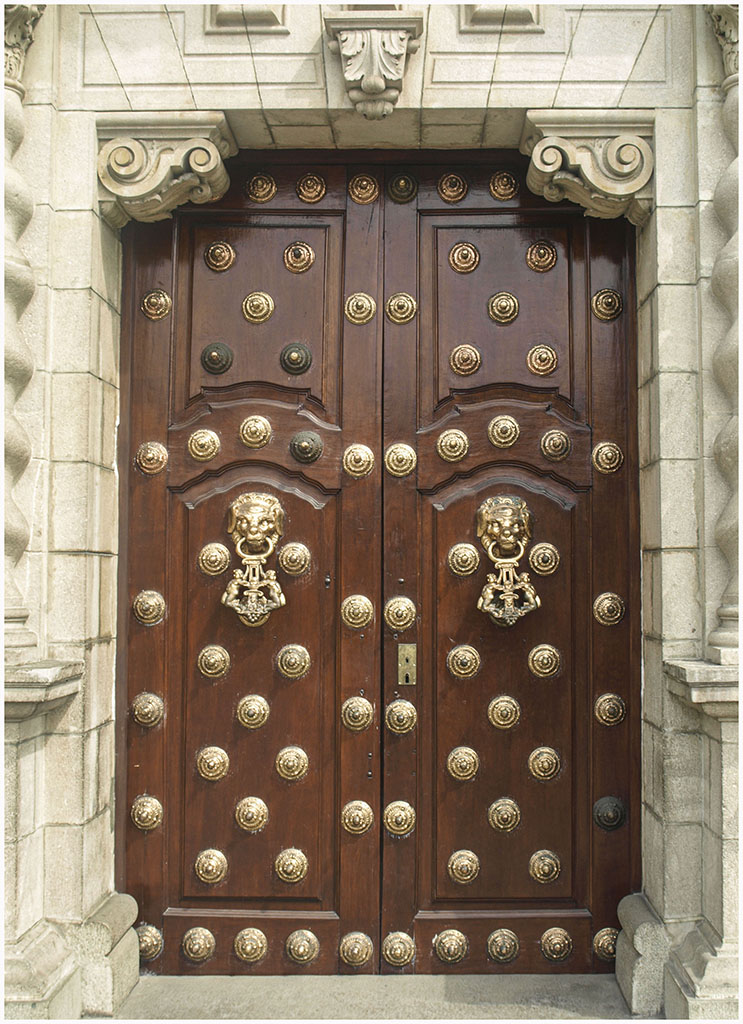
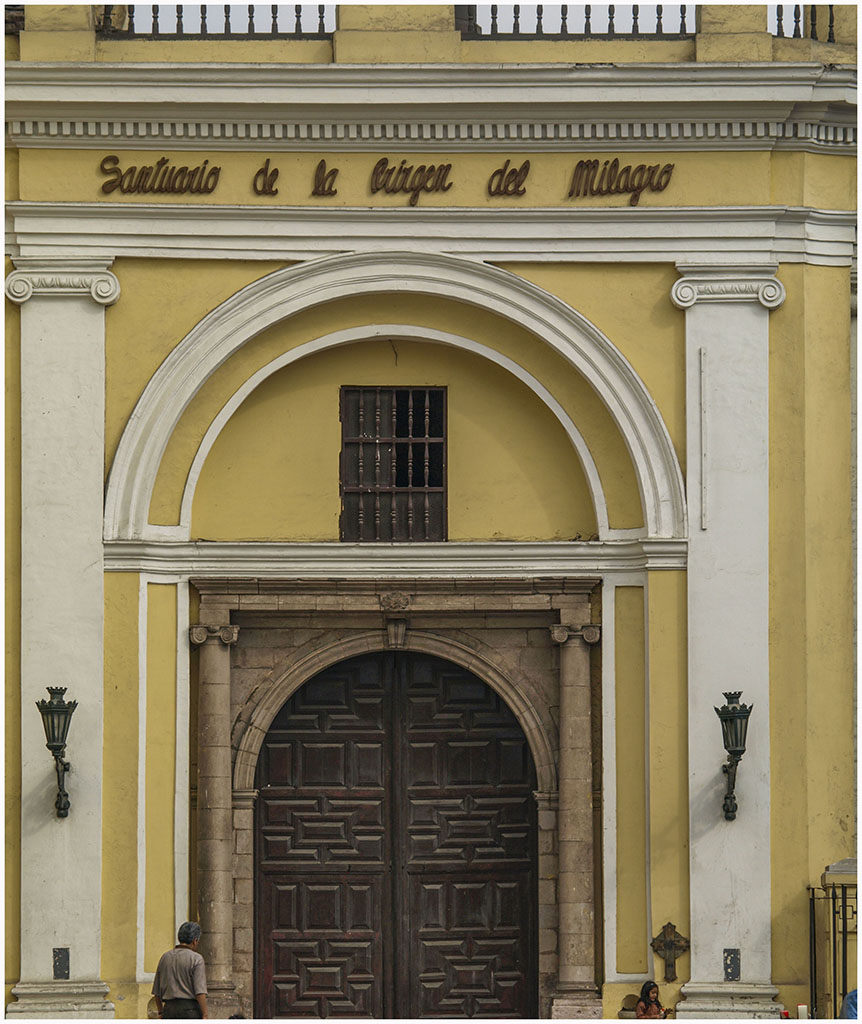
Lima Doorway
Lima Doorway |
|
|
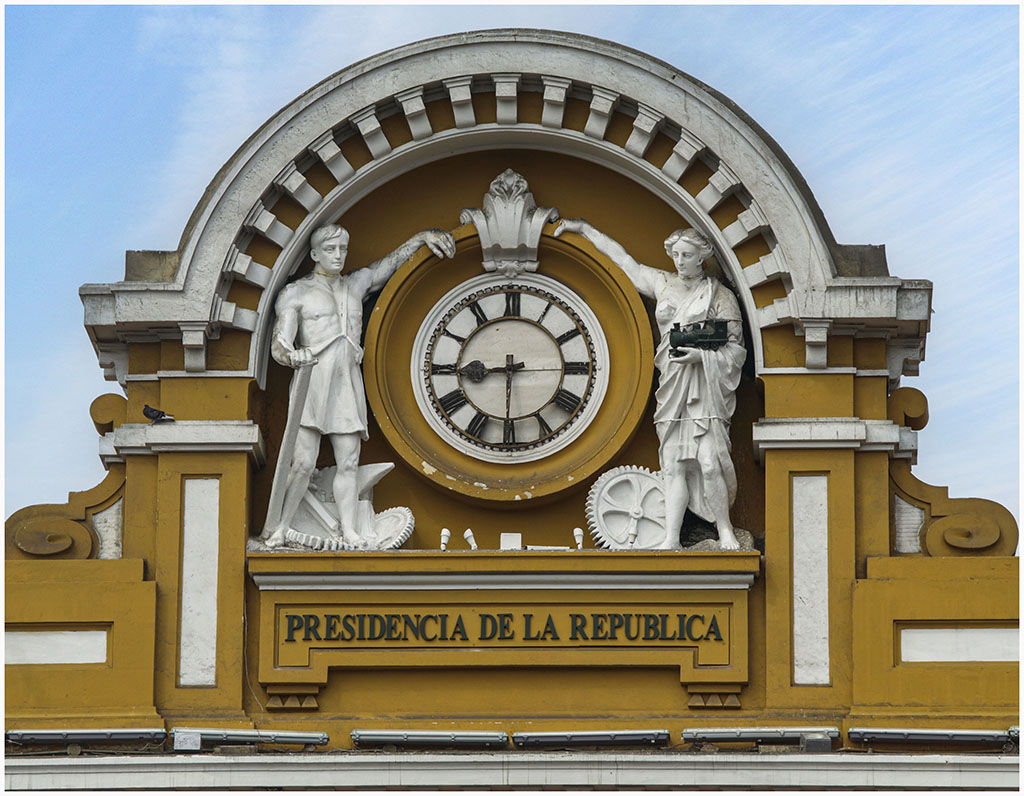
Presidencia Seal on Building
Cow Statue in Parque del Amor |
|
|
At Parque del Amore
"The Kiss" |
|
|
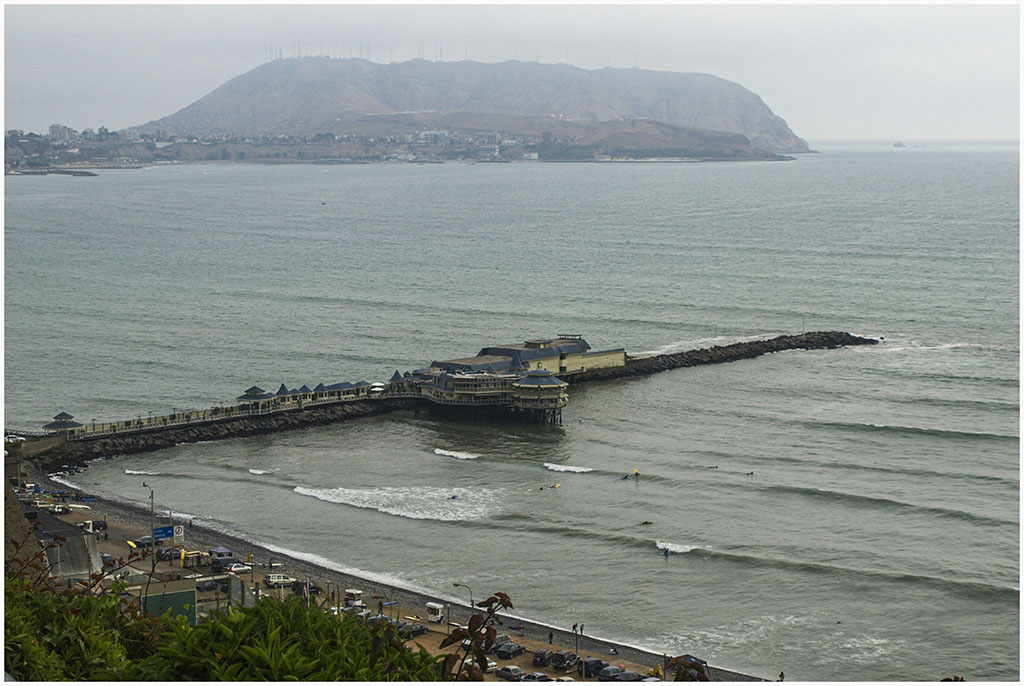
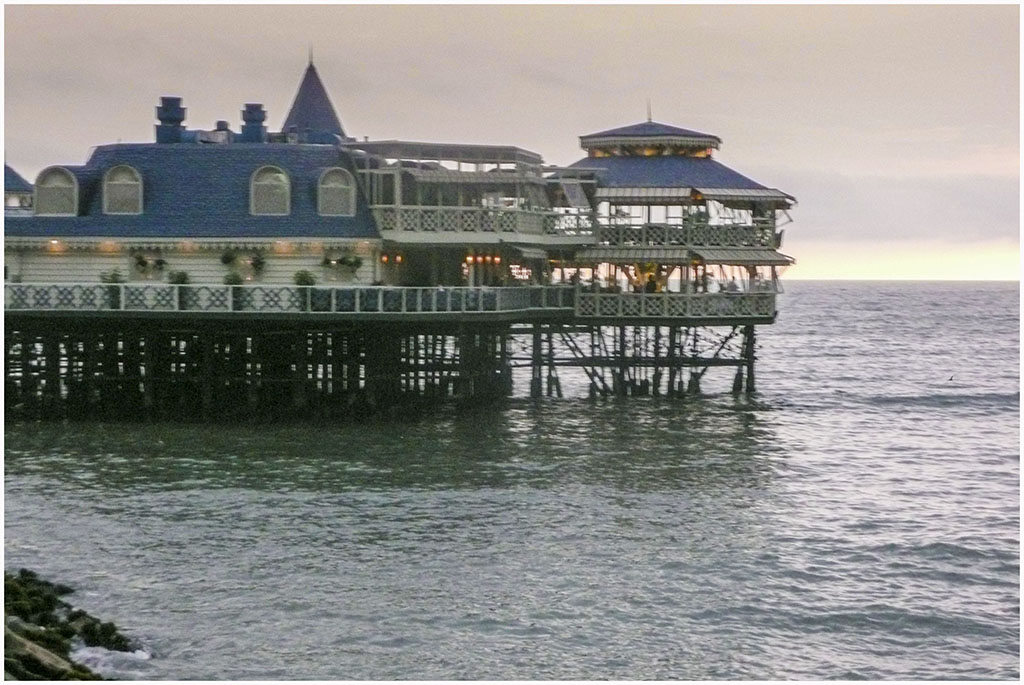
Restaurante La Rosa Náutica
Restaurante La Rosa Náutica |
|
|
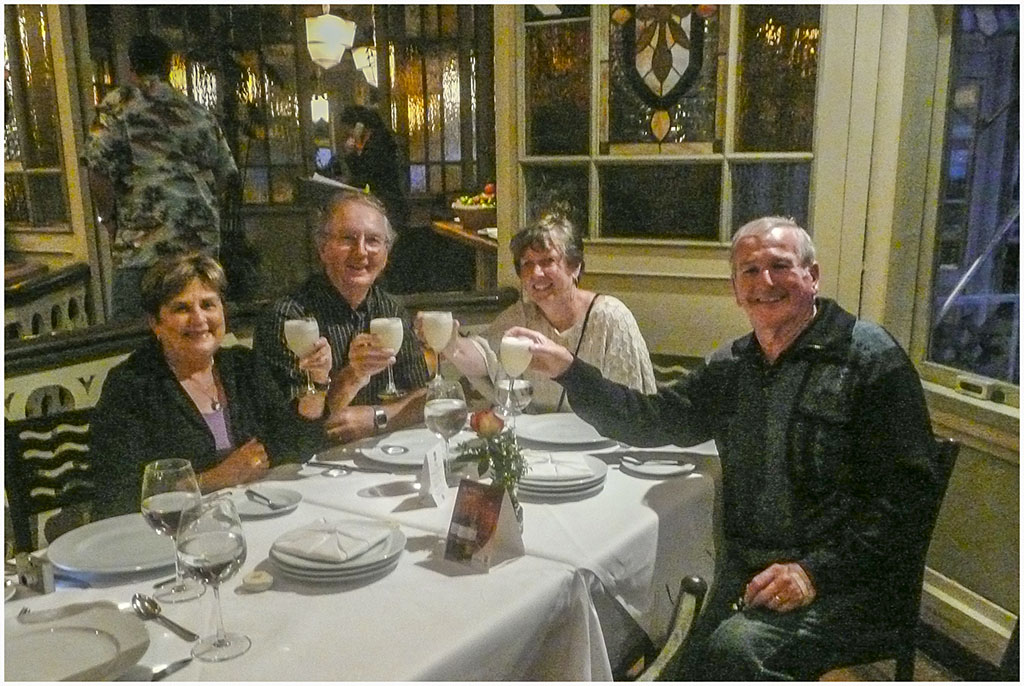
Dinner at Restaurante La Rosa Náutica
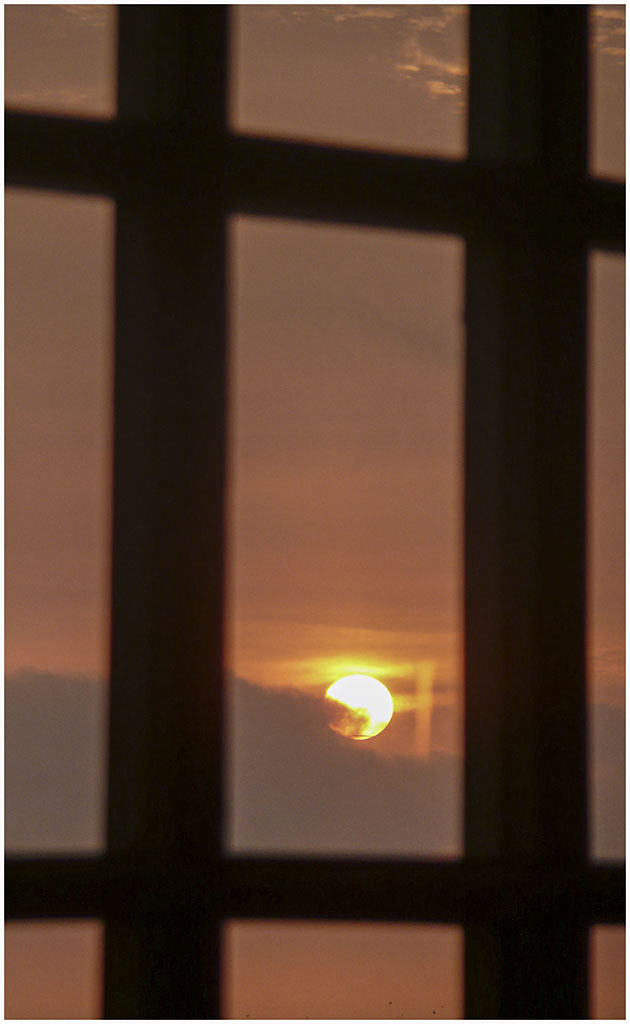
Sunset at Restaurante La Rosa Náutica |
|
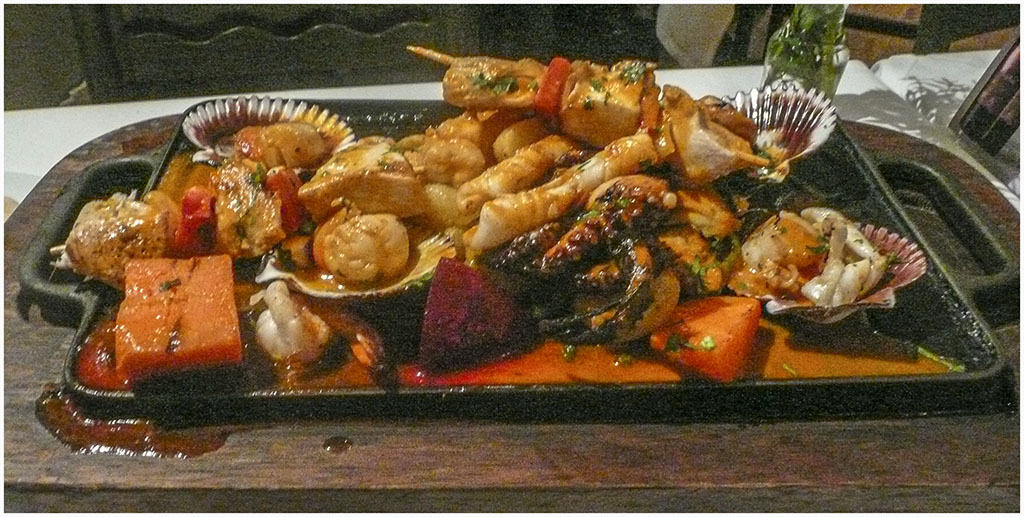
Sumptuous Seafood Banquet at La Rosa Náutica |