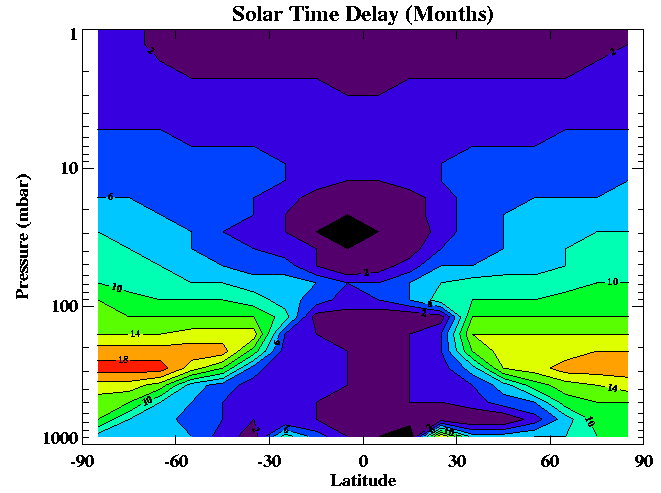
Solar cycle: To the extent that the solar cycle response of ozone in the atmosphere is driven by UV variations, there should be a time delay in the response when one goes away from the upper stratosphere. I have not published this, but I ran a statistical analysis of Jackman and Fleming's 2D model where they isolated the response of solar cycle from other perturbing influences. The model was run with and without the solar cycle. I then fit the results to the solar cycle as it was used as input to the model. I adjusted the fit with time delays of a variable number of months until a best fit was obtained. The resulting time delay for the best fit is shown in the figure below:
In the mid-latitude lower stratosphere, the time delays range up to 18 months in the response to solar cycle. This represents the response to the particular top-down perturbation that has been applied to the model. The primary effect on ozone is due to the increase in solar UV during solar maximum that increases the production of ozone. This increased ozone in the upper tropical stratosphere is transported downward and poleward into the middle and lower mid-latitude stratosphere.
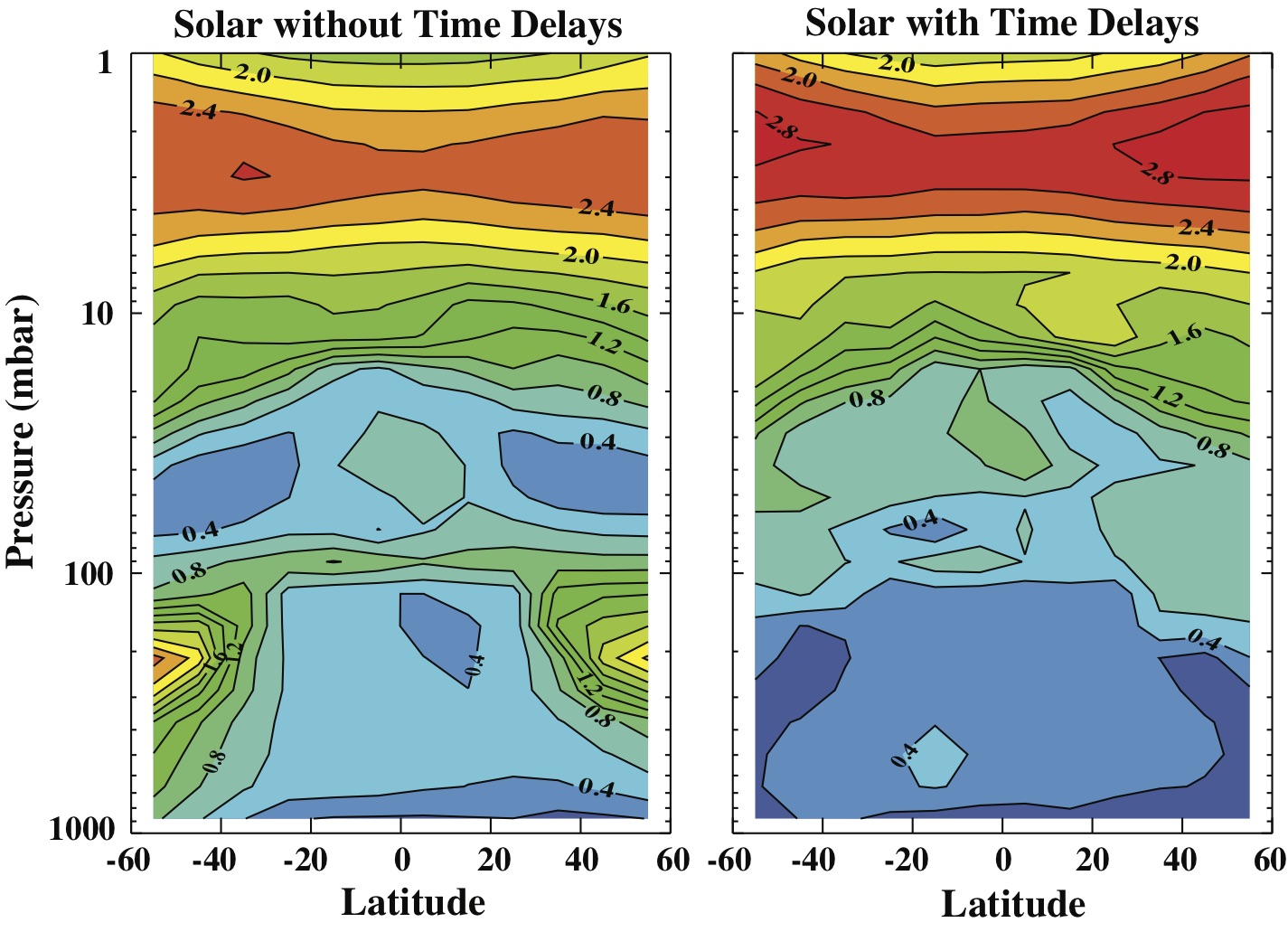
I also found that
if I did the analysis of the model results when all perturbations (chlorine, solar,
nitrous oxide, methane, carbon dioxide) were included that I could get false “solar”
signals in the lowermost stratosphere and upper troposphere if I did not include
estimates of the time delay. This is illustrated in the left panel of the figure below, where
there are apparent solar signals (in %) in the lowermost polar stratosphere of both hemispheres.
The right panel of the figure shows that when the time delays are taken into account, these
false
signals went away.
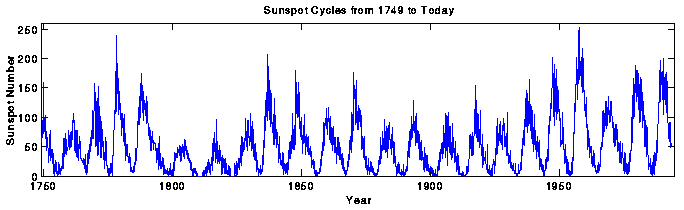
The above considerations are for the last few solar cycles starting in the late 1970s. There is a much richer long-term record of solar variations that goes back to at least the Maunder minimum in the 1500s. The solar cycle record back to 1749 is illustrated below: