
Analysis
With an understanding of the processes at work within the production of “Takalani Sesame” and “Rechov Sumsum,” what are we now to make of these programs in light of the fact that they are part of a broader global effort to induce social change through mediation? It is essential to understand that there are two levels within the production processes of the show must be analyzed: that of the localized program in its creation and that of Sesame Workshop as an international entity seeking to influence local communities through a universal televisual model. We must determine what is at stake in the collaboration between local producers and Sesame executives in the development of a program, and through such analysis work to situate these productions in a broader framework of the mediation of international development.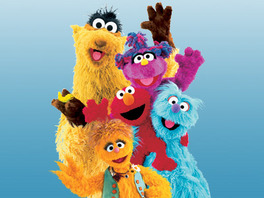
I would like to speak briefly about the issue of visuality that is inherent within the production of a television show like “Takalani Sesame.” For the purposes of this analysis, it may be useful to return to the claim by the “Takalani” producer that the program “show[s] children the different images, the different visuals that go with South Africa… [and] Takalani Sesame gave us an opportunity to create a bigger presence for an African vision.”1 The chance to create an imageric representation of one’s culture in this way is an opportunity unique to television production, and lends credence to a conception of international mediation as a channel for a deeper identification with a form of nationalism. This initially may appear to pose a contradiction for a production entity such as Sesame Workshop that is attempting to instill what they consider universal values on a global scale. However, analysis of this issue must take into account that the Sesame model is structured in such a fashion that promotes the creation of local characters, sets, and costumes, emphasizing local empowerment as the platform for greater international development through the program.
Beyond the sensory means through which a Sesame Workshop television program can mediate social values and educational curriculum, the specific content within this framework must be analyzed in order to contextualize the program within the realm of politics and discern what issues may arise from such an understanding of a show like “Rechov Sumsum.” As previously mentioned in the ethnography section, a central issue within the production of Israel’s and Palestine’s programs was that of tolerance, espoused within the separate spheres of each country’s programs. When analyzing how the methods of production involved in Rechov Sumsum were representative of the political context within which the show was created, media analyst Yael Warshel asserts that the relationship between the Israeli and Palestinian productions that necessitated separate programs is a direct reflection of the peacemaking process that was at work, such that the “imagined geographical space [of the two shows] implemented the vision sought by the [peace] agreements- a two-state solution.”2 In this way, Rechov Sumsum is a prime example of the inescapability of politicization within a program attempting to achieve international saliency, despite the seemingly apolitical nature of the values they are attempting to instill. As anthropological analysis concerning programs of this genre has revealed, “there is an inherent conundrum in producing material that aims to promote messages of understanding in a context where the political and/or social arena is complex or contentious.”3 Despite the restrictions imposed by such a paradox, it is apparent that Sesame Workshop attempts to combat such issues of political limitation through methods of local empowerment, an effort that is contentious in its own right due to issues of cultural relativism and universal imperialism.
In an effort to understand how the local production of these programs is influenced by conceptions of cultural relativism, it is beneficial to reference the work of Barry Dornfeld in Producing Public Television, Producing Public Culture. While Dornfeld’s work presents a theoretical analysis of a production that attempts to create representations of international cultures that will then be viewed by the American public (as opposed to Sesame Workshop’s intent to produce cultural representations that will be salient for the community itself), it is still pertinent to understand his conception of how “producers represented ‘otherness’…[through] how [they] went about selecting, steering, and structuring the material they used of the several cultures.”4 As we have seen through analysis of the Sesame Workshop model, the collaboration between local producers and Sesame executives acts as a deterrent to concerns of cultural imperialism within the creation of the program. However, the executives at Sesame Workshop must grapple with maintaining the authority of local producers while still providing a framework that allows the show to instill the values that they consider universally progressive. Just as Dornfeld argues that the program he analyzes “articulates a position mediating between what could be characterized as an anthropological cultural relativism and a universalism,” so does the Sesame Workshop find itself working to balance the importance of local representation with the need to maintain a universally applicable model.5 In this way, they attempt to create a program that allows its viewers to share a collective Sesame Worshop experience, while still maintaining the integrity of each local production.
The issue of maintaining cultural integrity becomes more complex, however, when considering that the actions of Sesame Workshop must also be situated within a cultural framework. This analytical necessity is perhaps best articulated by Dornfeld’s claim that “we need to rethink producers as particular types of agents, producing media texts within contexts constrained by both culture, ideology, and economy…not floating above society” 6Just as the political conflict surrounding the creation of Rechov Sumsum influenced the modes of production and the structuring of content within the program, the instruction and aid provided by Sesame Workshop must be contextualized within a theoretical understanding of political and cultural mediation. This is not to accuse Sesame Workshop of any inherent cultural imperialism; in fact, it is through Sesame Workshop’s prioritization of local cultural efficacy that the Sesame model is manifested in its current collaborative form. The importance of such a distinction between the cultural context of local producers and executive producers is merely to emphasize that anthropological studies of mediation must take into account the textured levels of cultural contextualization that exist not only within the consumption of a program like Sesame Street, but also within its production.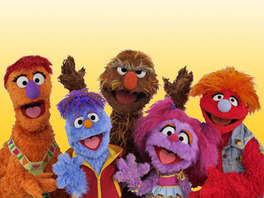
Where, then, does this interpretation of Sesame Workshop’s international televisual endeavor leave us? It is clear that there is much work to be done analyzing the intricacies of production involved in unique cases of international mediation such as this. Particular attention should be devoted to the contextualization of production within a cultural and political framework, focusing specifically on the modes through which these relationships are manifested. The products of such research could have drastic implications for international development as a process of mediation; for now, it is clear that even the simplicity of a Muppet can no longer be taken for granted, and that much larger processes are at work within Sesame Workshop than ABC’s and 123’s.
___________________________________________________________________________________________________
1 Sesame Workshop, Around the World, http://www.sesameworkshop.org/aroundtheworld.
2 Dafna Lemish and Maya Gotz, ed., Children and Media in Times of War and Conflict, 312.
3 Charlotte F. Cole, Daniel B. Labin, and Maria del Rocio Galarza, Begin with the Children: What Research on Sesame Street's International Coproductions Reveals about Using Media to Promote a New More Peaceful World, International Journal of Behavioral Development 32 (2008): 359-365.
4 Barry Dornfeld, Producing Public Television, Producing Public Culture, 141.
5 Ibid., 159.
6 Ibid., 13.
Analysis
With an understanding of the processes at work within the production of “Takalani Sesame” and “Rechov Sumsum,” what are we now to make of these programs in light of the fact that they are part of a broader global effort to induce social change through mediation? It is essential to understand that there are two levels within the production processes of the show must be analyzed: that of the localized program in its creation and that of Sesame Workshop as an international entity seeking to influence local communities through a universal televisual model. We must determine what is at stake in the collaboration between local producers and Sesame executives in the development of a program, and through such analysis work to situate these productions in a broader framework of the mediation of international development.
I would like to speak briefly about the issue of visuality that is inherent within the production of a television show like “Takalani Sesame.” For the purposes of this analysis, it may be useful to return to the claim by the “Takalani” producer that the program “show[s] children the different images, the different visuals that go with South Africa… [and] Takalani Sesame gave us an opportunity to create a bigger presence for an African vision.”1 The chance to create an imageric representation of one’s culture in this way is an opportunity unique to television production, and lends credence to a conception of international mediation as a channel for a deeper identification with a form of nationalism. This initially may appear to pose a contradiction for a production entity such as Sesame Workshop that is attempting to instill what they consider universal values on a global scale. However, analysis of this issue must take into account that the Sesame model is structured in such a fashion that promotes the creation of local characters, sets, and costumes, emphasizing local empowerment as the platform for greater international development through the program.
Beyond the sensory means through which a Sesame Workshop television program can mediate social values and educational curriculum, the specific content within this framework must be analyzed in order to contextualize the program within the realm of politics and discern what issues may arise from such an understanding of a show like “Rechov Sumsum.” As previously mentioned in the ethnography section, a central issue within the production of Israel’s and Palestine’s programs was that of tolerance, espoused within the separate spheres of each country’s programs. When analyzing how the methods of production involved in Rechov Sumsum were representative of the political context within which the show was created, media analyst Yael Warshel asserts that the relationship between the Israeli and Palestinian productions that necessitated separate programs is a direct reflection of the peacemaking process that was at work, such that the “imagined geographical space [of the two shows] implemented the vision sought by the [peace] agreements- a two-state solution.”2 In this way, Rechov Sumsum is a prime example of the inescapability of politicization within a program attempting to achieve international saliency, despite the seemingly apolitical nature of the values they are attempting to instill. As anthropological analysis concerning programs of this genre has revealed, “there is an inherent conundrum in producing material that aims to promote messages of understanding in a context where the political and/or social arena is complex or contentious.”3 Despite the restrictions imposed by such a paradox, it is apparent that Sesame Workshop attempts to combat such issues of political limitation through methods of local empowerment, an effort that is contentious in its own right due to issues of cultural relativism and universal imperialism.
In an effort to understand how the local production of these programs is influenced by conceptions of cultural relativism, it is beneficial to reference the work of Barry Dornfeld in Producing Public Television, Producing Public Culture. While Dornfeld’s work presents a theoretical analysis of a production that attempts to create representations of international cultures that will then be viewed by the American public (as opposed to Sesame Workshop’s intent to produce cultural representations that will be salient for the community itself), it is still pertinent to understand his conception of how “producers represented ‘otherness’…[through] how [they] went about selecting, steering, and structuring the material they used of the several cultures.”4 As we have seen through analysis of the Sesame Workshop model, the collaboration between local producers and Sesame executives acts as a deterrent to concerns of cultural imperialism within the creation of the program. However, the executives at Sesame Workshop must grapple with maintaining the authority of local producers while still providing a framework that allows the show to instill the values that they consider universally progressive. Just as Dornfeld argues that the program he analyzes “articulates a position mediating between what could be characterized as an anthropological cultural relativism and a universalism,” so does the Sesame Workshop find itself working to balance the importance of local representation with the need to maintain a universally applicable model.5 In this way, they attempt to create a program that allows its viewers to share a collective Sesame Worshop experience, while still maintaining the integrity of each local production.
The issue of maintaining cultural integrity becomes more complex, however, when considering that the actions of Sesame Workshop must also be situated within a cultural framework. This analytical necessity is perhaps best articulated by Dornfeld’s claim that “we need to rethink producers as particular types of agents, producing media texts within contexts constrained by both culture, ideology, and economy…not floating above society” 6Just as the political conflict surrounding the creation of Rechov Sumsum influenced the modes of production and the structuring of content within the program, the instruction and aid provided by Sesame Workshop must be contextualized within a theoretical understanding of political and cultural mediation. This is not to accuse Sesame Workshop of any inherent cultural imperialism; in fact, it is through Sesame Workshop’s prioritization of local cultural efficacy that the Sesame model is manifested in its current collaborative form. The importance of such a distinction between the cultural context of local producers and executive producers is merely to emphasize that anthropological studies of mediation must take into account the textured levels of cultural contextualization that exist not only within the consumption of a program like Sesame Street, but also within its production.
Where, then, does this interpretation of Sesame Workshop’s international televisual endeavor leave us? It is clear that there is much work to be done analyzing the intricacies of production involved in unique cases of international mediation such as this. Particular attention should be devoted to the contextualization of production within a cultural and political framework, focusing specifically on the modes through which these relationships are manifested. The products of such research could have drastic implications for international development as a process of mediation; for now, it is clear that even the simplicity of a Muppet can no longer be taken for granted, and that much larger processes are at work within Sesame Workshop than ABC’s and 123’s.
___________________________________________________________________________________________________
1 Sesame Workshop, Around the World, http://www.sesameworkshop.org/aroundtheworld.
2 Dafna Lemish and Maya Gotz, ed., Children and Media in Times of War and Conflict, 312.
3 Charlotte F. Cole, Daniel B. Labin, and Maria del Rocio Galarza, Begin with the Children: What Research on Sesame Street's International Coproductions Reveals about Using Media to Promote a New More Peaceful World, International Journal of Behavioral Development 32 (2008): 359-365.
4 Barry Dornfeld, Producing Public Television, Producing Public Culture, 141.
5 Ibid., 159.
6 Ibid., 13.