
Elmo in Egypt: An Ethnographic Approach to International Mediation
Credit: Sesame Workshop
Elmo in Egypt: An Ethnographic Approach to International Mediation
|
| Credit: Sesame Workshop |
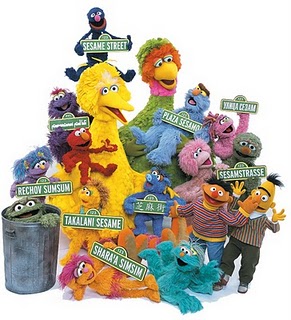
Can a furry yellow monster break the stigma of HIV/AIDS in South Africa? Can colorful puppets resolve deadly tensions between Arab and Jewish factions in Israel? This is my aim in exploring the international programs in the eighteen different countries supported by the renowned children’s television production of Sesame Street. When Sesame Street aired its first episode in 1969, it attempted to revolutionize the way in which children learned, emphasizing that “television could be educational, non-violent, and child centered” (Morrow, 86). By implementing an urban setting, a mixed race cast, and appropriate academic structures to episodes, the producers of Sesame Street hoped to level the educational playing field for disadvantaged African American toddlers, with the ultimate goal that “the program could be both universal and targeted to the poor” (Morrow, 61). After forty years of existence, this nonprofit children’s production has established a prominent reputation in the United States, and has now expanded its programs to reach millions of children across the globe. From Northern Ireland to Indonesia, Sesame Street producers collaborate with local directors and team members in order to create a culturally relevant television program that addresses the current social and educational needs of local children. These programs are produced in the native languages of the country, and incorporate many elements of the American production along with adaptations for each specific population. For the purposes of this project, I wish to pursue specific case studies of the South African program, "Takalani Sesame", and the Israeli program, "Rechov Sumsum", in order to discover essential truths about the project on a larger scale. In pursuing this topic of study, I am interested in the agency of local directors and writers, specifically concerning their efficacy in creating a program designed around their wishes for “their” children. By addressing a major documentary on the international project as well as discussing available published interviews with local team members, I hope to discern the nature of production of this medium through the eyes of the local community. I also wish to uncover, if possible, the effects of the specific format of a Sesame Street program on the development and socialization of children throughout these countries, taking into account the steps taken by each local production to tailor the program around country-specific conflicts and issues of socialization. This development will be elaborated through statistical evidence of educational and social change correlated with the program, as well as scholarly critique of this world-wide initiative. In this way, I will attempt to situate this program in a larger conceptualized realm of mediated international development, thereby illuminating the true essence of “The World’s Longest Street.”
For a brief overview of the Sesame Street International Project, watch video below.